Issues like prohibition and allegations of corruption directed against AIADMK by the opposition failed to cut any ice with the voters as the ruling dispensation not only retained power but also bettered its vote share in the May 16 Tamil Nadu Assembly polls.
In a wide open electoral battle that saw a six-cornered fight, the split in vote share among parties like DMDK, PMK and BJP seemed to have dented the chances of the main opposition DMK, which pulled out all stops to come back to power after a five year hiatus.
This even included party Treasurer M K Stalin’s much hyped pre-poll initiative ‘Namakku Name’ where he covered all 234 Assembly seats in the state. AIADMK, which fielded its candidates in 227 seats, made sure its small-time allies also contested on the party’s Two Leaves symbol, virtually making its presence felt in all 234 seats. However, elections were held only for 232 segments as the Election Commission had deferred polling in Aravakurichi and Thanjavur to May 23 following allegations of money power.
AIADMK may have seen a dip in the number of seats it scored this time at 134 as against 150 last time, but the party managed to increase its vote share. The party had registered a vote share of 39.80 per cent in 2011 with 150 seats but made gains this time by registering 40.8 per cent.
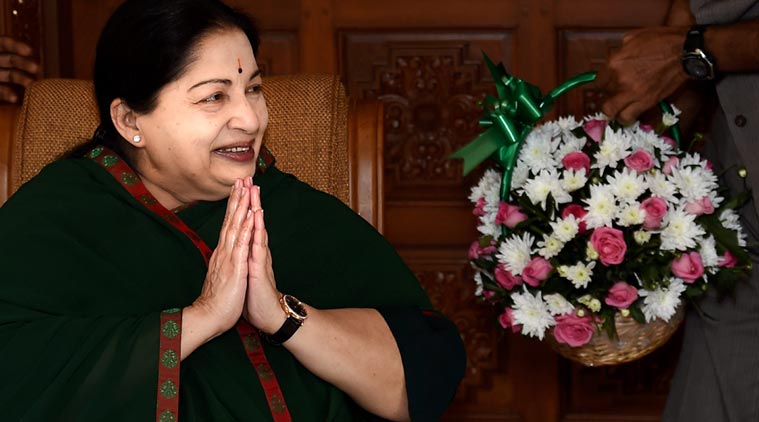
The party bucked the trend of parties alternatively forming government in the state, belying most exit polls that did not give it a favourable verdict. Amid a strong perceived anti-liquor mood where all parties, including DMK promised dry law with a single order, AIADMK supremo J Jayalalithaa took a gamble when she promised the same law, albeit in a phased manner.
At the meetings attended by women in large numbers, the 68-year-old leader repeatedly insisted that prohibition at one go was not possible as it required rehabilitation of affected persons. She also stuck to doling out freebies, saying they were meant for people’s welfare, and ridiculed the criticism by others including DMK, saying she was with the poor when it came to providing such sops.
Delivering a virtual masterstroke by delaying her party manifesto and releasing it on a day when Congress President Sonia Gandhi and DMK chief M Karunanidhi were slated to address a public meeting, Jayalalithaa ensured the limelight stayed on her.
Free 100 units of power, sops in education sector, free mobile phones and employment to one member in the family were the highlights of her party manifesto. DMK, which went all guns blazing, including making catchy ads even featuring the December 2015 deluge, failed to cross the finish line. However, the party stormed Chennai, its bastion wrested by AIADMK in 2011, even as it polled 31.6 per cent of the total votes. DMK won ten out of the 16 segments in Chennai district.
Having managed to stitch a rainbow alliance despite failing to rope in DMDK after much wooing, DMK settled for 89 seats, increasing both its number of seats (23) and vote share (22.38) from 2011. DMK’s ally Congress won eight seats and polled 6.4 per cent of the total votes.
DMK, which had continued with the liquor policy introduced by AIADMK in 2003 through its 2006-11 regime, seemed to have bet on prohibition and deployed Stalin for the campaign in favour of dry law. DMK even promised to shut down distilleries run by its leaders but the issue failed to make any impact on voters as South and West Tamil Nadu stood behind Jayalalithaa and voted en masse for AIADMK.
The DMK’s manifesto paled before AIADMK when it came to offering freebies. The party seemed to have taken at face value the many exit polls which gave it the numbers to form government. The real flop, however, turned out to be the DMDK-PWF-TMC combine. The combined vote share of the coalition stood at around 6.1 per cent, much less than what DMDK (7.88 per cent) scored on its own in the 2011 polls.
PWF constituents- MDMK, CPI(M), CPI and VCK besides TMC, could not even register one per cent votes. Political observers felt PWF coordinator Vaiko’s decision to pull out of the race in Kovilpatti in the last minute had given confusing signals to voters.
The voters also dashed the hopes of PMK and BJP to make a mark in the state polls.