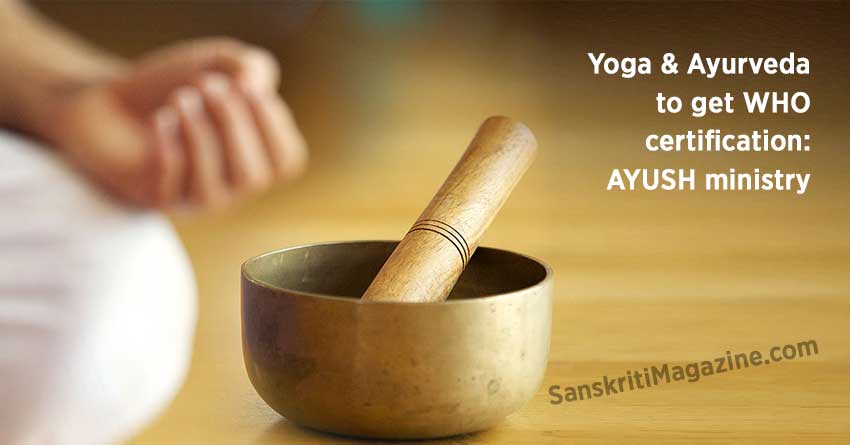
The project collaboration agreement with WHO will deliver for the first time the benchmarks for training in yoga and for practise in ayurveda, unani and panchakarma.
The mushrooming yoga and ayurveda centres in the country will soon have to follow strict protocols set by the government on the parameters of the World Health Organization (WHO).
The ministry of AYUSH and WHO on Friday signed a project collaboration agreement (PCS) for cooperation on promoting the quality, safety and effectiveness of service provision in traditional and complementary medicine.
The PCA will deliver for the first time WHO benchmarks for training in yoga as well as practise in traditional systems of medicine such as ayurveda, unani and panchakarma.
The move comes against the backdrop of Prime Minister Narendra Modi repeatedly calling for greater use of India’s health remedies and exercises. The United Nations last year declared June 21 the first International Day of Yoga after adopting a measure proposed by the NDA government.
“Alternative system of medicine is gaining ground in the country but it is equally important to regulate it,” said Anil Kumar Ganeriwala, joint secretary in the AYUSH ministry. When the WHO will set standards for traditional Indian medicine, the world will adhere to them, he said.
“Education in traditional medicine is well regulated in India but practising yoga and ayurveda has to be under strict scanner for effectiveness and safety. People start practising yoga by reading books and impart training. We are working on each and every aspect of alternative medicine in country.”
The PCA is titled “Co-operation on promoting the quality, safety and effectiveness of service provision in traditional and complementary medicine between WHO and AYUSH, India, 2016-2020”.
It aims to support the WHO in the development and implementation of the “WHO Traditional and Complementary Medicine Strategy: 2014-2023” and will contribute to the global promotion of traditional Indian systems of medicine.
After the WHO parameters come into place, yoga, ayurveda, unani and panchakarma will have to be practised according to these rules.
“As Good Manufacturing Practices are applicable to food products and other consumer items, same will be applied to training in yoga and alterative systems of medicine. We want to take ayurveda and related systems across the world,” said Ganeriwala.
Popular yoga guru Baba Ramdev also promotes the use of traditional medicines with his demonstrations drawing thousands of followers and his pharmaceutical company steadily eating into a market dominated by more established players.
The AYUSH ministry is already in the process of streamlining and ensuring quality in alternative systems of medicine, including yoga. To ensure the credibility of knowledge and skills of yoga experts and professionals, a scheme for voluntary certification was launched last year in collaboration with the Quality Council of India (QCI).
The programme aims to promote authentic yoga as a preventive, rehabilitative and health-promoting drugless therapy, and certify the competence level of the yoga professionals, which would help their deployment within and outside the country.
“The PCA with WHO is a further recognition of India’s rich experience in the development and governance of traditional medicine,” said Shripad Yesso Naik, minister of state (independent charge) of AYUSH.