IndianSanskriti
Indian-Govt-bans-use-of-animals-in-tests-for-soaps,-detergents

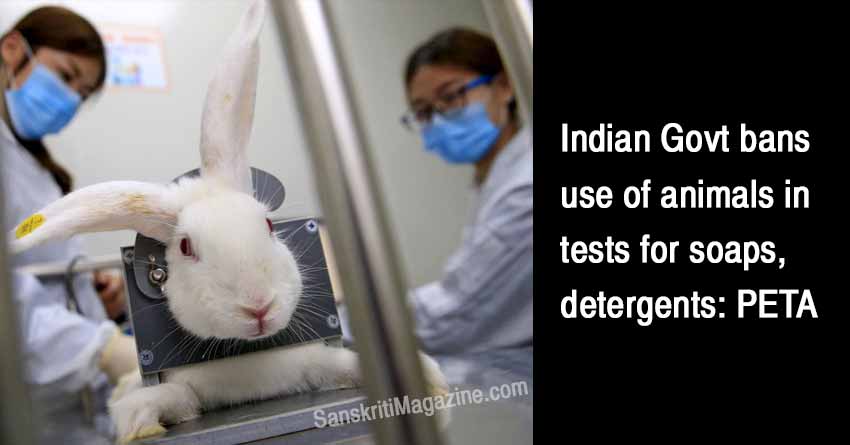
Indian Govt bans use of animals in tests for soaps, detergents: PETA

NEW DELHI: A ban has been imposed with immediate effect on the use of animals in tests for manufacturing soaps and detergents, an animal rights body said on Monday.

People for the Ethical Treatment of Animals (PETA), India, claimed to have received a circular, through an RTI, issued by the Committee for the Purpose of Control and Supervision of Experiments on Animals (CPCSEA), under the Environment Ministry in this regard.

“Through a Right to Information (RTI) request, PETA India has received a circular recently issued by the Committee for the Purpose of Control and Supervision of Experiments on Animals (CPCSEA) to manufacturers and industry associations that prohibits the use of animals in tests of soaps and detergents, effective immediately,” it claimed.

The circular, PETA said, is the “final” step in the process initiated by it in 2014, when the animal rights group had successfully worked with Bureau of Indian Standards (BIS) to remove tests on animals from the testing standards for household products such as soaps, detergents and other surface active agents – an effort supported by now-Union Minister Maneka Gandhi and other MPs.

“Consumers will be delighted to know the production of soaps and detergents manufactured in India will not involve harming rabbits, mice or guinea pigs.

“However, household products manufactured abroad can still be tested on animals. We continue to urge consumers only buy from those companies listed as cruelty-free on PETA’s website,” said Dipti Kapoor, PETA India research associate.

PETA said more than 2,000 companies around the world have banned all testing on animals in favour of effective, modern non-animal methods, but many still choose to subject animals to painful tests in which substances are “dripped into their eyes, sprayed in their faces or forced down their throats”.

“Before PETA India succeeded in ending household-product tests on animals in India, one mandatory test under BIS requirements called for harsh chemicals to be rubbed onto the sensitive skin of guinea pigs.

“Because of the vast physiological differences between humans and the animals used in these tests, the results are often misleading,” it claimed.

You may also like

Search the website

Like us on Facebook

Get daily updates via Email

Enter your email address:

Recent Posts

Yogini Ekadashi 2026 — The Yaksha Who Missed the Morning Flowers, and the Ekadashi That Undid His Curse

On Friday, July 10, 2026, the rare Krishna Paksha Ekadashi of Nija Ashadha arrives. The Padma Purana tells the story of Hemamali — the Yaksha gardener of Bhagavan Kubera in Alaka, whose single morning of distraction with his wife Vishalakshi cost him his form, his wife, and his celestial city. Cursed to wander the earth of Bharata as a leper for a long time, he was at last shown the way back by Sage Markandeya — a single sincere keeping of Yogini Ekadashi.

Jamai Shashthi 2026 — The Story of Maa Shashthi, the Cat, and the Wife Who Was Forgiven

Jamai Shashthi 2026 — The Story of Maa Shashthi, the Cat, and the Wife Who Was Forgiven

On Saturday, June 20, 2026, Bengali households across Bharata will welcome their married daughters and sons-in-law home for the legendary jamai-aador feast and perform the Shashthi Vrata. But behind the warmth lies a story most Bengalis know by heart and most non-Bengalis have never heard — the wife who stole the hilsa, blamed the cat, lost six sons to Maa Shashthi’s wrath, and was finally forgiven. The Vrat Katha, the vidhi, the mantras, and the deeper teaching.

Vat Purnima 2026 — The Wife Who Argued Yama Into Returning Her Husband’s Life

On Monday, June 29, 2026, women across Maharashtra, Gujarat, and southern Bharata will tie red thread around banyan trees and hear the story of Savitri — the wife who walked behind Yamaraja Himself when He came for her husband, and out-argued the Lord of Dharma into returning Satyavan’s life. The Mahabharata’s Pativrata Mahatmya Parva, the vrat vidhi, and why the banyan witnessed everything.

Nija Jyeshtha 2026 — The Real Jyeshtha Begins, and the Calendar Resumes

Nija Jyeshtha 2026 — The Real Jyeshtha Begins, and the Calendar Resumes

With Adhik Maas now closed on the Somvati Amavasya of June 15, the long-postponed festivals of Jyeshtha return — Vat Purnima (June 29, the Savitri-Yamaraja katha), Jamai Shashthi (June 20, the Bengali festival of Maa Shashthi), Sankashti Chaturthi (June 28), Yogini Ekadashi (July 10), and Devshayani Ekadashi (July 16, opening the four-month Chaturmas of Bhagavan Vishnu’s yoga-nidra). A guide to what the next four weeks hold and what the household that kept Purushottam Maas now carries forward.

The Closing of Purushottam Maas 2026 — Adhik Amavasya and the Sealing of the Month-Long Vrat

On Monday, June 15, 2026 — a rare Somvati Amavasya — the intercalary month that bears Bhagavan Vishnu’s own name comes to its close. The Acharyas teach that a vrat is not measured by its duration but by its closing. Here are the Padma Purana’s instructions for sealing the month-long Purushottam Maas vrat: the morning snan, the closing puja with the Vishnu Sahasranama, the day of dana, the Somvati Amavasya gift, and the final sarva-arpana — the offering of all merit at the feet of the Lord.

css.php