IndianSanskriti
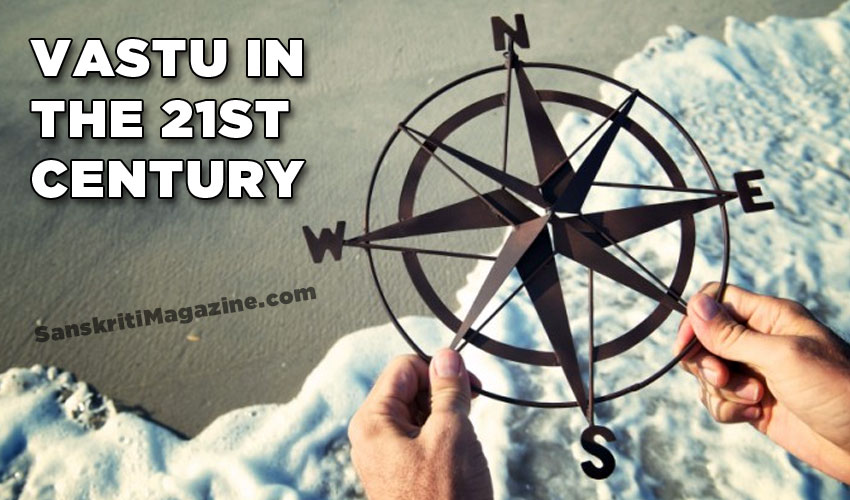
Vastu in the 21st Century

Vastu in the 21st Century

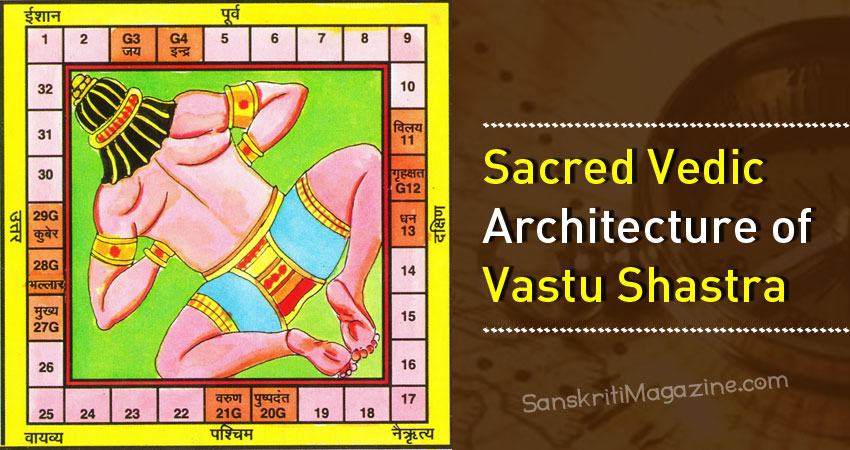
Our ancient Vastu Shastra has been founded in such a way, that people can derive maximum benefits from sun-rays and the energies of the sun like heat light, UV rays – the only reliable source of Vitamin D (Vitamin D is absorbed by the blood directly when the bare skin is exposed to sun), which is vital for sustenance of life on the Earth.

Uttaraayana and dakshinaayana too are of great scientific importance since daytime will be more than the nighttime in the Uttaraayana facilitating availability of more sun light.

It is only some years ago that the modern scientists have discovered that the white solar light could be split into segments called visible rays and invisible heat spectrum. But thousands of years ago, our ancient Indian sages, not equipped with any kind of appliances were able to discern many natural phenomena in a scientific manner and according to the visible spectrum had distinctive names with specific functions besides colors like: Jayanta, Parjanya, Mahendra…. to Bhrsha and Aakaasha , which correspond to VIBGYOR.

Other than that, sun rays consist of 7 colors (VIBGYOR) and their effect on human body is immense as it cures several diseases.

The modern astra physics, during the last few decades, has divided the atmosphere into several zones like Stratosphere, Ozonosphere etc. but several centuries before this discovery, the atmosphere over which Varuna held its way was divided by our sages into Bhu, Bhuv, Swar, Jan, Tap and Satyalok.

The Eastern direction assumes a great significance because the sun rays of early morning emit more light and less heat, hence the best. In the afternoon, sun moving towards West, grow hot emitting Infrared rays, which are detrimental to health.

Thus, due to all these reasons, it is explicitly laid down in Vastu Shastra that more open space, more windows and doors fixed, more balconies and verandas should be provided towards the East and the North side than in the South and the West side.

The most important aspect considered while formulating the Vastu Shastra is the magnetic field of the Earth, which has significant influence on the human life. Human body itself acts as a magnet with the head, the heaviest as North Pole. If the head is directed towards the North while sleeping, the North Pole of the Earth and that of the human body repel each other affecting the blood circulation, causing disturbed sleep, tension and other problems. Thus, it is said by Vastu Shastris that ONE SHOULD NOT SLEEP FACING HIS HEAD TOWARDS NORTH.

Now-a-days many hi-tech instruments are available by which one can detect Vastu defect of a house by measuring the energy level of the person residing in. By using Feed Back Energy tester, one can not only detect the Vastu defect by measuring the energy of the human, but the same person can restore the energy with the help of ‘Lecher Antenna’.

In the most recent survey of the Gujarat earth quake effected regions , the maximum houses destroyed were not according to Vastu and those were intact were constructed on the principles of Vastu.

You may also like

Search the website

Like us on Facebook

Get daily updates via Email

Enter your email address:

Recent Posts

Jamai Shashthi 2026 — The Story of Maa Shashthi, the Cat, and the Wife Who Was Forgiven

Jamai Shashthi 2026 — The Story of Maa Shashthi, the Cat, and the Wife Who Was Forgiven

On Saturday, June 20, 2026, Bengali households across Bharata will welcome their married daughters and sons-in-law home for the legendary jamai-aador feast and perform the Shashthi Vrata. But behind the warmth lies a story most Bengalis know by heart and most non-Bengalis have never heard — the wife who stole the hilsa, blamed the cat, lost six sons to Maa Shashthi’s wrath, and was finally forgiven. The Vrat Katha, the vidhi, the mantras, and the deeper teaching.

Vat Purnima 2026 — The Wife Who Argued Yama Into Returning Her Husband’s Life

On Monday, June 29, 2026, women across Maharashtra, Gujarat, and southern Bharata will tie red thread around banyan trees and hear the story of Savitri — the wife who walked behind Yamaraja Himself when He came for her husband, and out-argued the Lord of Dharma into returning Satyavan’s life. The Mahabharata’s Pativrata Mahatmya Parva, the vrat vidhi, and why the banyan witnessed everything.

Nija Jyeshtha 2026 — The Real Jyeshtha Begins, and the Calendar Resumes

Nija Jyeshtha 2026 — The Real Jyeshtha Begins, and the Calendar Resumes

With Adhik Maas now closed on the Somvati Amavasya of June 15, the long-postponed festivals of Jyeshtha return — Vat Purnima (June 29, the Savitri-Yamaraja katha), Jamai Shashthi (June 20, the Bengali festival of Maa Shashthi), Sankashti Chaturthi (June 28), Yogini Ekadashi (July 10), and Devshayani Ekadashi (July 16, opening the four-month Chaturmas of Bhagavan Vishnu’s yoga-nidra). A guide to what the next four weeks hold and what the household that kept Purushottam Maas now carries forward.

The Closing of Purushottam Maas 2026 — Adhik Amavasya and the Sealing of the Month-Long Vrat

On Monday, June 15, 2026 — a rare Somvati Amavasya — the intercalary month that bears Bhagavan Vishnu’s own name comes to its close. The Acharyas teach that a vrat is not measured by its duration but by its closing. Here are the Padma Purana’s instructions for sealing the month-long Purushottam Maas vrat: the morning snan, the closing puja with the Vishnu Sahasranama, the day of dana, the Somvati Amavasya gift, and the final sarva-arpana — the offering of all merit at the feet of the Lord.

Parama Ekadashi 2026 — The Other Rare Ekadashi of Purushottam Maas, and the Poor Brahmin Who Kept It

Two weeks ago, Vaishnavas across Bharata kept Padmini Ekadashi — the rare Shukla Paksha Ekadashi of Adhik Maas. Padmini has a twin. On Thursday, June 11, 2026, the Krishna Paksha Ekadashi of the same intercalary month appears: Parama — the Supreme Ekadashi. The Padma Purana names it the rarer and more secret of the two, and reserves it for those whose poverty or sorrow has refused to lift in spite of every other vrat already kept. The story of Sumedha and Pavitra of Kampilya, the rishi Kaundinya, the prince sent by Bhagavan Brahma — and the vidhi for the day.

css.php