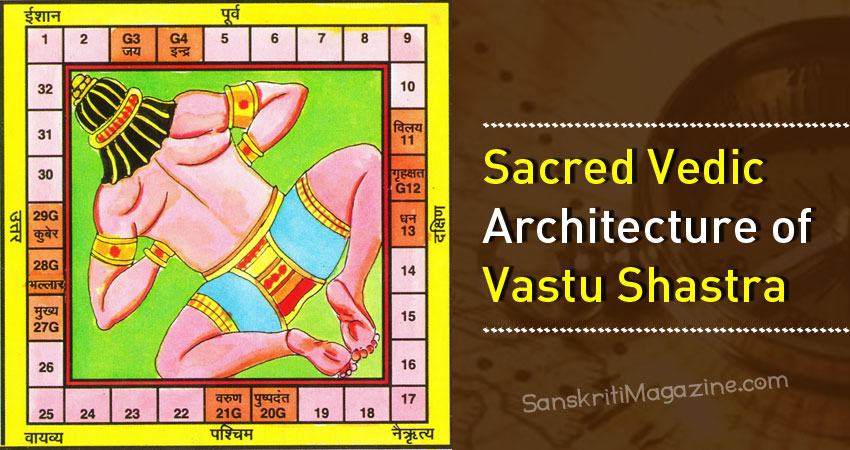
It is believed that vastu has a vital role in the birth of progeny. It is considered to not only resolve progeny related problems, but also help promote the health and wellbeing of a child. Vastu experts claim that by analysing a house, they can predict whether inmates will have normal progeny, delayed progeny or no progeny at all. Vastu parameters are determined keeping in mind various energy fields emanating from different directions, experts aver. These different fields affect various spheres of our life, they say.
Some affect our health, some affect finance, some affect mutual relations, some affect profession while other affect progeny. This piece will discuss some factors which effect progeny in a family or in a house. Having children and promoting their good health is one of the most important motives of any married couple worldwide. But if we make a house against vastu norms, we find ourselves standing against natural forces, experts say.
One of the basic mottoes of vastu is to extract the most out of natural forces so that we can get maximum energy for each and every field of life, vastu experts say. If we are standing against nature, some of the energies are obstructed and we find ourselves lagging behind in some spheres of life, they caution. In our ancient texts, there are innumerable references to methods that guide couples in having healthy babies. These techniques are called “Garbadhan ka Sidhant” (law of conceiving).
These observations are based on ayurveda, yogashastra, and vastushastra. Vastu experts say they consider energy created by our various organs and by using ayurveda, they observe diseases inside human bodies for change in energy levels. Yogashastra makes our body fit and increases its energy to the desired levels. By combining the effects of all these forces, one can have a healthy baby, vastu experts say.
If there is any physical limitation, it should first be cured by medication, mainstream or alternative therapy, experts say. The sloping of a house not only affects the health and financial status of family members but also places a vital role in extension of the family tree, experts say.
If the northeast of a house is the highest point, it will be almost impossible to have a progeny in that house, experts say. And, if there are children in these kinds of houses, they may face various problems in their childhood, vastu experts suggest.
If the southwest is at the lowest point, the elder son will face problems during adolescence, the experts say. Lowest southeast shows that these houses may have a lot of problems for the women folk, while lowest northwest portends miscarriages , vastu experts say.
If the northeast is at the lowest point, it leads to a healthy child, they say. Before the construction of a house, perform a “sarvabeej” plantation on that plot, vastu experts suggest; the rate of growth of that plantation is indicative of that soil’s power to help in progeny or not, they add.
If we find some growth in the plantation within seven days, the land is a good place to locate your house, but if there is no growth at all, it indicates infertility , vastu experts say. Water source in northeast leads to a healthy child.
In other words, you can say that if there is an underground water tank to the northeast, it is good for the children. But if there are stairs in the northeast or this point is elevated, it is supposed to be harmful, as it leads to denial of progeny, vastu experts caution.
If you are planning a baby you should not sleep in the northwest room, experts say, as this is the direction of air element and it is hard to conceive in this direction . Energy fields of this direction give instability and nothing can remain in this direction for very long. One should immediately change the room.
A bedroom in the northwest and northeast leads to miscarriages, vastu experts suggest ; so, if a lady is pregnant, she should not sleep in this direction. Your bed should be towards southwest in your room and you should sleep with your head towards south. In this way you can extract the maximum favorable energy from nature, vastu experts say.
~Alkesh Gupta