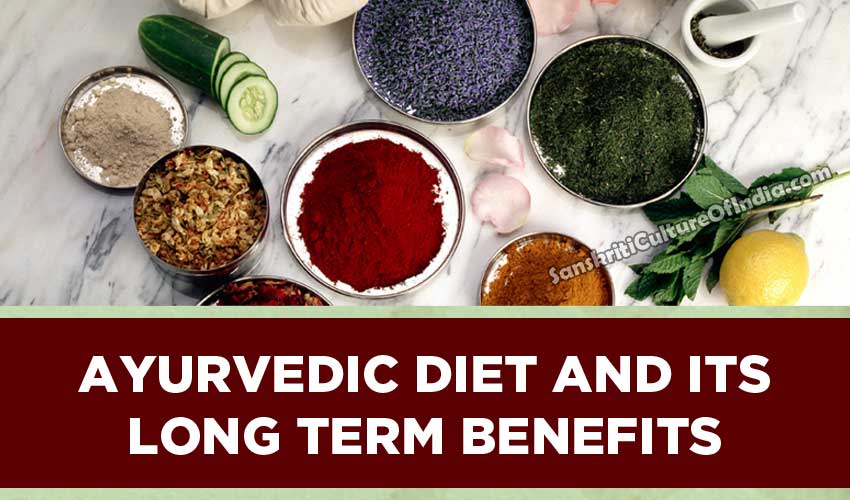
The Ayurvedic diet is one of the key components to finding the perfect balance within oneself, which is the core of Ayurveda. This diet does not have any hard and fast rules or foods to eat; rather every person has to eliminate or incorporate “the six tastes” and the “the six qualities” to find the balance among all the “Doshas”.
In other words, this way of dieting is to some degree personalized to each individual. Once you find the correct balance, there is no end to the benefits it will have in your overall health.
Benefits of Ayurvedic Diet
Cure for all ailments: the principles of Ayurveda state that the beginning of curing all diseases and problems is making changes in the diet of the patient. The combination of these dietary rules with proper supplements is believed to remedy any problem.
Increased life span:
Adhering to this way of eating, you find balance between all tridosha; which means that your body and mind will be performing at its best. It also aids in the generation of new cells, and enhances the survival period of your existing cells. This will help you live a longer and healthier life.
Healthy weight:
Like every other diet, this also helps you lose weight, but in a healthy manner. Many of the weight-loss fads & plans damage your body by burning or depleting all the other nutrients, in addition to the fats. It’s a way to promote eating everything according to the person’s Vikriti. This means that people suffering from anorexia can also use this to become healthier.
Increased energy:
According to Ayurveda, it is believed that the digestive system is the source of energy, from where it is supplied to all the other parts of the body. When you eat, the first effect is on the person’s digestive system. Also, after attaining the balance, all the energy blocks in your body are said to be released; ensuring a better flow of energy.
Improved body functions:
You eat according to what your body needs to perform at its optimum level. Hence, nothing that you eat will be wasted or stored as fat. Adopting this way of eating alone can improve your nervous system, immune system, circulatory system etc; combining it with other Ayurvedic herbs and treatment methods will help your attain ongoing benefits and balance. Your body will benefit at the cellular level, become at peace emotionally, and find yourself far less stressful and more intellectual.
Personalized to your needs:
The diet is based upon the six tastes that are: sour, bitter, astringent, pungent, sweet and salty- and the six food qualities which are; oily/dry, heavy/light and hot/cold. Some qualities and tastes increase kapha, vata or pitta (the three doshas); while some work on decreasing them. Every person’s diet plan varies according to his or her prakriti. Also, you have the freedom to choose any food according to the tastes and qualities; making it easier to manage, and allowing a wider selection of foods to choose from.
Reduces Ama:
The term “Ama”, in Ayurvedic treatment, symbolizes toxicity. This works antagonistically with Angi. When Agni burns low, the body lacks the ability to digest food properly; resulting in the production of Ama – toxins- in the body.
The enlightenment of “Agni”:
Agni is the Hindi term for fire. In Ayurvedic practices this term is used for the digestive fire. According to this, Ayurvedic Dietwhen this fire burns deep and strong, your body can digest any food, whether it be according to your diet, and use it in a healthy manner.
These are just some of the benefits you can expect of an Ayurvedic diet; providing of course that if you start yourself down this life-changing road, you follow it through in a proper manner.