IndianSanskriti
A 300-Year-Old Gurdwara In Pakistan Opens Its Doors For The First Time In Nearly 70 Years

A 300-Year-Old Gurdwara In Pakistan Opens Its Doors For The First Time In Nearly 70 Years

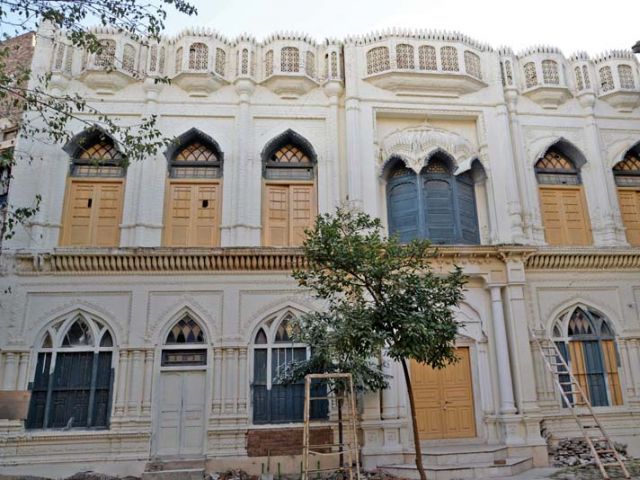
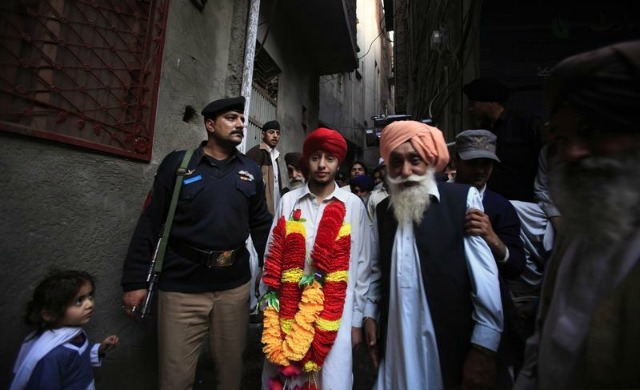
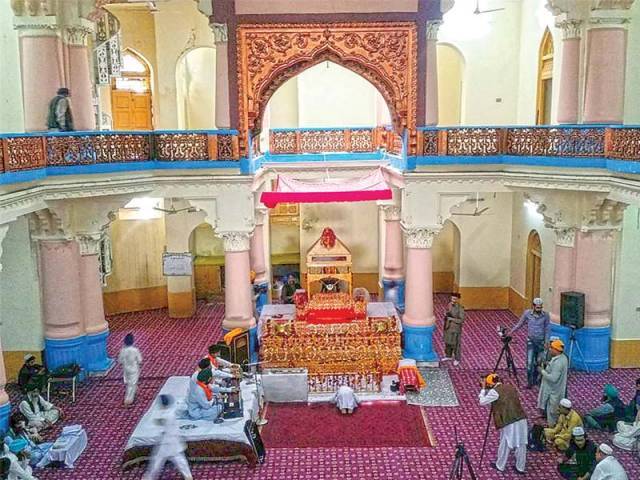
Gurdwara Bhai Biba Singh in Jogiwara, Peshawar opened its doors for devotees on Wednesday, ahead of the baisakhi festival.

The Gurdwara is believed to have been established at the time of the 10th Sikh guru, Gobind Singh, who passed away in 1708, making this structure at least 300-years-old.

It was for centuries one of the most visited places of worship for Sikhs but has not been used since the partition.

“We have carried out massive renovation work of Gurdwara Bhai Biba Singh and would be pleased if Sikhs from India visit the shrine and pay obeisance,” Siddiq-ul-Farooq , chairman of Evacuee Trust Property Board said,

“The decision to reopen our place of worship has brought us great joy. Before this, we had only two gurdwaras in Peshawar, Gurdwara Johgan Shah in Saddar and another in RA Bazaar. The gurdwara in RA Bazaar mostly remain closed as security forces are deployed there,” Pakistan Sikh Community (PSC) Chairperson Radesh Singh Tony told The Express Tribune.

Even though many parts of Pakistan including Punjab and Sindh had a thriving Sikh population before 1947, a majority of them migrated to the Indian side following the partition.

According to a 2006 estimate there are around 20,000 Sikhs in Pakistan.
 

A 300-Year-Old Gurdwara In Pakistan Opens Its Doors For The First Time In Nearly 70 Years

A 300-Year-Old Gurdwara In Pakistan Opens Its Doors For The First Time In Nearly 70 Years

A 300-Year-Old Gurdwara In Pakistan Opens Its Doors For The First Time In Nearly 70 Years

You may also like

Search the website

Like us on Facebook

Get daily updates via Email

Enter your email address:

Recent Posts

Purushottam Maas — The Month No Deity Would Claim, and the Lord Who Made It Supreme

Every month of the Hindu calendar has a lord — except the rare thirteenth, the Adhika Maas, born an orphan and shunned as the “impure month.” The Puranas tell how this rejected month went in grief to Bhagavan Vishnu, who claimed it, gave it His own name — Purushottam — and made it the most fruitful month of all. The origin story, the teaching, and what it means for Purushottam Maas 2026 (May 17 – June 14).

Padmini Ekadashi 2026 — The Ekadashi Even the Devas Descend to Keep

Padmini Ekadashi 2026 — The Ekadashi Even the Devas Descend to Keep

The rarest Ekadashi of the entire Hindu calendar is three days away. The Padma Purana preserves a conversation between Bhagavan Krishna and Yudhishthira about a single Ekadashi the great Rishis spend lifetimes waiting for — Padmini. The Vrat Katha of Queen Padmini of Mahishmati, the lotus teaching, and why May 27, 2026 is the morning Vaishnavas across Bharata are preparing for.

Varada Chaturthi 2026 — The Rare Ganesha Day of Purushottam Maas

Varada Chaturthi 2026 — The Rare Ganesha Day of Purushottam Maas

Once every 2.5–3 years — when the rare 13th month of Adhika Maas opens — a thirteenth Vinayaka Chaturthi appears. The Mudgala Purana calls it Varada Chaturthi, the “boon-giving” Chaturthi, and holds it as the most fruit-bearing Ganesha day of the entire calendar. Today, Wednesday May 20, 2026, is that day.

Padmini Ekadashi 2026 — The Rare Ekadashi That Comes Only in Purushottam Maas

Padmini Ekadashi 2026 — The Rare Ekadashi That Comes Only in Purushottam Maas

Padmini Ekadashi 2026 falls on Wednesday, May 27 — the Shukla Paksha Ekadashi of Adhika Maas, the rarest Ekadashi in the entire Hindu calendar (it appears only every 2.5–3 years). The Padma Purana conversation between Bhagavan Krishna and Yudhishthira, the Vrat Katha of Queen Padmini, complete vrat vidhi with jagrana, mantras, and the lotus symbolism that gives the Ekadashi its name.

Ganga Dussehra 2026 — The Day Maa Ganga Came Down to Bhagiratha

Ganga Dussehra falls on Monday, May 25, 2026 — commemorating the day Maa Ganga descended from Vaikuntha to the earth through the millennia-long tapasya of King Bhagiratha. The full account from the Valmiki Ramayana, snan vidhi, dana traditions, mantras, and the teaching of sustained sincerity.

css.php