In Mahabharat, the blind King Dhritarashtra and his wife Gandhari had 1 daughter named Dushala and 100 sons who were all killed in the epic battle. They were:
| Duryodhanan | Chithran | Chithrakundalan | Sadaasuvaak | Bheemavikran |
| Dussaasanan | Upachithran | Bheemavegan | Ugrasravas | Dhanurdharan |
| Dussahan | Chithraakshan | Bheemabelan | Ugrasenan | Veerabaahu |
| Dussalan | Chaaruchithran | Vaalaky | Senaany | Alolupan |
| Jalagandhan | Saraasanan | Belavardhanan | Dushparaajan | Abhayan |
| Saman | Durmadan | Ugraayudhan | Aparaajithan | Dhridhakarmaavu |
| Sahan | Durvigaahan | Sushenan | Kundhasaai | Dhridharathaasrayan |
| Vindhan | Vivilsu | Kundhaadharan | Visaalaakshan | Anaadhrushyan |
| Anuvindhan | Vikatinandan | Mahodaran | Duraadharan | Kundhabhedy |
| Durdharshan | Oornanaabhan | Chithraayudhan | Dridhahasthan | Viraavy |
| Subaahu | Sunaabhan | Nishamgy | Suhasthan | Pramadhan |
| Dushpradharshan | Nandan | Paasy | Vaathavegan | Amapramaadhy |
| Durmarshanan | Upanandan | Vrindaarakan | Suvarchan | Deerkharoman |
| Durmukhan | Chithrabaanan | Dridhavarman | Aadithyakethu | Suveeryavaan |
| Dushkarnan | Chithravarman | Dridhakshathran | Bahwaasy | Dheerkhabaahu |
| Karnan | Suvarman | Somakeerthy | Naagadathan | Sujaathan |
| Vikarnan | Durvimochan | Anthudaran | Ugrasaai | Kaanchanadhwajan |
| Salan | Ayobaahu | Dridhasandhan | Kavachy | Kundhaasy |
| Sathwan | Mahabaahu | Jaraasandhan | Kradhanan | Virajass |
| Sulochanan | Chithraamgan | Sathyasandhan | Kundhy | Yuyulssu |
Many years passed after the death of the Kauravas and Dhritarashtra, Gandhari and Kunti grew old. Tired of the palace, they longed for solace in the forest and made their wish known to Yudhisthira and others who were reluctant to see them go but finally relented.
Maharishi Ved Vyas, upon hearing this took the three to his forest dwelling where they lived peacefully for a while.
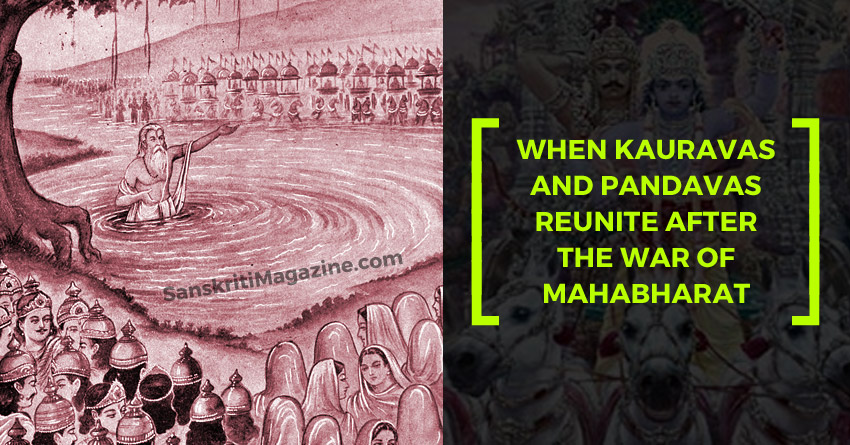
After a while, Dhritarashtra, Gandhari and Kunti found themselves feeling depressed and longing to see their dead children one more time. Ved Vyas sent word for the Pandavas to be present for the occasion and upon their arrival gathered everyone at the banks of Ganga River.
Towards midnight, Ved Vyas stood in the river and called out the names of the dead one by one. The dead appeared one by one – on one side stood Duryodhana and his 99 brothers while on the other side stood Karna, Abhimanyu, all relatives and friends who had died in the battle. All enmities were forgotten, everyone embraced each other and they all felt great joy beyond comprehension.
The night of gathering seemed to last but a few minutes and when the morning came, those who had come through the barrier between the two worlds ended up going back into the mist that enshrouds them.
Putradarsana Parva
He who knows himself attains the highest understanding and becomes freed from error,
All creatures appear from an invisible state, and once more disappear into invisibleness.He enjoys, or endures, the fruits of all his act, where he does them,
If the act be a mental one, its consequences are enjoyed, or endured, mentally;
If it is done with the body, its consequences are to be enjoyed, or endured, in the body.—Vaisampayana, Ashramvasika Parva, Mahabharata Book xv.34