Editorial by Mohanji
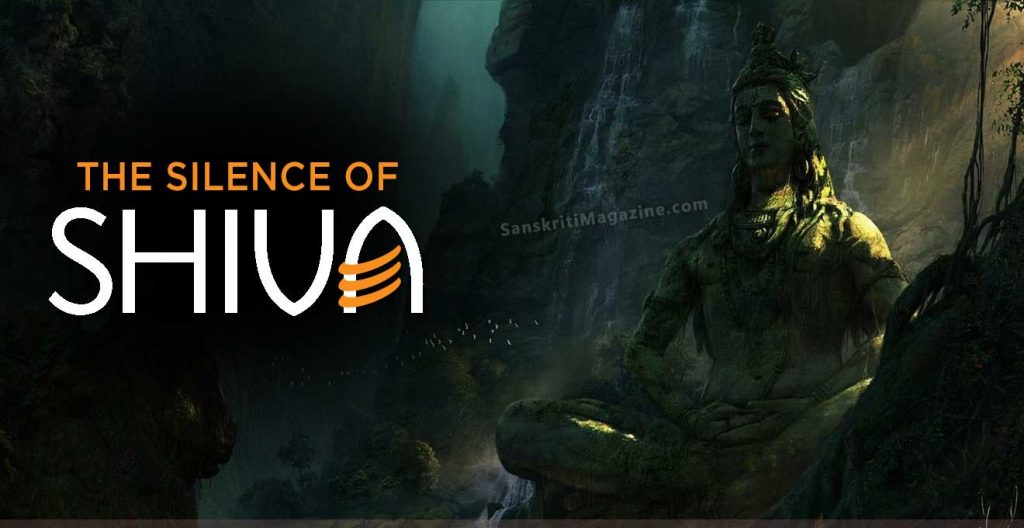
 Shiva is Supreme Consciousness. Shiva is formless, vaster than the whole manifested universe. The only form that can possibly represent this fathomless one is the Shivalinga. The whole universe has come out of that Supreme which is brighter than a million suns. This formless, pure brightness is the aspiration of all forms of the universe.
And all are connected to it all the time, because all exist in that vast consciousness. Supreme Consciousness is silent witness to all of creation as well as the constant dissolution of all creation. Like waves come out of the ocean and merge back into it, creations emerge from the Supreme Consciousness and dissolve back into it time and again. Shiva is silence, and it takes deeper avenues of silence to reach the silence of Shiva.
Sounds have come out of silence and all sounds dissolve back into the silence of Shiva. Every seeker aspires to dive and dissolve into this silence which takes them beyond duality into the absolute bliss of silence. The Yoga Sutras define the layers of this silence, which are broadly classified from the grossest aspect of the mind dwelling in duality, to layers of detachment from external objects and internal responders that make noises in the mind.
Thoughts are the noise of the mind. External materials and objects trigger the already inherent internal responders or frequencies inside as emotions, and they lead to sounds in the mind. The substratum consists of vasana, inclinations, and vayu, prana or breath. They are interconnected. One can influence the other.
Yogis start their practice on these aspects and regulate their flow of thoughts. Thus, they dive deeper into the layers of silence. At the second stage, detachment from sounds is inevitable, yet without compulsive response, it is experienced. At the third stage, thoughts leave boundaries of the mind and start getting detached, as thoughts cannot make any impact inside, anymore. At the fourth stage, thoughts die a natural death and so does the mind. When thoughts do not exist, the mind has no pillars. This is the stage of no return.
The yogi has no more worries of slipping back into the quagmire of thoughts and emotions. The fifth state is the stage of detachment from the body, and the sixth stage has no feeling of the body — the state of an Avadhoota, one who has already found his place in the silence of Shiva. At the seventh state, it is just the subtle form waiting to become the ocean of silence. And as that state is not bound by time, it can exist in that state as long as it takes. Then the drop becomes the ocean, and the seeker becomes the sought. This is the cycle of evolution of silence into pure merger. When the mind becomes a witness to the body and activities, the karmic pressure reduces.
When a shift happens to the consciousness that operates in three states — waking, dream and deep sleep — the yogi becomes a witness to both mind and body. When he goes beyond the operating consciousness into the soul aspect, which is same as God aspect, he becomes a witness to even his consciousness. In that level of witnesshood, there is nothing inside or outside. Everything becomes one huge existence called Shiva. No name, form or identification matters in that state.
Shiva is a state. The state of perfect detachment, represented by his eternal silence. Yogis have given various attributes to Shiva as being fond of cremation grounds, wearing ash on the body, carrying a trident, drum, so on and so forth. These are all connected to dissolution. Ash of the funeral pyre is a reminder that when a person sees the truth beyond his ego identification, he is pure ash. Shiva wears that ash on his body as a reminder that our existence eventually returns to dissolution. ■