IndianSanskriti
the-importance-of-light

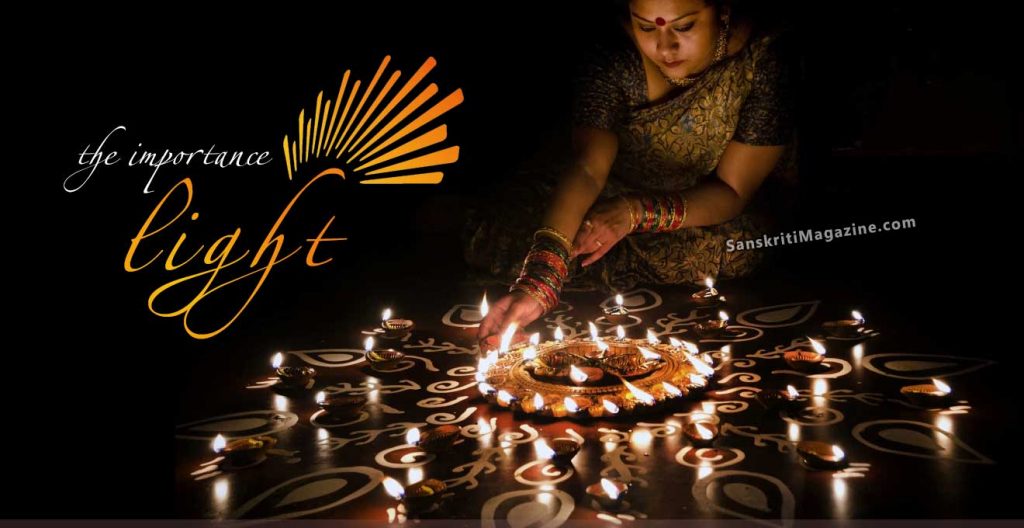
The importance of light

There was a farmer in a village who had two daughters. One of them got married locally and another was married to a Sozian (a man form Chola country) in a nearby town. The eldest one who was married locally lost her husband and father in course of time. She had no issue. She made her living by working in the paddy fields. She had an unusual habit of consuming a large quantity of food i.e two measures of rice every day. Actually, ten people can eat in two measures of rice. (A Tamil measure is bigger than one litre). She was very shy and so she did not tell anyone about it and never sought a reason for it.

One day the eldest one felt sick. Sozian’s wife visited her elder sister. It was getting darker and the sun had set. The eldest one started cooking by adding an extra half a measure because of her younger sister’s visit.

Two things surprised her younger sister. Firstly, two and half measures of rice for two people! Secondly, cooking in a pitch dark place. She slowly spoke to her elder sister. She asked why she was cooking in a pitch-dark place and why she cook for ten to twelve people. Her elder sister answered her saying that she had no money to buy oil and more over she was eating two measures of rice every day and she did not know why.

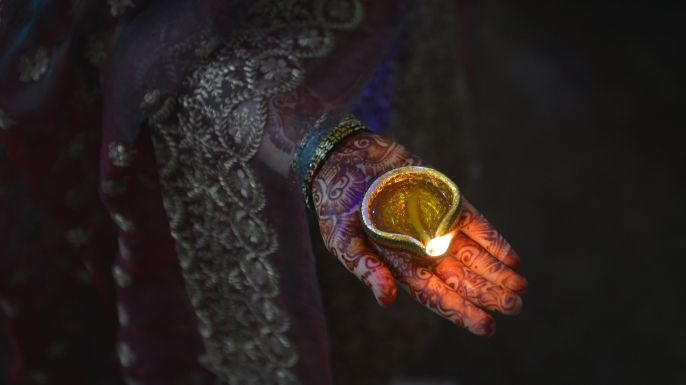
Then her younger sister insisted she must go and get some oil for the lamp, otherwise she could not stay there for night. At last she went out and got some oil for half a measure of rice and lighted the lamp and finished the cooking. When both of them felt contented after eating they saw three fourth of their rice was still in the cooking pot. While both of them were wondering how was it that after eating little they felt full in stomach.
hindu light

At that time they heard a loud noise. One voice asked the other voice, ‘Oh Sokka, do we get food or not tonight?’ The other voice replied ‘Oh, No, Sozian came and spoiled it’. Both the sisters were puzzled by that noise because no one else was in that house. When they gathered enough courage, they asked who they were. One voice replied that he was a ghost and came to this house every day to take the food because it was dark. Today the Sozian made her to light the lamp and so they were running away from the place. Now the younger one reasoned out that was why her elder sister consumed two measures of rice every day. When the ghosts went out of the house the eldest daughter returned to her normal eating schedule.


You may also like

Search the website

Like us on Facebook

Get daily updates via Email

Enter your email address:

Recent Posts

Jamai Shashthi 2026 — The Story of Maa Shashthi, the Cat, and the Wife Who Was Forgiven

Jamai Shashthi 2026 — The Story of Maa Shashthi, the Cat, and the Wife Who Was Forgiven

On Saturday, June 20, 2026, Bengali households across Bharata will welcome their married daughters and sons-in-law home for the legendary jamai-aador feast and perform the Shashthi Vrata. But behind the warmth lies a story most Bengalis know by heart and most non-Bengalis have never heard — the wife who stole the hilsa, blamed the cat, lost six sons to Maa Shashthi’s wrath, and was finally forgiven. The Vrat Katha, the vidhi, the mantras, and the deeper teaching.

Vat Purnima 2026 — The Wife Who Argued Yama Into Returning Her Husband’s Life

On Monday, June 29, 2026, women across Maharashtra, Gujarat, and southern Bharata will tie red thread around banyan trees and hear the story of Savitri — the wife who walked behind Yamaraja Himself when He came for her husband, and out-argued the Lord of Dharma into returning Satyavan’s life. The Mahabharata’s Pativrata Mahatmya Parva, the vrat vidhi, and why the banyan witnessed everything.

Nija Jyeshtha 2026 — The Real Jyeshtha Begins, and the Calendar Resumes

Nija Jyeshtha 2026 — The Real Jyeshtha Begins, and the Calendar Resumes

With Adhik Maas now closed on the Somvati Amavasya of June 15, the long-postponed festivals of Jyeshtha return — Vat Purnima (June 29, the Savitri-Yamaraja katha), Jamai Shashthi (June 20, the Bengali festival of Maa Shashthi), Sankashti Chaturthi (June 28), Yogini Ekadashi (July 10), and Devshayani Ekadashi (July 16, opening the four-month Chaturmas of Bhagavan Vishnu’s yoga-nidra). A guide to what the next four weeks hold and what the household that kept Purushottam Maas now carries forward.

The Closing of Purushottam Maas 2026 — Adhik Amavasya and the Sealing of the Month-Long Vrat

On Monday, June 15, 2026 — a rare Somvati Amavasya — the intercalary month that bears Bhagavan Vishnu’s own name comes to its close. The Acharyas teach that a vrat is not measured by its duration but by its closing. Here are the Padma Purana’s instructions for sealing the month-long Purushottam Maas vrat: the morning snan, the closing puja with the Vishnu Sahasranama, the day of dana, the Somvati Amavasya gift, and the final sarva-arpana — the offering of all merit at the feet of the Lord.

Parama Ekadashi 2026 — The Other Rare Ekadashi of Purushottam Maas, and the Poor Brahmin Who Kept It

Two weeks ago, Vaishnavas across Bharata kept Padmini Ekadashi — the rare Shukla Paksha Ekadashi of Adhik Maas. Padmini has a twin. On Thursday, June 11, 2026, the Krishna Paksha Ekadashi of the same intercalary month appears: Parama — the Supreme Ekadashi. The Padma Purana names it the rarer and more secret of the two, and reserves it for those whose poverty or sorrow has refused to lift in spite of every other vrat already kept. The story of Sumedha and Pavitra of Kampilya, the rishi Kaundinya, the prince sent by Bhagavan Brahma — and the vidhi for the day.

css.php