इन्द्रियाणां विचरतां विषयेष्वपहारिषु ।
संयमे यत्नमातिष्ठेत् विद्वान् यन्तेव वाजिनां॥
इन्द्रियाणां प्रसंगेन दोषमृच्छत्यसंशयं।
संनियम्य तु तानेव ततः सिद्धिं नियच्छति ॥
न जातु कामाः कामानामुपभोगेन शाम्यति ।
हविषा कृष्णवर्त्मेव भूय एवाभिवर्धते ॥
वेदास्त्यागश्च यज्ञाश्च नियमाश्च तपांसि च ।
न विप्रदुष्टभावस्य सिद्धिं यच्छन्ति कर्हिचित् ॥
MEANING:
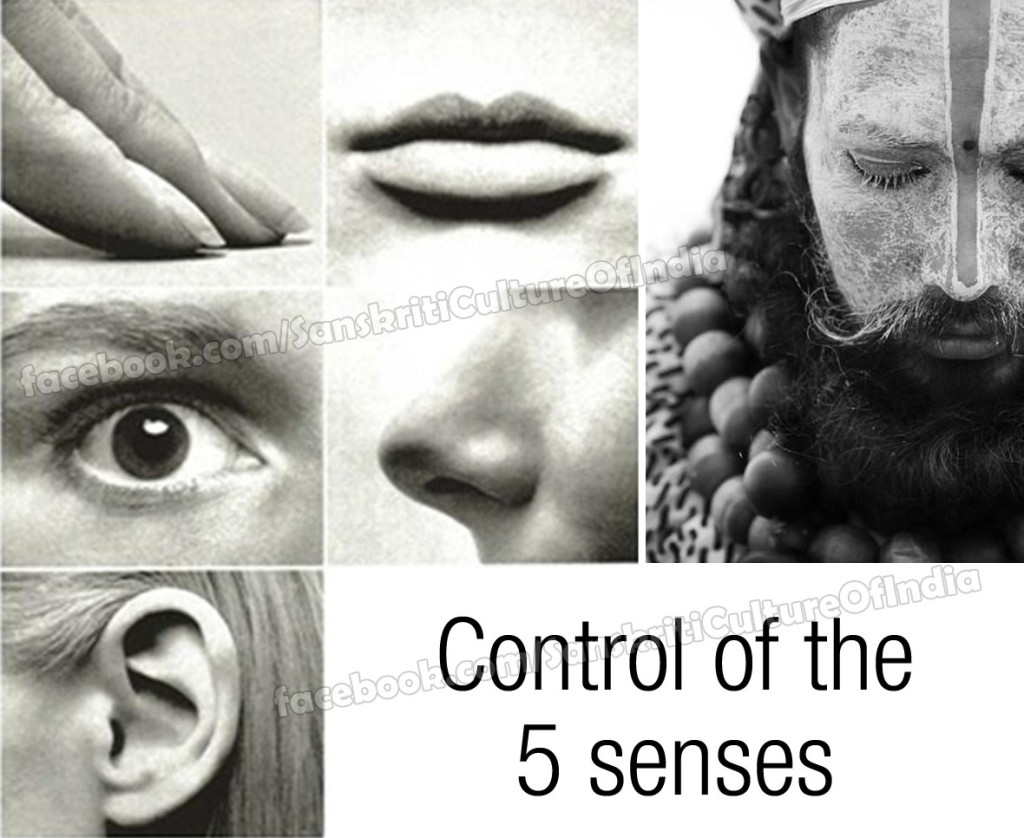
The five senses chase the objects of their desire which powerfully attract them. Wise men should endeavor to keep them under control like a horseman controls his horses.
There is no doubt that, ultimately, only something bad comes out of the attachment of the senses to their objects. By controlling the very same senses one is able to achieve the ultimate goal of one’s life.
Desire itself never subsides by enjoyment of the objects of desire. It only flares up again like a fire into which ghee is poured while performing havan.
Study of vedas, sacrifices, performance of yagnas, niyamas (ahimsa, truth in thought word and deed, non-stealing, non-acceptance of gifts etc) and penances cannot lead one to the ultimate goal of one’s life if the mind is polluted by uncontrolled desires.
~ Manusmriti, on control of the senses