IndianSanskriti
Sri-Vellai-Pillaiyar-or-Swetha-Vinayakar-Temple

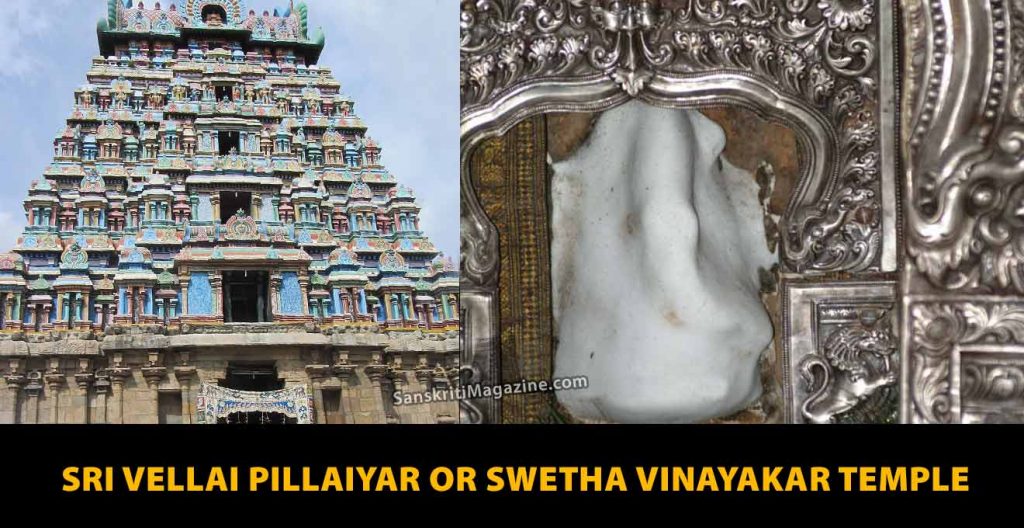
Sri Vellai Pillaiyar or Swetha Vinayakar Temple

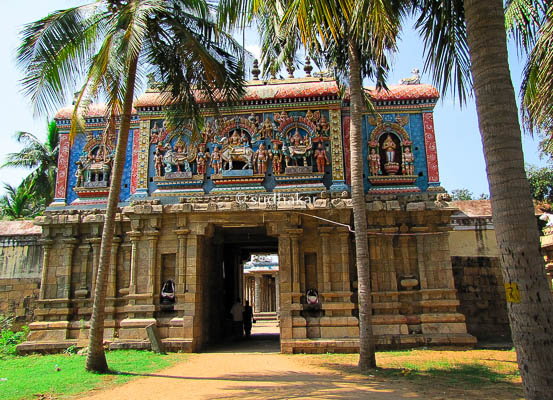
Sri Vellai Pillaiyar (Swetha Vinayakar or Nuraippillaiyaar) Temple is situated at Thiruvalanchuzhi, a village located just 6 kms near Kumbakonam, Tamilnadu, India.

Swetha Vinayakar, a white coloured deity of Ganesha is worshipped here. Though this is a temple for Lord Shiva, Swetha Vinayakar is the important deity of Thiruvalanchuzhi.

Legend has it that the Devas, forgot to worship Lord Ganesha before starting to churn the “Milk Ocean” (Ksheera Saagaram). Hence, they were only able to get the Alakala Poison out of it.

Later Indra, the king of Devas realised that, it was because they did not worship Ganesha before starting their mission.

Lord Indra created this deity out of the foam (Kadal Nurai) that was generated from the milky ocean (Ksheera Saagaram) churned by them, in their quest for the celestial nectar Amrudham.

After they worshipped this deity made of foam (Nurai in Tamil), they were able to take out the Amrudham from the Ocean.
As the deity is made of the foam, there is no Abhisheg etc., performed here.

Durvasa Muni is said to have carried out a yajna here, and the Devas who attended it are said to have established several Siva Lingams in this temple.

As the trunk of Lord Ganesha is twisted towards his right hand side, the place is said to have got the name “Thiru Valam Suzhi”.

It is also believed that once Kaveri went back into the earth and people were worried without the existence of holy river. A Rishi by name Heranda Muni went inside the small passage where River Kavery went inside the earth and sacrificed himself.

After this incident, River Kavery came back to the surface near this shrine, and made a complete circle towards the right and hence the village got the name Thiruvalanchuzhi.

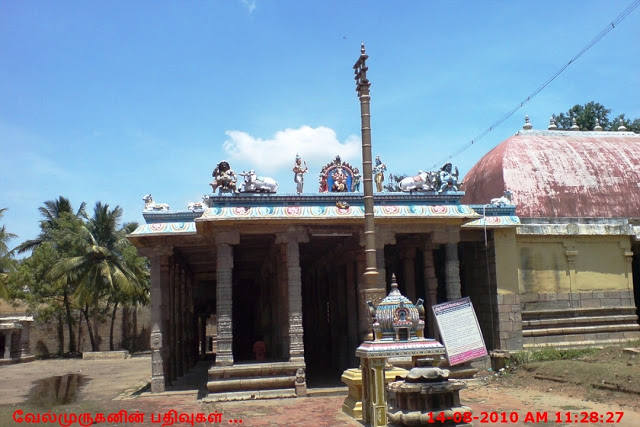
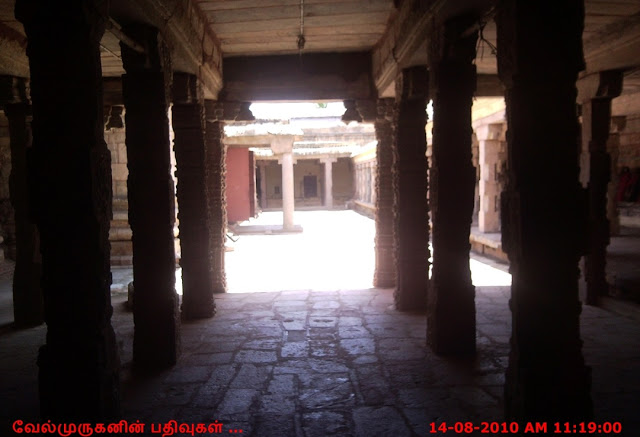
There are several interesting sculptural features in this vast temple. Inscriptions reveal that Raja Raja Cholan had made several endowments here. There are also inscriptions from the period of Parantaka Chola I.

There are lots of quotes in the history about the sculptures of this temple. There is a huge window like structure carved out of a single stone which is facing Lord Ganesha. It is said that we also have to get the Dharshan of Lord Ganesha through this window.

It is said that the ancient sculptors, when they approach the Kings to demonstrate their skills and to get an opportunity to work for the kings, they used to tell the king that except the window of Thiruvalanchuzhi temple, they can do any kind of sculpture.

Located enroute to Swamimalai from Kumbakonam, Lord Ganesha is a feast to watch at Thiruvalanchuzhi.

You may also like

Search the website

Like us on Facebook

Get daily updates via Email

Enter your email address:

Recent Posts

Yogini Ekadashi 2026 — The Yaksha Who Missed the Morning Flowers, and the Ekadashi That Undid His Curse

On Friday, July 10, 2026, the rare Krishna Paksha Ekadashi of Nija Ashadha arrives. The Padma Purana tells the story of Hemamali — the Yaksha gardener of Bhagavan Kubera in Alaka, whose single morning of distraction with his wife Vishalakshi cost him his form, his wife, and his celestial city. Cursed to wander the earth of Bharata as a leper for a long time, he was at last shown the way back by Sage Markandeya — a single sincere keeping of Yogini Ekadashi.

Jamai Shashthi 2026 — The Story of Maa Shashthi, the Cat, and the Wife Who Was Forgiven

Jamai Shashthi 2026 — The Story of Maa Shashthi, the Cat, and the Wife Who Was Forgiven

On Saturday, June 20, 2026, Bengali households across Bharata will welcome their married daughters and sons-in-law home for the legendary jamai-aador feast and perform the Shashthi Vrata. But behind the warmth lies a story most Bengalis know by heart and most non-Bengalis have never heard — the wife who stole the hilsa, blamed the cat, lost six sons to Maa Shashthi’s wrath, and was finally forgiven. The Vrat Katha, the vidhi, the mantras, and the deeper teaching.

Vat Purnima 2026 — The Wife Who Argued Yama Into Returning Her Husband’s Life

On Monday, June 29, 2026, women across Maharashtra, Gujarat, and southern Bharata will tie red thread around banyan trees and hear the story of Savitri — the wife who walked behind Yamaraja Himself when He came for her husband, and out-argued the Lord of Dharma into returning Satyavan’s life. The Mahabharata’s Pativrata Mahatmya Parva, the vrat vidhi, and why the banyan witnessed everything.

Nija Jyeshtha 2026 — The Real Jyeshtha Begins, and the Calendar Resumes

Nija Jyeshtha 2026 — The Real Jyeshtha Begins, and the Calendar Resumes

With Adhik Maas now closed on the Somvati Amavasya of June 15, the long-postponed festivals of Jyeshtha return — Vat Purnima (June 29, the Savitri-Yamaraja katha), Jamai Shashthi (June 20, the Bengali festival of Maa Shashthi), Sankashti Chaturthi (June 28), Yogini Ekadashi (July 10), and Devshayani Ekadashi (July 16, opening the four-month Chaturmas of Bhagavan Vishnu’s yoga-nidra). A guide to what the next four weeks hold and what the household that kept Purushottam Maas now carries forward.

The Closing of Purushottam Maas 2026 — Adhik Amavasya and the Sealing of the Month-Long Vrat

On Monday, June 15, 2026 — a rare Somvati Amavasya — the intercalary month that bears Bhagavan Vishnu’s own name comes to its close. The Acharyas teach that a vrat is not measured by its duration but by its closing. Here are the Padma Purana’s instructions for sealing the month-long Purushottam Maas vrat: the morning snan, the closing puja with the Vishnu Sahasranama, the day of dana, the Somvati Amavasya gift, and the final sarva-arpana — the offering of all merit at the feet of the Lord.

css.php