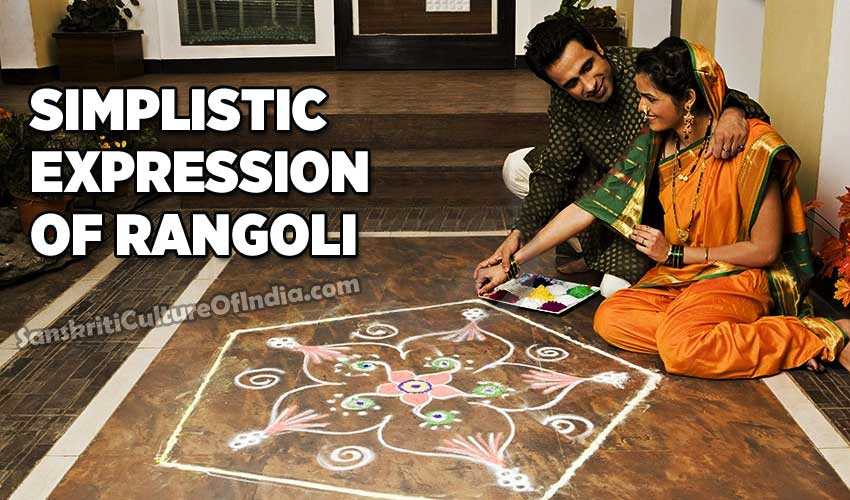
One of the most prominent features in Indian homes is rangoli, which is elaborately drawn in front of the main door. Apart from the immense aesthetic appeal which they add to the home, rangolis have a lot of spiritual and scientific significance. In India, Rangoli is not something which is drawn only for special occasions. It is an everyday ritual, meant for a much greater purpose. It is hard to believe that those twisted lines, the combination of geometric shapes, lines, dots and various other pictures reflect some of the most profound truths of the universe. Believe it or not, rangoli signifies all these and much more.
Universal coexistence
Indian traditions are meant to bring harmony among all elements of nature. Humans, being part of the universe, are supposed to co-exist with all other creatures on earth. Rangoli is a small step towards achieving this sort of natural synchronization. Traditionally, the white powder which is used to draw lines and dots is nothing but powdered rice. This serves as a way of inviting little ants, birds and insects to a feast and symbolizes acceptance and coexistence among different life forms. There is another interesting and a more practical use of using rice powder. With the little insects and bugs satisfied with food at the door, they don’t enter the house. If you browse through pictures Indian homes of the olden days, you can find rangoli not just at the main door, but at every door of the house. Now, you know why!
Screen out negativity
The second brilliant significance of rangoli is that it acts as an energy filter. These beautiful designs are the first things that a catch the attention of visitors to your home. Humans are built in a very unique way. When you sense anything good, it creates positive energy in your body and diminishes the dominance of negativity. Rangoli ensure that when guests visit your home, they come with more positivity than negativity. This enhances the well being of your house. So, make an effort to make the beautiful rangolis every day. The better you make, more will be the positive energy that enters your house.
Internal peace and harmony
Rangolis do not just encourage harmony among different elements of the universe. They encourage peace and harmony within you. How is that? Symmetry is the answer. Unfortunately, modern rangoli designs dwell more on creativity than on enforcing the spiritual importance of this art form. Traditional rangoli designs are always symmetric and symmetry has enormous influence on the mind. Every element of nature and the universe dwells on symmetry, including the movement of planets and the Milky Way. Symmetric patterns are also more pleasing to the eye, especially a circle which is characterized by a smooth surface without sharp edges. When you view such proportionate pictures, the energies in your mind and bodies are soothed and you experience peace. So, it is no wonder that rangoli is associated with well being and prosperity. The symmetry also indicates spiritual balance.
The prominent use of whites in these designs also has a very special significance. White is the color you get when you blend in all other colors. This phenomenon can be seen when white light passes through a prism and splits into a brilliant spectrum. Using white in rangoli is another is for harmony and unity. So, a traditional rangoli, at the entrance of your home, is symbolic of cosmic symmetry.
Physical significance
Rangoli is one of the first things that the woman of the house makes early in the morning. Rangoli is never made on dirty places or without bathing, because it is considered sacred. So, the whole ritual of making a rangoli, beginning from the woman bathing early in the morning, cleaning the front of the house, sprinkling water and making the rangoli is extremely purifying for the mind as well as the body. Also, a woman, has to endure stress and hassles of running a household throughout the day. When she begins her day by making a rangoli, she experiences spiritual and emotional peace and balance, which increases her efficiency in running the household.
On the religious front, Goddess Lakshmi, who is considered to be the Goddess of wealth and prosperity, is said to be attracted by colorful rangolis. Considering the mammoth benefits of rangoli on a household, it is no wonder that wealth and prosperity follow. So, yes, Goddess Lakshmi really blesses residents of the home.
Rangoli is the energy center of a home and a way of spiritual realization which transcends the boundaries of religion, caste, sect or creed. This Ganesh Chathurthi, make a beautiful colorful symmetric rangoli at home. Goddess Lakshmi will definitely come and if you do it right, probably Lord Ganesha will follow too!