Many of the Hindu deities have their own animal symbols in the guise of mounts or vehicles called Vahanas. Depicted as either an animal or bird, these vahanas are a constant companion of their corresponding deities who are rarely portrayed without them.
The representation of these animals alongside a divine force may seem odd or outright strange to those who are not familiar with the Hindu Pantheons. However, there is a deeper meaning to these animal renditions than just pretty pictures or superstition.
Below are some vahanas and their symbolism in Hinduism:
Ganesha:
Known as the “Obstacle Remover”, Ganesha is the first deity acknowledged in any Hindu prayers and rites. His vehicle represents a pesky little rat known for gnawing its way through almost everything. By domesticating this rodent, Ganesha rids of any obstacles that affect our lives.
Shiva:
Known as “The Destroyer”, Shiva is Mahadev, the God of Gods of the Saivite sect, one who wields the power to destroy and to restore; the great ascetic who also represents sensuality. Shiva’s vehicle is Nandi, a bull exemplifying independence, unbridled sexuality along with brute and blind power. These are qualities that only Shiva can help us harness.
Vishnu:
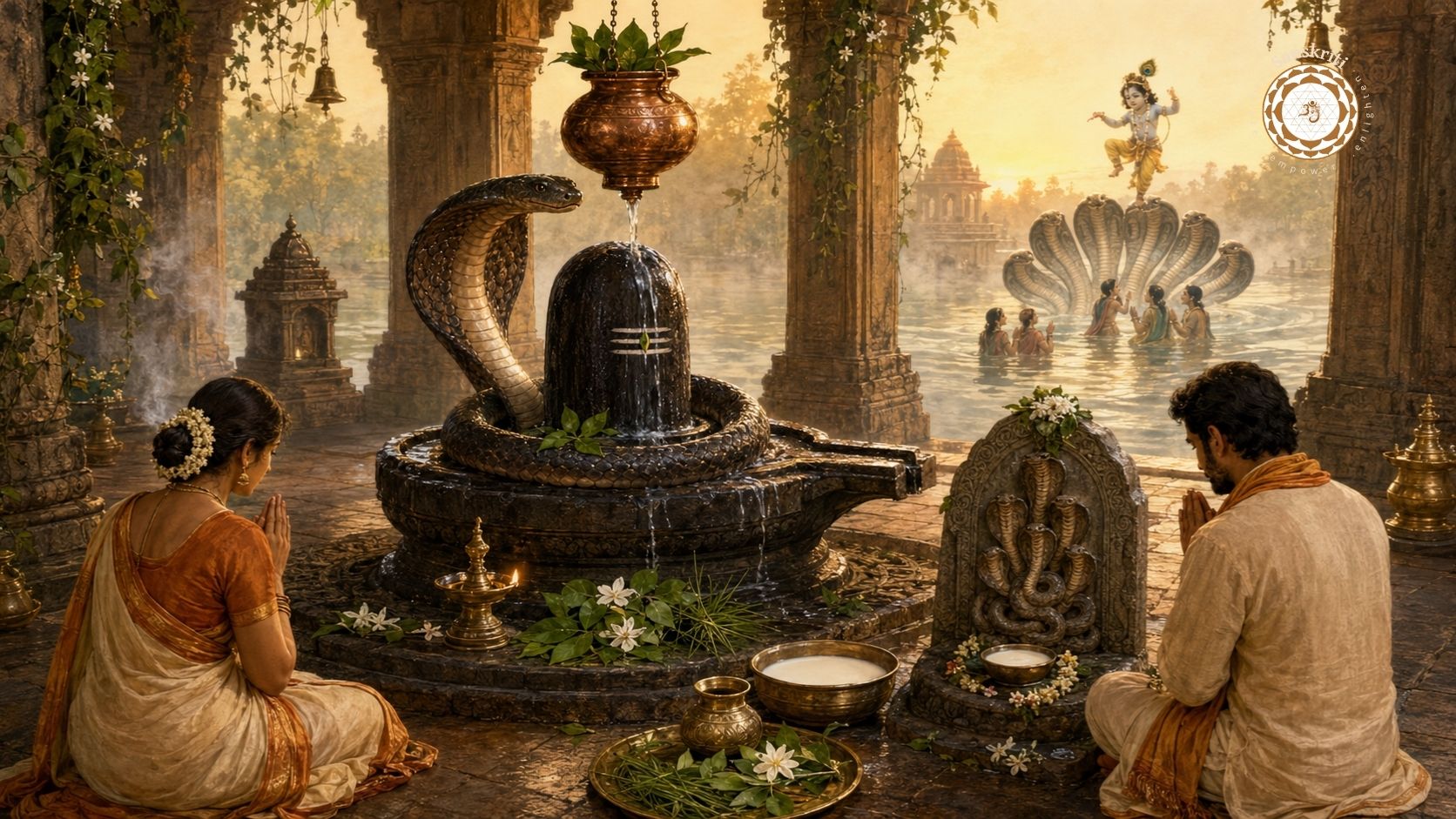
Vishnu is the Preserver of the Universe, the protector of order of things (dharma) and when necessary, he appears on earth in various incarnations to fight evil and maintain cosmic harmony. Vishnu sits on Shesh Nag, the primal serpent representing the desire of consciousness in humankind. Garuda, the hawk is his vehicle which defines mobility and wider vision of things.
Brahma:
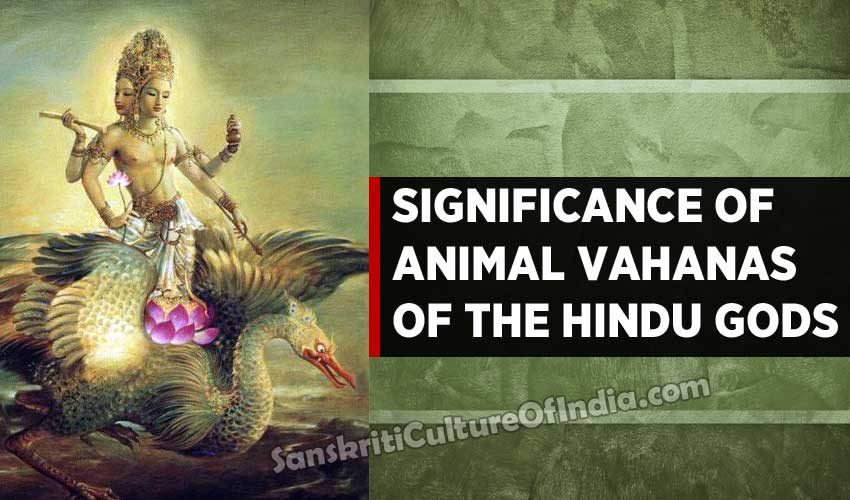
The Creator of the Universe is usually seen carrying the Vedas, a sceptre, a rosary of rudraksha beads and a water pot, constantly reciting the Vedas with his four faces. Brahma’s vehicle is the swan or hamsa as it is called in Sanskrit. The swan is said to have the amazing power of separating milk from water, implying the knowledge to separate the good from the bad in terms of spiritual growth. Hamsa is also linked with the fundamental sound of the universe – the breath of life. Inhalation is said to make the sound “ham” while exhalation is “sa”. It is the very fundamental exercise of the yogi.
Durga:
Also called the “Divine Mother”, Shiva’s wife Durga is the embodiment of Shaki, the creative cosmic energy, the Mother of all beings in this world and beyond. Durga’s vehicle is the lion, the mastery of which denotes strength and fearlessness while destroying demons like anger, pride and mercilessness.
Lakshmi:
The Goddess of Wealth represents material wealth, happiness and prosperity. She is Mother Earth, the goddess of fortune who bestows unlimited bounty to her devotees. Lakshmi’s vehicle is the owl, a bird which can only see in the darkness but is blind during the day. By controlling the owl, Lakshmi teaches us to look beyond the glamour of worldly possessions and seek inner wisdom while keeping ignorance under her control.
Saraswati:
One of the most important deities, the Goddess of Wisdom governs knowledge, art, music and learning. Saraswati’s vehicle is the swan, symbolizing purity and realization of the highest reality and knowledge. A peacock is also seen seated beside her sometimes and signifies arrogance and pride over its beauty. In this manner, the Goddess asks us to let go of our external appearance and focus on discovering the eternal truth instead.