IndianSanskriti
shani-dev

Significance and Meaning of Fasting on Saturdays

God:

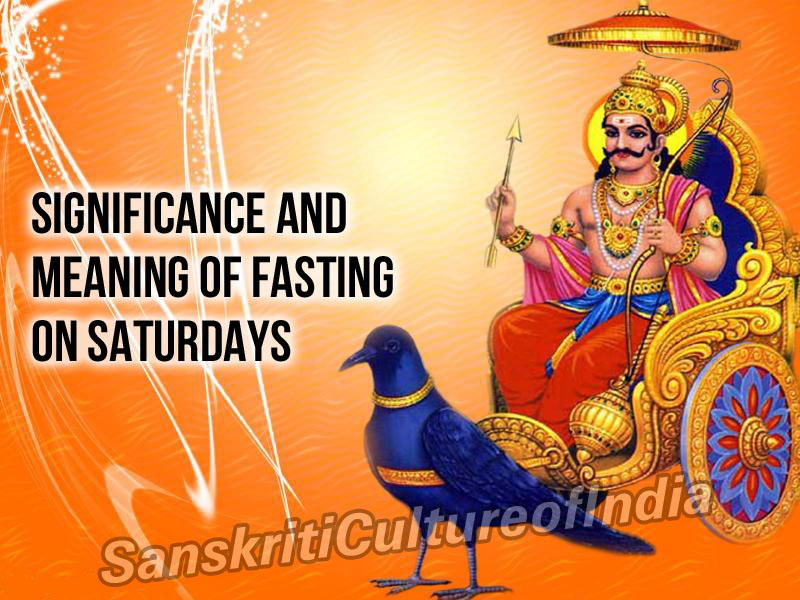
Saturday is dedicated to the fearful god Shani, who is one of the Navagrahas – or nine planets. He is represented as a deity carrying bow and arrows and riding a crow or a vulture.

Ritual:

There are temples exclusively dedicated to god Shani and normally they are painted black. The idol too is black in color, and sometimes made of iron. Devotees observing the Shanivar fast usually visit Shani shrines and offer black-colored items like sesame oil, black clothes, and black grams. After the evening prayers, those devotees take a single meal, which is usually cooked sans salt, prepared using sesame til or black gram or other black colored food items.

Some worship the ‘peepal tree’ (the holy Indian fig) and tie thread around its bark. Shani is said to ward off ill effects, illness and troubles. Shani is so dreaded that many Hindus avoid long journeys on Saturday. Fast is observed by many to avoid the adversities and misfortunes on Shanivar. It is also believed that those who have Lord Hanuman’s blessings are protected from Shani’s wrath. So many people flock to Hanuman temple on Saturday.

Folklore:

Legend has it that Lord Hanuman had rescued Shani from Ravana, the demon king of Lanka, at the time when Hanuman set Lanka ablaze as depicted in the epic Ramayana. Lord Shani had then promised that he would not trouble Lord Hanuman devotees.

Color & Gem:

Blue and black are the preferred colors. Blue gems, such as, blue sapphire, black iron rings made of horse-shoe are worn to ward off Shani.

Celestial Body:

The planet Saturn or Shani rules Saturday.

~ Subhamoy Das
You may also like

Search the website

Like us on Facebook

Get daily updates via Email

Enter your email address:

Recent Posts

Adi Shankaracharya Jayanti 2026 — Advaita Vedanta, Om symbol, and four Amnaya Peethas

Adi Shankaracharya — The Monk Who Reunited Bharata

Shankaracharya Jayanti 2026 — the 1238th birth anniversary of Adi Shankaracharya. His extraordinary life, the Digvijaya, the debate with Mandana Mishra, Advaita Vedanta, the four Amnaya Peethas, and his timeless literary legacy.

Akshaya Tritiya 2026 — royal purple hero banner with Akshaya Patra vessel and Devanagari text

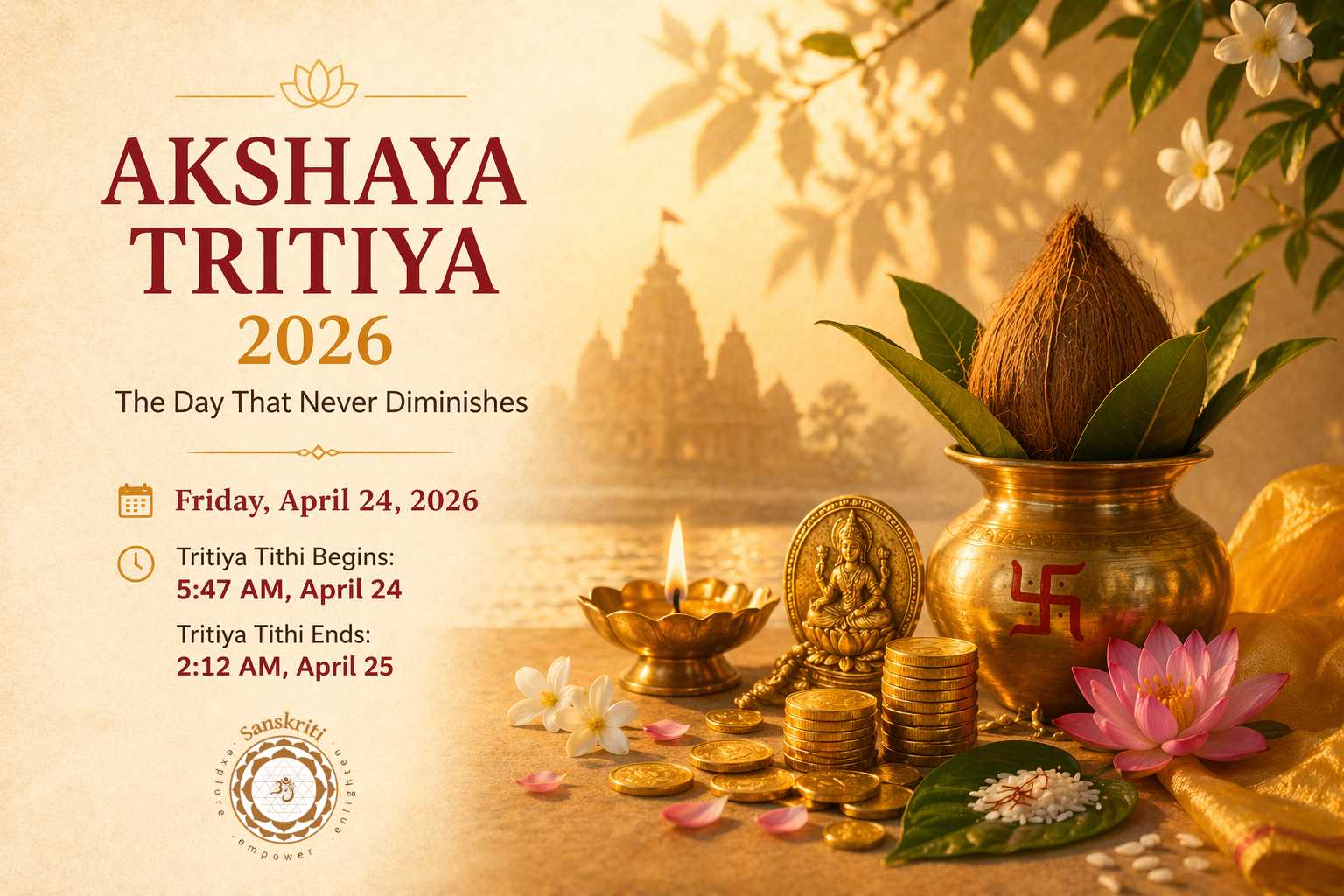
Akshaya Tritiya 2026 — The Day That Never Diminishes

Akshaya Tritiya (April 19, 2026) is one of the most auspicious days in the Vedic calendar — when any act of dharma, dana, or japa yields imperishable merit. Discover the five sacred Puranic events, complete puja vidhi, timings, mantras, and the deeper spiritual teaching beyond gold-buying.

Baisakhi 2026 — Mesha Sankranti Hindu Solar New Year hero banner with rising sun, Om symbol and wheat harvest

Baisakhi 2026 — Harvest, Hope, and the Hindu Solar New Year

Baisakhi 2026 falls on Tuesday, April 14 — the day Bhagavan Surya enters Mesha Rashi at 9:39 AM, marking the Hindu Solar New Year. Discover the sacred science of Mesha Sankranti, the Punya Kaal rituals, and how this one cosmic moment is celebrated across Bharata as Vishu, Puthandu, Pohela Boishakh, Bohag Bihu, and Pana Sankranti.

Varuthini Ekadashi 2026 — sacred vrat guide hero banner with Vishnu Chakra mandala

Varuthini Ekadashi 2026 — The Sacred Vrat That Shields from Sin

Varuthini Ekadashi (April 13, 2026) is one of the most powerful Ekadashi vrats — dedicated to Lord Vamana, it dissolves lifetimes of karmic burden and shields the devoted soul with Bhagavan Vishnu’s protective grace. Complete vrat vidhi, timings, mantra, and the sacred Vrat Katha from the Bhavishya Purana.

css.php