IndianSanskriti
Rohingya-Muslims-Gang-Caught-Selling-Minor-Girls-in-Jammu

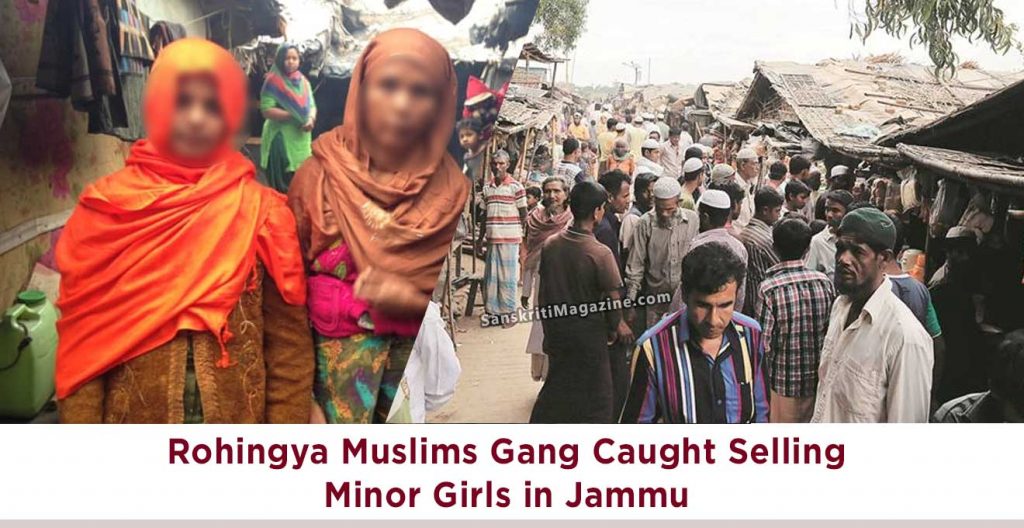
Rohingya Muslims Gang Caught Selling Minor Girls in Jammu

A Rohingya Muslim gang which brought minor girls from Myanmar to sell them off in Jammu has made startling revelations during police investigation. The gang arrives every Friday with the girls after the weekly namaz where they search for their buyers. They have sold many girls in remote districts of Ramban and Kishtwar in J&K state.

Resident of Mallik Market, Narwal, gang leader Noor Gul Ameen, son of Akbar Ali who has now been caught by the police told that he brought the girls from Myanmar to Bharat in the name of getting them jobs. After that he sent them to different locations in the country. Jammu has become a big market of human trafficking for Rohingyas.

Minor girls from Myanmar are firstly brought to the capital New Delhi. Afterwards, they are sent off to Jammu. The girls are sold at merely forty to fifty thousand rupees. Toyba Ghulam Nabi, a Kashmiri woman caught by the police in relation to the case has given vital information to the police. Being a mother of a child, police hasn’t arrested her but is monitoring her activities. Two absconders in the case who are residents of Kashmir have been taken into custody. Help of Delhi police was taken by the police for arresting Kareni Talab, Narwal resident Mohammad Abbas, and Hyderabad resident Mohammad Ayyub.

The rescued Myanmarese minor girls have been handed over to an NGO by the police. NGO’s name has not been revealed for security reasons.

Security threat posed by illegal Rohingya immigrants living in Bharat, and their involvement in various crimes, has been consistently raised by many commentators such as Prof. Hari Om. As per official estimates, some 40,000-50,000 Rohingyas are believed to be living in Bharat, including nearly 7,000-8,000 in the Jammu region. But natives in Jammu believe the Rohingya population is actually larger.

Spate of terror attacks in recent years on Army camps in Jammu such as Nagrota and Sunjwan, highlights the security risk posed by the illegal Rohingya settlements which offer a safe environment for terrorists to blend in. Elimination of a Rohingya terrorist named ‘Chot Burmi’ (Abdur Rehman al Arkani) in Tral in 2016 had established the alarming trend of Rohingyas getting involved in the Islamist jihad raging in Kashmir valley.

Incidentally, around 100 Hindus, dozens of other ethnic minorities, and border guards were massacred in Rakhine state of Myanmar by Rohingya Muslim mobs and ARSA terrorists in August last year, which led to a harsh crackdown on Rohingyas by the Myanmar Army. 8 young Hindu women were abducted and brought to Bangladesh by the Rohingyas and forcefully converted to Islam, before they were rescued by Hindu groups in Bangladesh.

Source

You may also like

Search the website

Like us on Facebook

Get daily updates via Email

Enter your email address:

Recent Posts

Yogini Ekadashi 2026 — The Yaksha Who Missed the Morning Flowers, and the Ekadashi That Undid His Curse

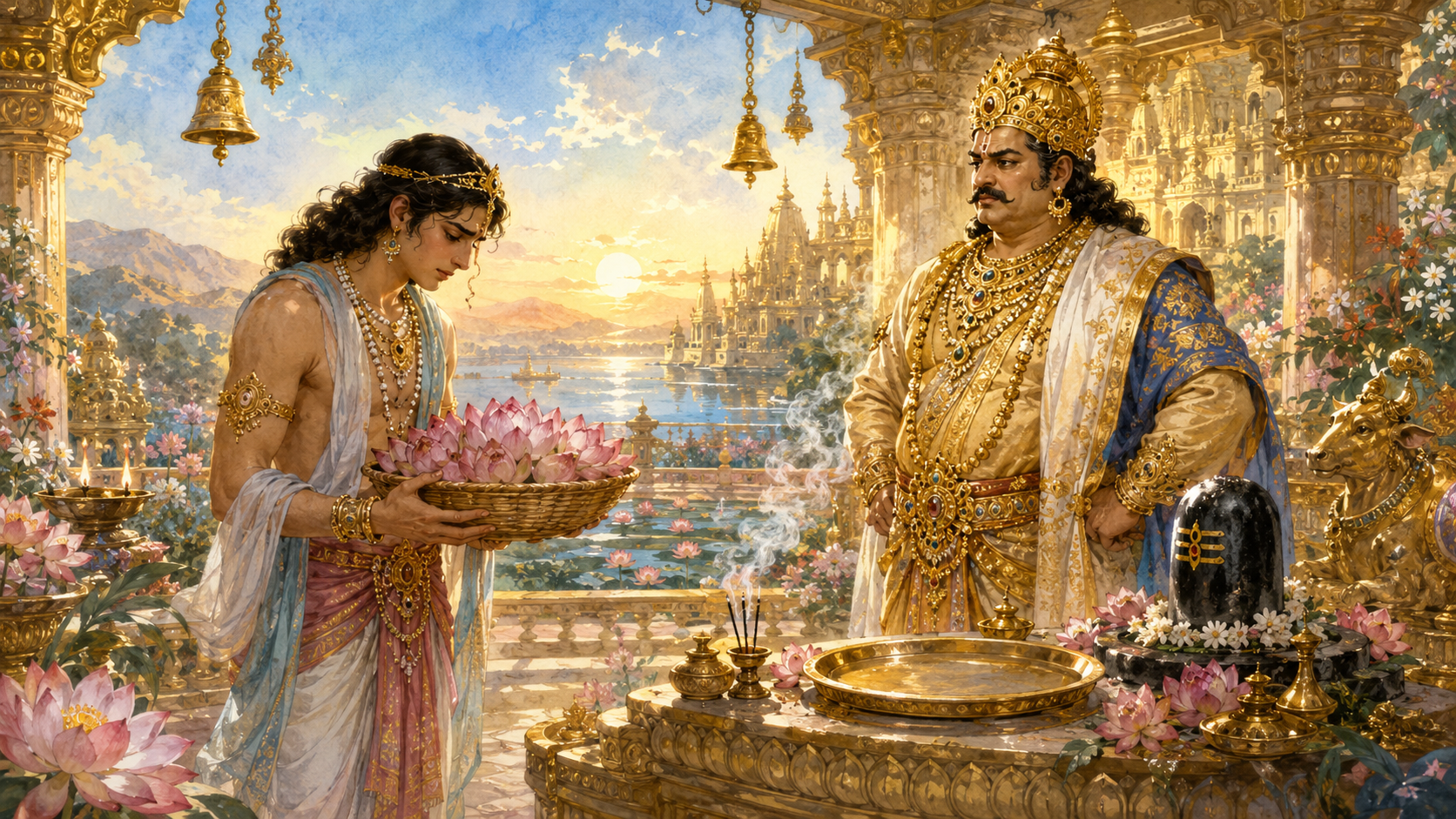
On Friday, July 10, 2026, the rare Krishna Paksha Ekadashi of Nija Ashadha arrives. The Padma Purana tells the story of Hemamali — the Yaksha gardener of Bhagavan Kubera in Alaka, whose single morning of distraction with his wife Vishalakshi cost him his form, his wife, and his celestial city. Cursed to wander the earth of Bharata as a leper for a long time, he was at last shown the way back by Sage Markandeya — a single sincere keeping of Yogini Ekadashi.

Jamai Shashthi 2026 — The Story of Maa Shashthi, the Cat, and the Wife Who Was Forgiven

Jamai Shashthi 2026 — The Story of Maa Shashthi, the Cat, and the Wife Who Was Forgiven

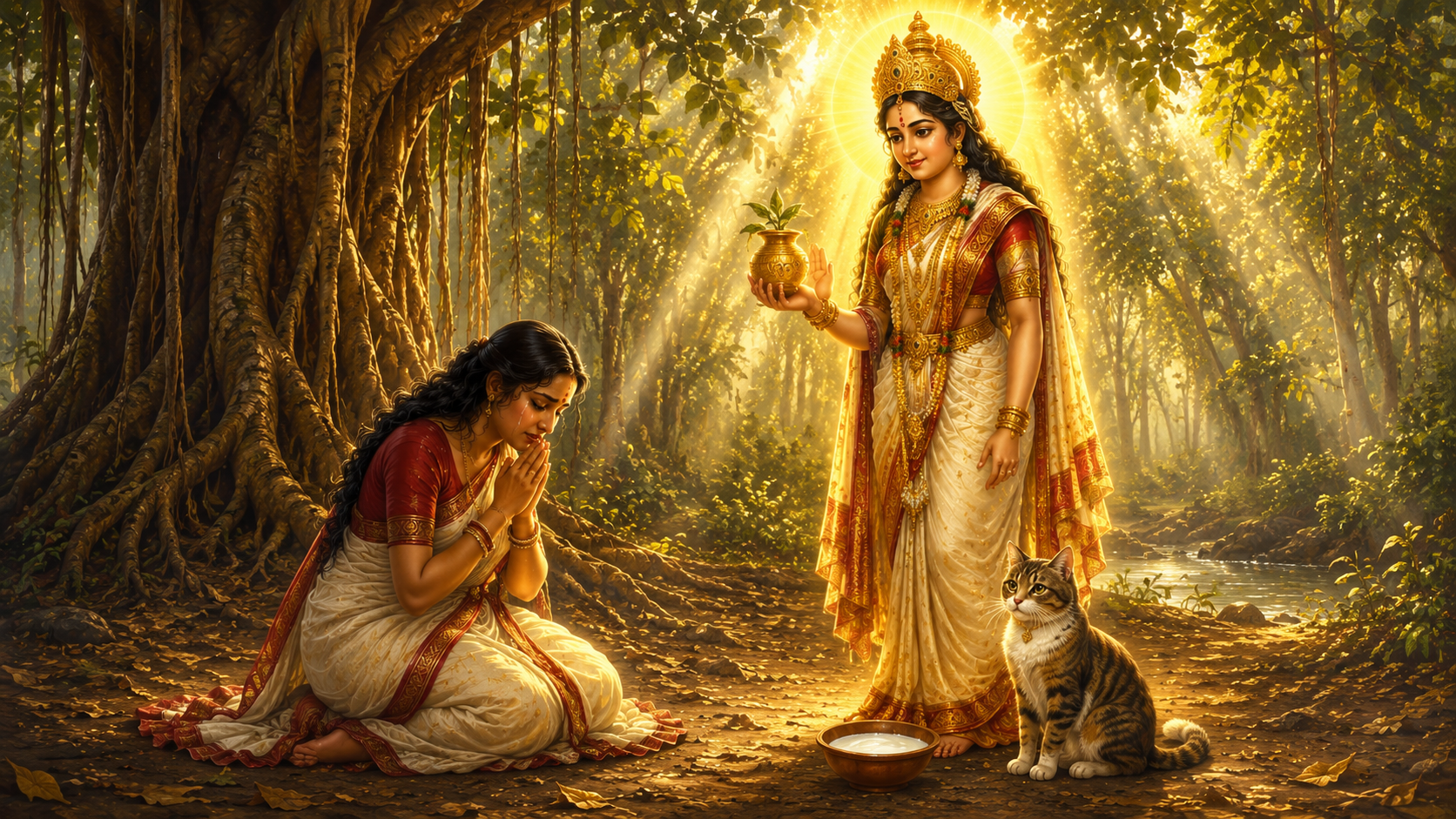
On Saturday, June 20, 2026, Bengali households across Bharata will welcome their married daughters and sons-in-law home for the legendary jamai-aador feast and perform the Shashthi Vrata. But behind the warmth lies a story most Bengalis know by heart and most non-Bengalis have never heard — the wife who stole the hilsa, blamed the cat, lost six sons to Maa Shashthi’s wrath, and was finally forgiven. The Vrat Katha, the vidhi, the mantras, and the deeper teaching.

Vat Purnima 2026 — The Wife Who Argued Yama Into Returning Her Husband’s Life

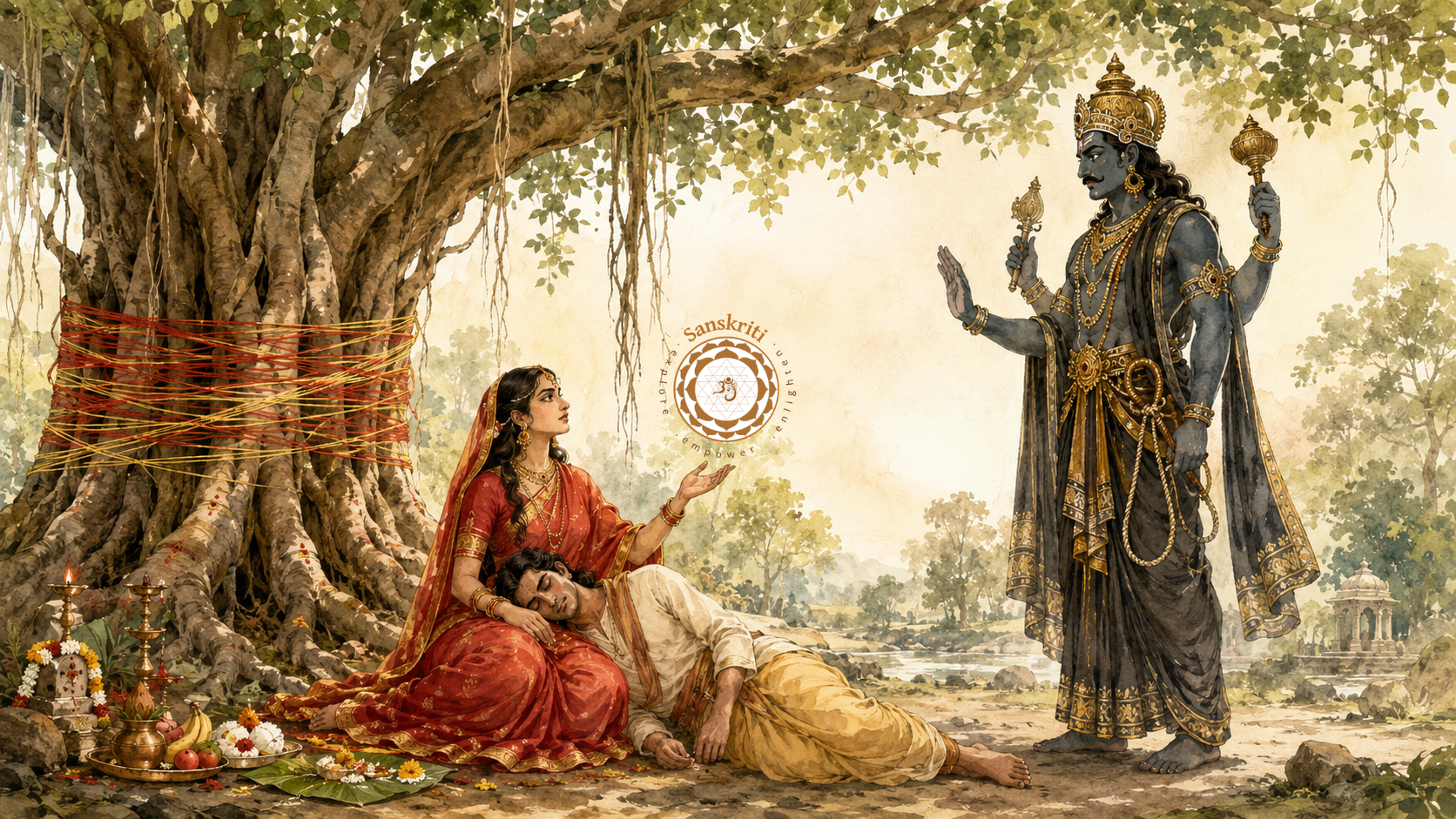
On Monday, June 29, 2026, women across Maharashtra, Gujarat, and southern Bharata will tie red thread around banyan trees and hear the story of Savitri — the wife who walked behind Yamaraja Himself when He came for her husband, and out-argued the Lord of Dharma into returning Satyavan’s life. The Mahabharata’s Pativrata Mahatmya Parva, the vrat vidhi, and why the banyan witnessed everything.

Nija Jyeshtha 2026 — The Real Jyeshtha Begins, and the Calendar Resumes

Nija Jyeshtha 2026 — The Real Jyeshtha Begins, and the Calendar Resumes

With Adhik Maas now closed on the Somvati Amavasya of June 15, the long-postponed festivals of Jyeshtha return — Vat Purnima (June 29, the Savitri-Yamaraja katha), Jamai Shashthi (June 20, the Bengali festival of Maa Shashthi), Sankashti Chaturthi (June 28), Yogini Ekadashi (July 10), and Devshayani Ekadashi (July 16, opening the four-month Chaturmas of Bhagavan Vishnu’s yoga-nidra). A guide to what the next four weeks hold and what the household that kept Purushottam Maas now carries forward.

The Closing of Purushottam Maas 2026 — Adhik Amavasya and the Sealing of the Month-Long Vrat

On Monday, June 15, 2026 — a rare Somvati Amavasya — the intercalary month that bears Bhagavan Vishnu’s own name comes to its close. The Acharyas teach that a vrat is not measured by its duration but by its closing. Here are the Padma Purana’s instructions for sealing the month-long Purushottam Maas vrat: the morning snan, the closing puja with the Vishnu Sahasranama, the day of dana, the Somvati Amavasya gift, and the final sarva-arpana — the offering of all merit at the feet of the Lord.

css.php