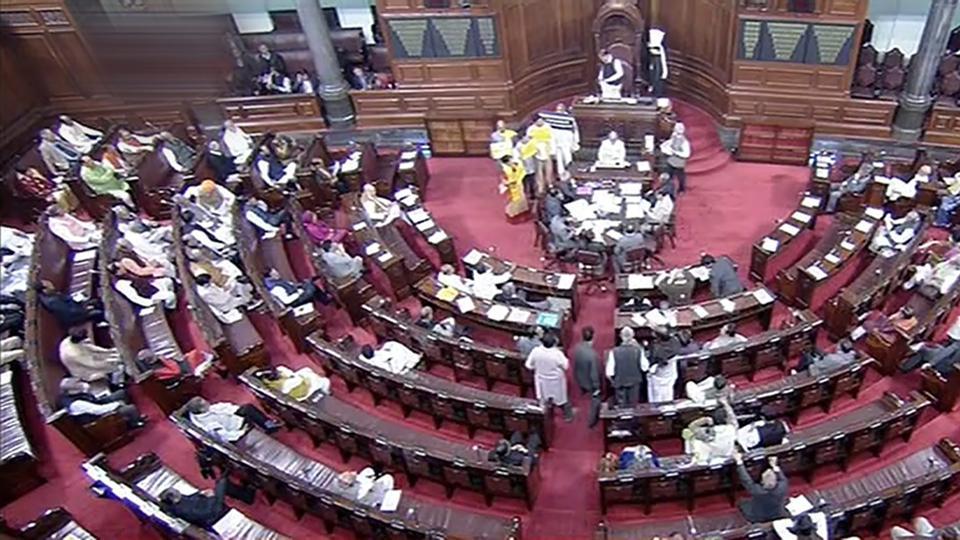
The draft law says the government will empanel mediators and set up state-of-the-art mediation centres.
The law ministry is preparing a legal framework to reduce the time taken for settling commercial and civil disputes in India — an important consideration in the Doing Business rankings — by bringing in a mediation law and reducing “the intervention of the court” in the entire process, a top official involved in the exercise has said.
The ministry wants to push for the said laws in the budget session of Parliament which resumes on Monday.
“Key among these is creating legal backing for mediation to reduce the court’s intervention in commercial disputes and tackle pendency,” the officer revealed on condition of anonymity. The average time taken for a commercial dispute to get resolved in the country is 1,445 days (over four years), he added.

The move envisages amending the Arbitration and Conciliation Act (ACA), the Commercial Courts Act, the Specific Relief Act as well as pushing for passage of a new law to create a New Delhi International Arbitration Centre. The bills for changing the specific relief act and to create the state-of-the art arbitration centre are pending in Parliament since the winter session.
The country got its first arbitration law, the ACA, in 1996 which was amended in 2015 after the BJP-led NDA government came to power. The government also brought in the Commercial Courts Act in 2015 to create special courts to deal with commercial disputes but pendency and long proceedings remain a concern. While the ACA gave a fillip to arbitration, mediation is still not the preferred mode of dispute resolution, the official said.
In January 2017, the law ministry appointed the Justice BN Srikrishna committee to recommend ways to institutionalise the arbitration mechanism in India; some of the suggestions made by the committee have been included in a new bill to amend the ACA. A key inclusion in the amended law that goes beyond the committee’s recommendations is giving mediation a legal backing and a regulatory framework.
The government’s aim is to encourage mediation to boost India’s ease of doing business ranking (conducted by the World Bank) — in which enforcement of contracts carries significant weight, while, according to the official, improving the “ease of living” for people who have waited too long for justice to be served. The law ministry is one of the key ministries working on the goal of taking India’s rank from the current 100 to 50.
A law ministry official said the government will also move to create a professional arbitration body to be named the Arbitration Promotion Council of India, headed by the Chief Justice of India. “The council will promote the country as an international arbitration hub, accredit and grade arbitral institutions and eventually work towards creating a specialist bar dedicated to arbitration,” he added. Some of these changes in the law were recommended by the Srikrishna committee.
Arbitration and mediation together are the accepted dispute resolution mechanisms worldwide that reduce the dependence on litigation, experts said.
“The government will train and appoint subject experts as mediators and hopes to reduce pendency and time taken on commercial disputes sharply through this move,” the official said.
The draft law says the government will empanel mediators and set up state-of-the-art mediation centres. The law ministry’s proposal, which is likely to come up before the cabinet soon, adds that the state will also bear the cost of appointing mediators, reasoning that pending litigation costs a lot in terms of infrastructure and human capital.
Experts welcome the idea of a broader framework, but warn against the government assuming too big a role for itself. “We urgently need a full-fledged mediation law in India but the government should promote mediation as a professional practice and not as a state-subsidised mechanism,” Sriram Panchu, senior advocate and mediation expert said. Panchu said in countries such as the US courts impose heavy costs on the losing party in commercial disputes which acts as a deterrent against litigation.