IndianSanskriti

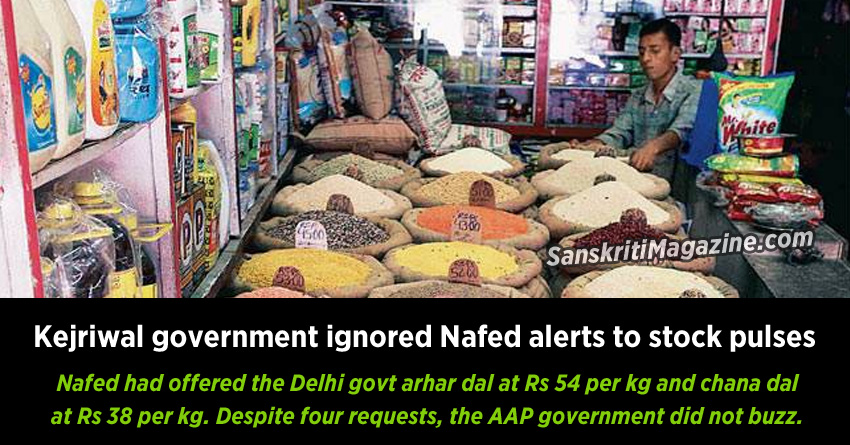
Kejriwal government ignored Nafed alerts to stock pulses

Nafed had offered the Delhi govt arhar dal at Rs 54 per kg and chana dal at Rs 38 per kg. Despite four requests, the AAP government did not buzz. As a result Delhiites are forced to buy arhar dal at Rs 150 per kg and chana dal at Rs 70 to Rs 80 a kilo.

Blame it on the AAP government in Delhi for unabated rise in price of pulses and other essential commodities. The Kejriwal government ignored repeated alerts by Nafed to stock sufficient quantity of pulses and other eatables so as to meet the requirement in case of short supply. And all this happened at a time the Delhi government faced criticism for not procuring onions that resulted in cost escalation.

An RTI reply by the food and supplies department of Delhi government said it has not purchased pulses or any other grain and eatable products.

The Nafed, which is a central government agency, wrote four letters to Delhi government from April to June but the government chose to ignore them. “Nafed offered arhar dal at Rs 54 per kg and chana dal at Rs 38 per kg. Despite four requests, the AAP government did not buzz. As a result Delhiites are forced to buy arhar dal at Rs 150 per kg and chana dal at Rs 70 to Rs 80 a kilo,” said Nafed Director Ashok Thakur. The letters, copies of which are in possession of Mail Today, were written on April 8, May 1, June 5 and June 30. However, there was no reply from the Delhi Government.

“Your department (food and supplies) had initially shown interest in purchase of arhar and chana dal available with Nafed in the states of Maharashtra and Rajasthan. The tentative cost of the purchase was also informed to the Delhi government but since then there has been no response. On directions of the central government, Nafed has restarted the sale of pulses from June 29,” read one of the letters written to Delhi government. “Nafed is awaiting response from the Delhi government for purchase of pulses and other whole grains. Considering the present situation of pulses in the country, the Delhi government may assess its requirement as convey it to Nafed for purchase of commodities,” said another letter dated June 5.

Thakur alleged that non-procurement of commodities by the government resulted in hoarding by traders and black marketers as a result of which price of grains skyrocketed. “No purchase of pulses has been done by the Delhi government. No other grain and other etable products were purchased by the food and supply department,” the Food and Supplies department said in the RTI reply.

~IANS

You may also like

Search the website

Like us on Facebook

Get daily updates via Email

Enter your email address:

Recent Posts

Yogini Ekadashi 2026 — The Yaksha Who Missed the Morning Flowers, and the Ekadashi That Undid His Curse

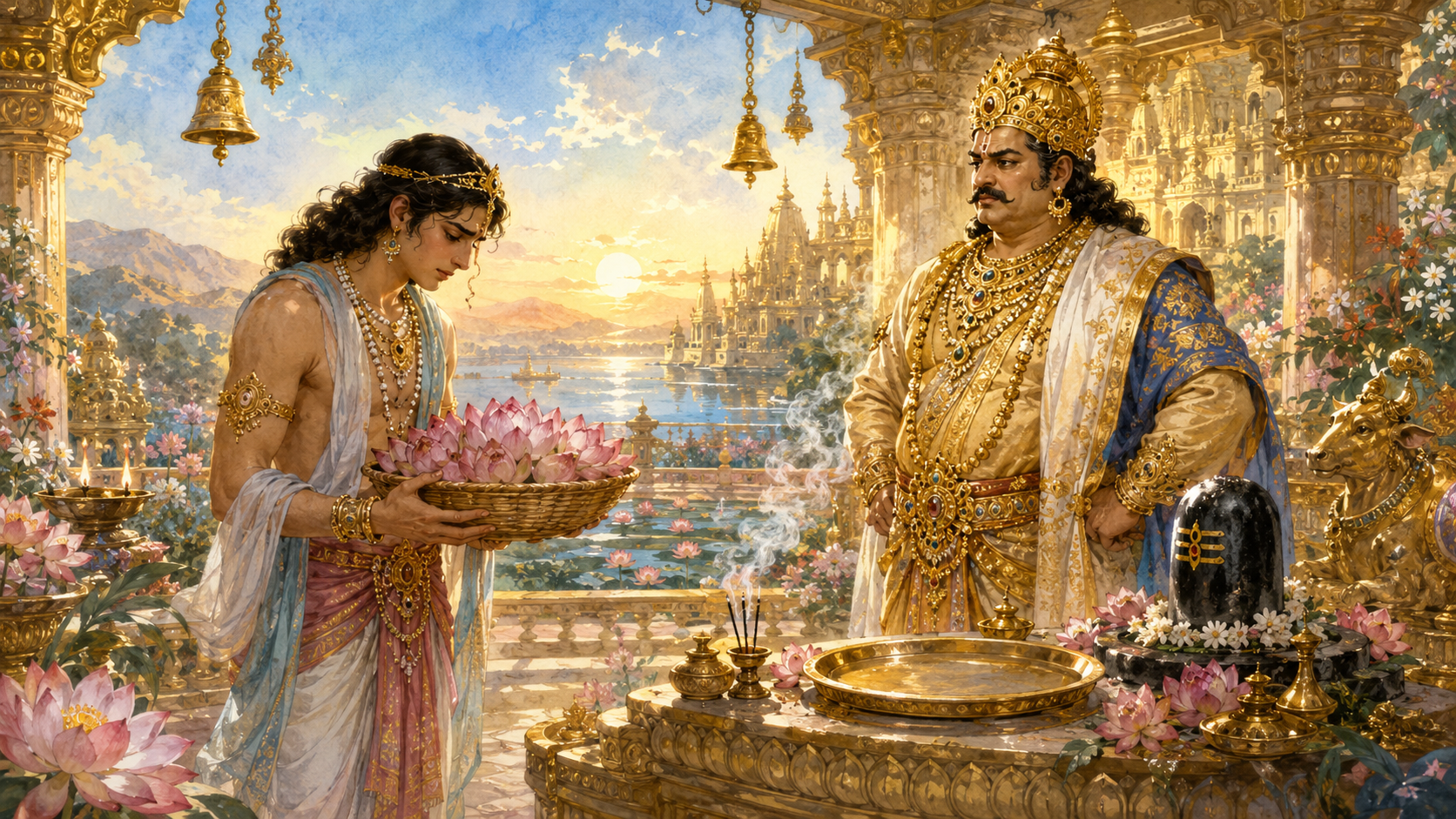
On Friday, July 10, 2026, the rare Krishna Paksha Ekadashi of Nija Ashadha arrives. The Padma Purana tells the story of Hemamali — the Yaksha gardener of Bhagavan Kubera in Alaka, whose single morning of distraction with his wife Vishalakshi cost him his form, his wife, and his celestial city. Cursed to wander the earth of Bharata as a leper for a long time, he was at last shown the way back by Sage Markandeya — a single sincere keeping of Yogini Ekadashi.

Jamai Shashthi 2026 — The Story of Maa Shashthi, the Cat, and the Wife Who Was Forgiven

Jamai Shashthi 2026 — The Story of Maa Shashthi, the Cat, and the Wife Who Was Forgiven

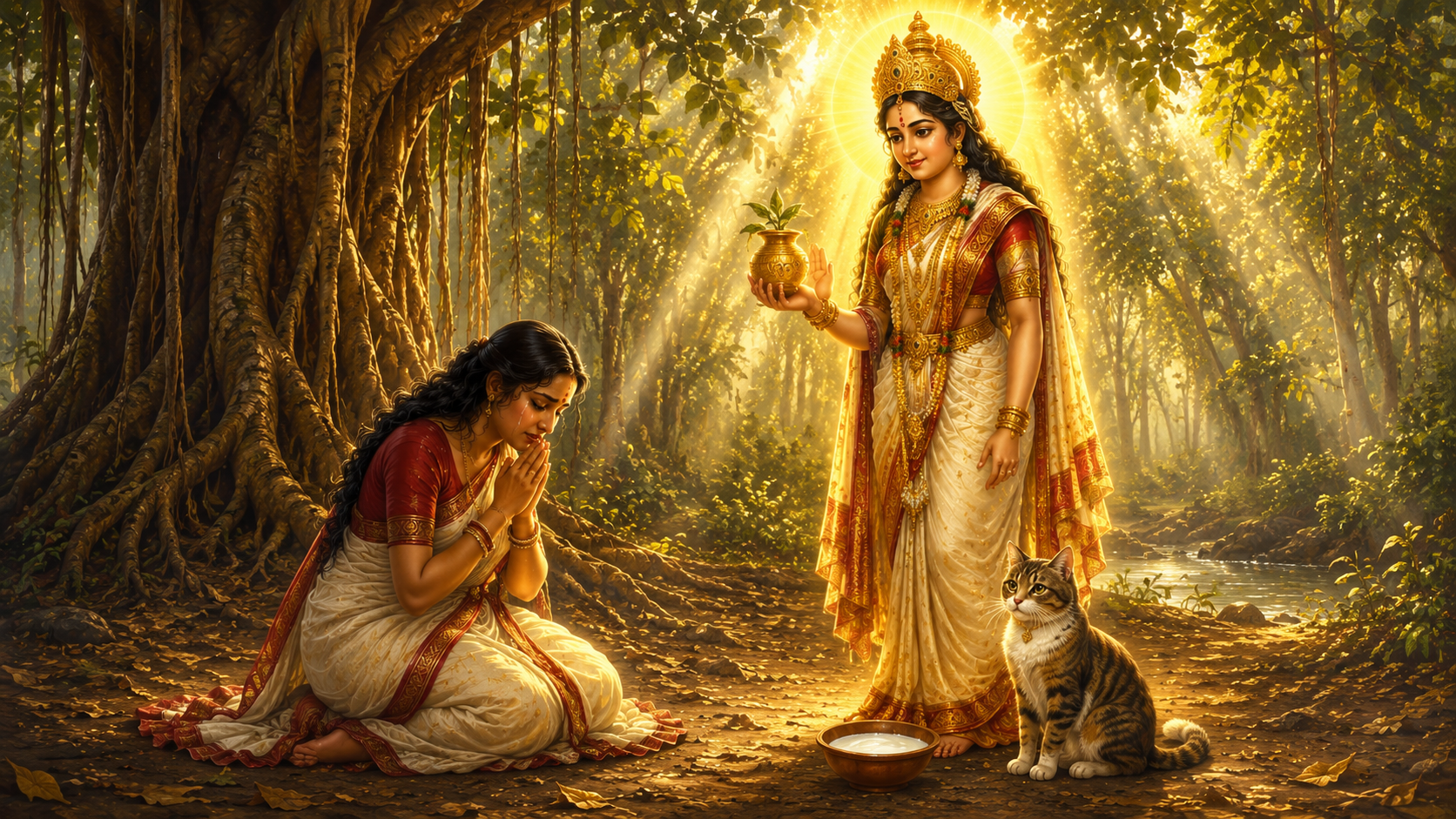
On Saturday, June 20, 2026, Bengali households across Bharata will welcome their married daughters and sons-in-law home for the legendary jamai-aador feast and perform the Shashthi Vrata. But behind the warmth lies a story most Bengalis know by heart and most non-Bengalis have never heard — the wife who stole the hilsa, blamed the cat, lost six sons to Maa Shashthi’s wrath, and was finally forgiven. The Vrat Katha, the vidhi, the mantras, and the deeper teaching.

Vat Purnima 2026 — The Wife Who Argued Yama Into Returning Her Husband’s Life

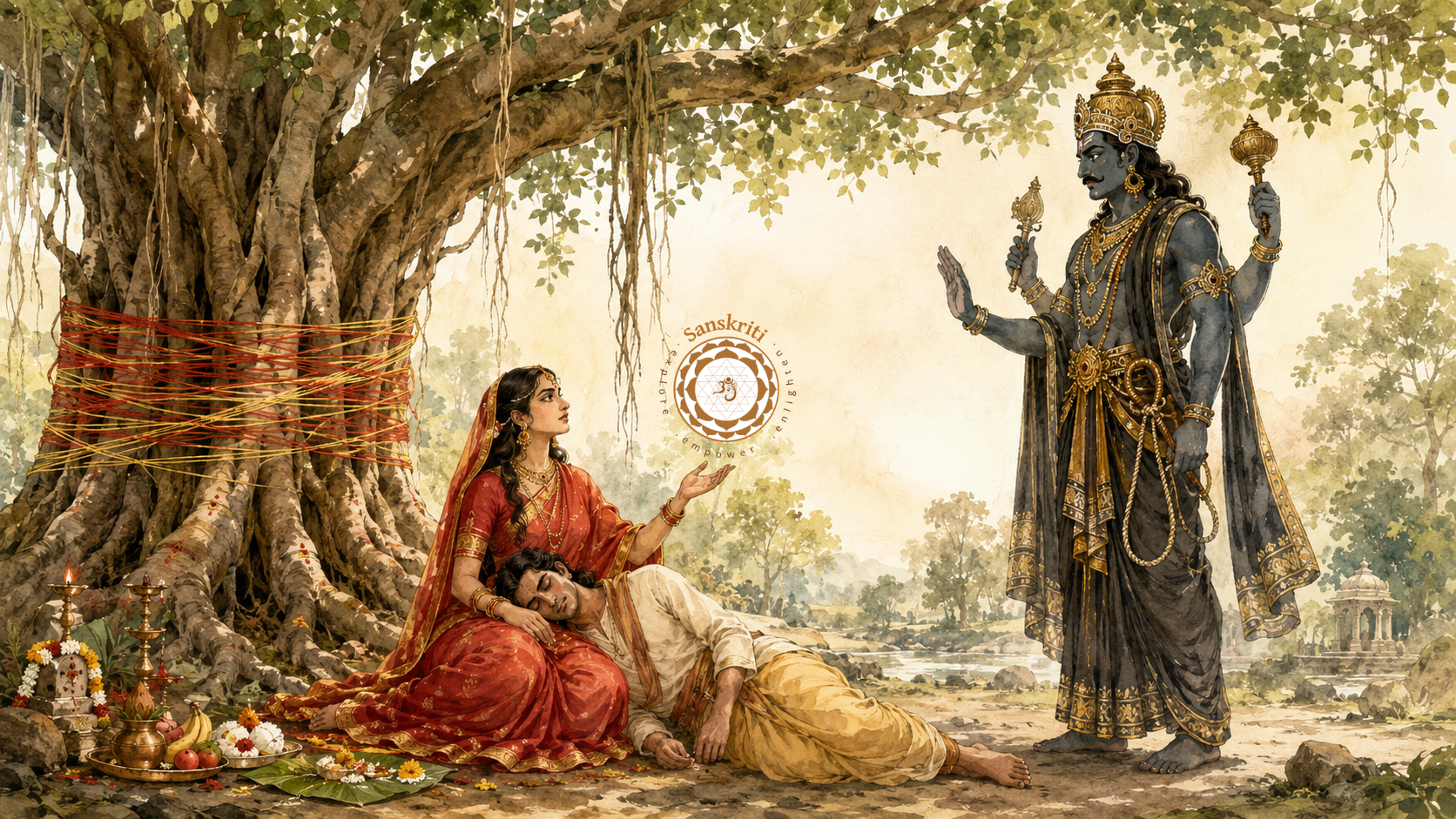
On Monday, June 29, 2026, women across Maharashtra, Gujarat, and southern Bharata will tie red thread around banyan trees and hear the story of Savitri — the wife who walked behind Yamaraja Himself when He came for her husband, and out-argued the Lord of Dharma into returning Satyavan’s life. The Mahabharata’s Pativrata Mahatmya Parva, the vrat vidhi, and why the banyan witnessed everything.

Nija Jyeshtha 2026 — The Real Jyeshtha Begins, and the Calendar Resumes

Nija Jyeshtha 2026 — The Real Jyeshtha Begins, and the Calendar Resumes

With Adhik Maas now closed on the Somvati Amavasya of June 15, the long-postponed festivals of Jyeshtha return — Vat Purnima (June 29, the Savitri-Yamaraja katha), Jamai Shashthi (June 20, the Bengali festival of Maa Shashthi), Sankashti Chaturthi (June 28), Yogini Ekadashi (July 10), and Devshayani Ekadashi (July 16, opening the four-month Chaturmas of Bhagavan Vishnu’s yoga-nidra). A guide to what the next four weeks hold and what the household that kept Purushottam Maas now carries forward.

css.php