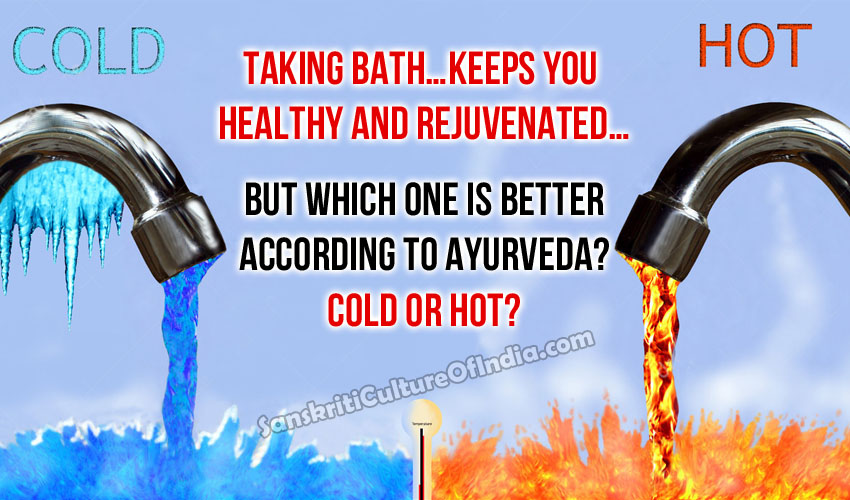
Taking bath regularly keeps you healthy, fresh, energetic and rejuvenated for the whole day and for life is a statement made in Ayurveda centuries ago. All of us take bath daily as a formality and as a routine part of our daily schedules. But the medical importance of taking bath has not been emphasized and explained anywhere other than the oldest holistic medical science…Ayurveda. Here we shall be discussing about the holistic and medical horizons of bathing.
What are the benefits of bathing?
“Deepanam vrishyamaayushyam snaanamojo bala pradam
Kandoo mala shrama sweda tandraa trut daaha paapmanut”
Deepana:
Enhances the digestive fire (capacity) and regularizes metabolism. This property enables us to digest our food properly. This may probably brought about by improvisation of circulation & retention of heat after bath.
Vrishyam:
Aphrodisiac effect. Gives sexual competence to an individual. Taking showers before sex always enhances the performance and keeps us fresh and spirited during the act and allows us to enjoy sex to the maximum – both physically and mentally.
Bathing relaxes the mind and body from the effects of day long stress and fills in enthusiasm and interest in sex.
Aayushyam:
Enhances life span. It means to say that it fills in a new energy and life in all the cells.
Oorja & bala pradam:
Provides energy and strength. This is achieved when the bath alleviates tiredness and fatigue enabling an individual to get actively involved in physical and mental activities.
*Relieves one from kandoo (itching), mala (dirt), shrama (fatigue), sweda (sweating), tandra (stupor), trut (thirst), daaha (burning sensation) and paapma (effects of unwholesome and sinful acts)
Effects of morning bath:
“Praata snaanam cha paapaharanam duswapna pradhwamsanam shouchasya aayatanam malaapaharanam samvardhanam tejasaam
Roopa dhyotakaram shareera sukhadam kaamaagni sandeepanam streenaam manmatha gaahanam shramaharam snaane dashaite gunaaha”
The below mentioned 10 fold benefits are achieved after snana (bath):
- Relieves one from paapma (effects of unwholesome and sinful acts)
- Destroys the effects of bad dreams and nightmares.
- Source of cleanliness.
- Removes dirt and dust.
- Improves appetite.
- Improves color and complexion.
- Gives freshness to the body.
- Improves sexual vigour and libido.
- Enhances sexual interest in the women too.
- Relieves one from fatigue.
Health Benefits of having cold and hot bath:
*Cold bath helps alleviate Raktapitta(haemorrhagic disorders).
*Hot bath increases strength of an individual and pacified the aggravated vata and kapha. It provides strength only when it is used to bathe the body excluding the head. It means to tell that hot water should not be used for head bath. If done it not only destroys the strength but also causes harm to the hairs and eyes. When vata and kapha doshas are vitiated luke warm water can be used for head bath.
“Asheetena ambhasa snaanam payaha paanam yuva striyaha
Etadvoo maanavaaha pathyam snigdamalpam cha bhojanam”
As quoted by Ashwini Devas (or the divine physicians of Hindu mythology who are rated as the first ever physicians by Ayurveda) to King Bhoja “Bathing with hot water, drinking milk, sex with a young virgin and food in lesser quantities which is admixed with ghee are always beneficial for you” These can be considered as beneficial for the whole human race…for all of us.
***Aamalaki or Embalica Officinalis called amla is said to be one of the best rejuvenators in Ayurveda – when taken as an internal medicine. The same is advised to be used for bathing in Yoga Ratnakara(Ayurvedic text)
“Yaha sadaa aamalakaihi snaanam karoti sa vinishchitam
Valee palita nirmukto jeevadvarshashatam naraha”
One who regularly takes bath using amalaki admixed water or by applying paste of amalaki will be devoid of vali(ageing and wrinkling) and palita(premature maturing of hairs) and will have a healthy life span of hundred years.
Conditions contraindicated for bathing:
Those suffering from fever, diarrhea, diseases related to eye and ears, flatulence, cold and congestion, diseases caused by vitiated vayu and indigestion should not take bath. It should not be taken immediately after taking food too.
Wipe your body thoroughly after bath:
“Snaanasyaanantaram samyak vastrena tanu marjanam
Kaanti pradam shareerasya kandu twak roga naashanam”
After bath one should wipe his body using a clean cloth thoroughly. By doing so one gets relieved of itching and skin related ailments. The complexion of the skin increases as a result of wiping.
Bathing is a part of our health and life style…customary…traditional…and more of culture…
~ Dr Raghuram Y.S., MD