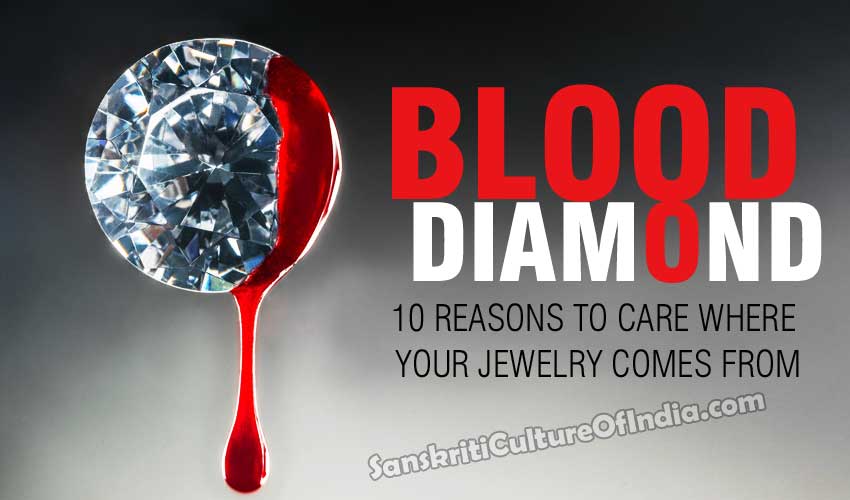
Fine jewelry symbolizes everlasting love between two people. A gift of jewelry should have as pure a history as your love. But the jewelry industry is unfortunately plagued by shocking human rights abuses and reckless disregard for the environment. Here are ten reasons why you should care about where your jewelry comes from.
1. CIVIL WARS
In just the past 15 years, diamond mining has fueled brutal civil wars in Sierra Leone, Angola, Liberia, the Republic of Congo, Côte d’Ivoire, and the Democratic Republic of Congo. The war in the Democratic Republic of Congo continues today, with rebel groups fighting to control Congo’s diamond and mineral wealth. To date, this war has claimed more than 5 million lives, making it the deadliest war since World War II.
2. VIOLENCE
Government militaries use horrific violence to maintain control of people and resources in mining regions. In Angola, soldiers routinely demand bribes from diamond miners, beating and killing those who do not cooperate. And in eastern Zimbabwe, the army has used indiscriminate force to seize valuable diamond fields. In one violent incident, soldiers killed more than 200 diamond miners, at times shooting live ammunition from helicopters.
3. POVERTY
Although the precious metals and gems they mine are worth billions, most miners live in extreme poverty. Without access to global markets, miners are forced to sell to middle-men at bargain prices. Global Witness estimates that there are over one million diamond diggers in Africa earning less than a dollar a day.
4. RAPE AND TORTURE
In large areas of the Democratic Republic of Congo, civilians are at the mercy of vicious and heavily armed rebel groups that fight to exploit the country’s mineral resources. These groups gain power by terrorizing villages with fires, torture, and violent sexual attacks. More than 200,000 women have been raped in Congo since the civil war began. Government militaries also use torture and rape to maintain control of mining regions. In Zimbabwe, for example, the military runs torture camps for miners who refuse to pay kickbacks to soldiers.


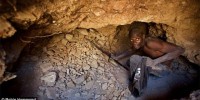

5. FORCED LABOR AND CHILD LABOR
Children as young as five years old are being forced into dangerous jobs in gold and diamond mining. An estimated one million children work as gold miners for little to no pay and at high risk to their lives. Adults also may be forced into mining. For instance, some adults enter mining to repay a debt. Conditions are usually rigged so that the debt is never satisfied, keeping the miner trapped in servitude.
6. MERCURY POLLUTION
Many gold miners rely on mercury to separate gold from unwanted minerals. As a result, gold mining is responsible for 30 to 40 percent of man-made mercury pollution each year, making it the second leading cause of mercury pollution after coal-fired power plants. Mercury poisoning is a serious public health problem and a global issue, since rivers can spread pollution into neighbouring countries. Severe health consequences include damage to an adult’s brain, heart, and lungs, as well as neurological damage to developing fetuses.
7. CYANIDE SPILLS
Industrial gold mining uses cyanide during the gold extraction process. Like mercury, this toxic chemical inevitably leaks out and contaminates the surrounding environment. The most devastating cyanide spill in recent times occurred in Romania, where more than 100,000 gallons of cyanide-laced wastewater spilled from a gold mine into nearby rivers. The incident killed thousands of fish and contaminated the drinking water of millions of people.
8. ECOSYSTEM DEVASTATION
Irresponsible mining for gemstones and precious metals can devastate landscapes and wreak environmental havoc. The Kono district of Sierra Leone has paid a heavy environmental price for decades of destructive diamond mining. The land is now scarred with thousands of abandoned mining pits filled with mosquito-infested water. Wildlife has vanished and land once suitable for agriculture is now a desolate moonscape.
9. DANGEROUS WORKING CONDITIONS
Tunnel collapses, falling rocks, underground fires, and many other hazards make mining for precious metals and gems a highly dangerous occupation. Workplace injuries and deaths are common. Hundreds of miners have died in accidents in South African gold mines alone.
10. CORRUPTION
Natural resources, including gems and precious metals, provide fertile ground for corruption. Profits are frequently directed toward strengthening despotic regimes, rather than addressing the suffering and poverty of millions of people. In Burma, for instance, the government is guilty of massive human rights violations, including the widespread use of forced and child labor and the brutal oppression of ethnic minorities. The CAD 335 million dollars that Burma earns from ruby mining each year allows the country’s oppressive government to stay in power, while the Burmese people continue to live in extreme poverty.
~ Brilliant Earth