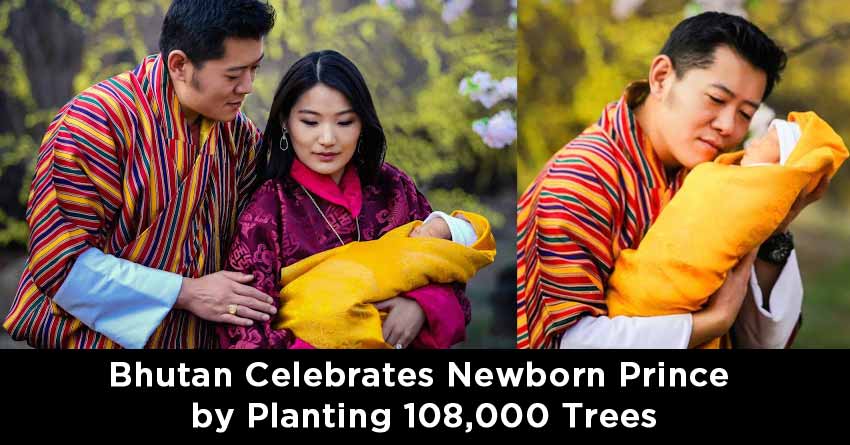
Prime Minister Tshering Tobgay, three of his ministers, and the leader of Opposition were among the 100,000 volunteers who planted the trees across the country on March 6, about a month after King Khesar and Queen Jetsun announced the birth of their first child on February 5.
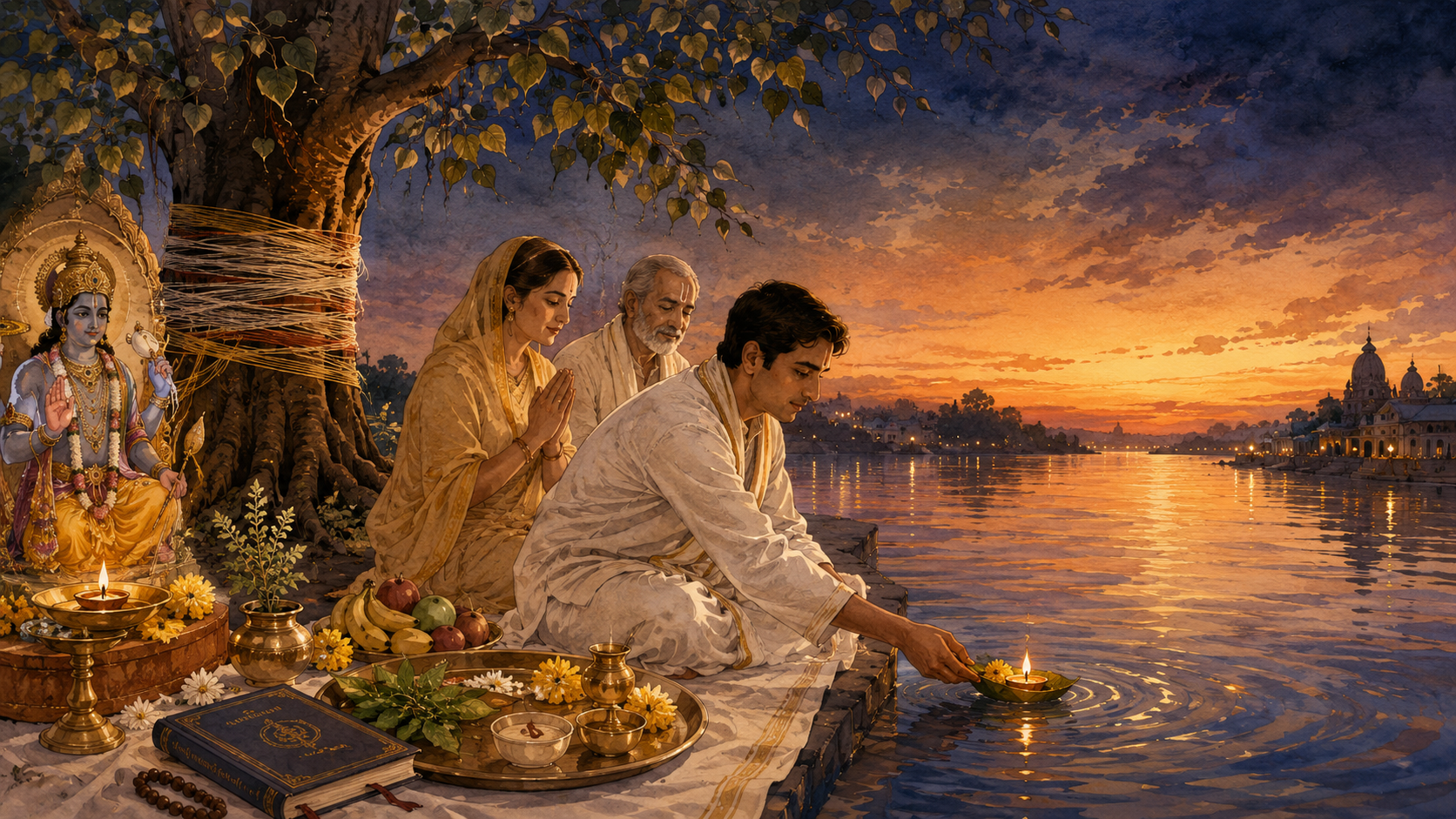
“In Buddhism, a tree is the provider and nourisher of all life forms, symbolizing longevity, health, beauty and even compassion,” said Tenzin Lekphell, who coordinated the initiative, called Tendrel in the local language. It wasn’t a coincidence that the Buddha attained enlightenment under a banyan tree, he added.
The number of trees planted was exactly 108,000, as “108” is a sacred number in Buddhism, denoting the cleansing of 108 defilements that impede beings from attaining enlightenment, Lekphell, who heads a private management institute, said. “Hence 108 beads in rosary.”
All 82,000 households in the country planted a tree, while the remaining 26,000 were planted by volunteers in special plantations in 14 districts. “Each sapling encapsulates a prayer and a wish from the person who planted it to His Royal Highness the Prince so that just like the bountiful tree, the Prince also grows up healthy, strong, wise and compassionate,” Lekphell said.
It would be hard to find another monarchy where people love and respect the royal couple as as Bhutanese do. Fireworks lit up the sky over the capital city of Thimphu during the royal wedding in October 2011. The low-budget wedding was designed to be modest, but the people – Buddhists, Hindus and Christians – made it grand by celebrating it with lights.
The Buddhist-majority Bhutan doesn’t have incidents of mass violence or terrorist attacks, which are routine elsewhere in South Asia. Bhutan was never colonized, and remains rooted in tradition. People credit this uniqueness to their monarchs. And the newborn prince promises continuity of the monarchy, which is the reason behind the celebration.
Bhutan, a democratic monarchy, has a unique policy of “Gross National Happiness,” which balances economic growth with environmental conservation and the wellbeing of its people. Its constitution states that the country shall always keep 60 percent of its total area under forest cover.
The term “Gross National Happiness” was coined by the fourth King Singye, the incumbent king’s father, in 1972, when he was just 16. Bhutan became a democracy in 2008, two years after King Singye abdicated in favor of Khesar, who introduced democracy against the wishes of the people.
While people still look up to the king for the nation’s stability and progress, the two elected governments have introduced reforms. Some issues related to civil and political rights remain and the country is yet to address alleged past human rights violations, but a slow and steady change appears to be taking Bhutan closer to being a true democracy. The king is seen as welcoming these changes.
As the people planted trees on March 6 in celebration, the Ministry of Tourism used the occasion to inaugurate a “Happiness Garden” in the national capital of Thimphu.
The 48,400-square-yard garden invites foreign tourists to plant “happiness trees,” with the aim of having trees representing every country in the world. “Bhutan is known as a country of happiness. To have a happiness garden is therefore logical. With this garden, we hope to bring the peoples of the world closer,” Damchoe Rinzin, a spokesperson for the Tourism Council of Bhutan, said.
Last June, a team of 100 volunteers in Bhutan set a new Guinness record by planting 49,672 trees in just one hour in mountainous terrain.
(The Diplomat)