IndianSanskriti
Ahimsa paramo dharmah

Ahimsa Paramo Dharmah

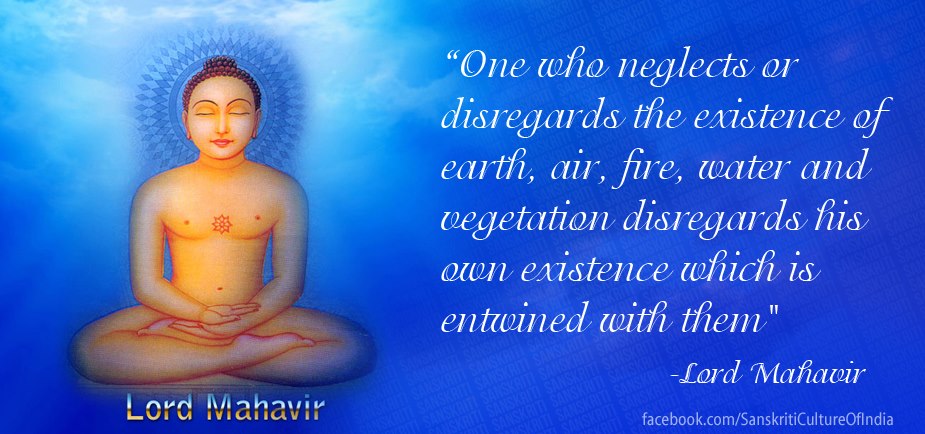
Mahavir, the 24th and last Tirthankara (Spiritual Teacher and Guide) of the Jains taught that:
“There is no quality of soul more subtle than non-violence and no virtue of spirit greater than reverence for life.”

Jains believe that the only way to save one’s own soul is to protect every other soul and so follow the path of Ahimsa (non-violence) that plays the biggest part in their lives, especially in the regulation of their diet. For them Ahimsa is more than just non-violence or an attitude but rather a way of life that now, in modern terms, includes positive elements of working for justice, peace, liberation and freedom as long as their actions do not involve violence.

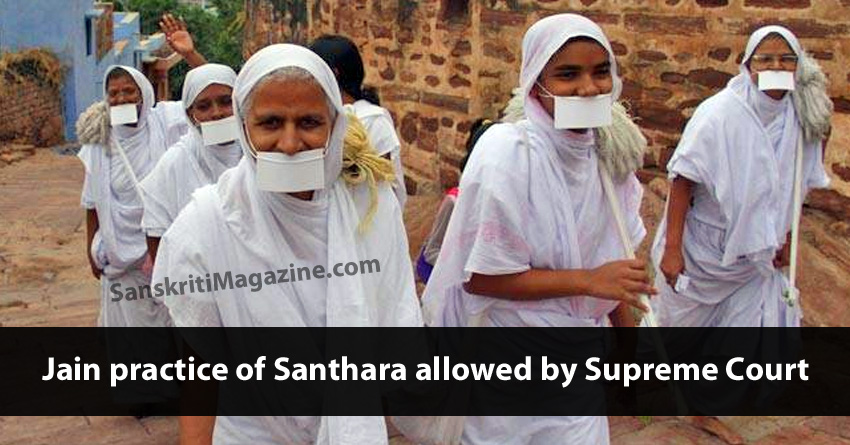
To Jains, every life or soul is sacred, regardless of faith, caste, race or even species. Their faith enforces that they not injure, abuse, oppress, enslave, insult, torment, torture or kill any creature or living being. For this reason alone, Jain monks wear a cloth muslin cloth over their mouth in case they should accidentally swallow an insect.

Jains are vegetarians and do not use cloth whose production hurts animals or humans. In fact, they take care to preserve life in everything they do. They do not hold jobs that cause harm such as cutting trees, silk or leather trade, selling weapons or pesticides, anything involving fermentation, etc.

‘Ahimsa paramo dharmah’ (Non-violence is the supreme religion)
Jains believe that violence in thought and speech is as bad as physical violence, so they try to control things like anger, greed, pride and jealousy. Getting others to do harm, or allowing others to do harm, is as bad as doing harm yourself. It is simply not enough to control harm but rather working positively to promote tolerance, forgiveness, compassion and to help those who are less fortunate. Charity is a very important component in a Jain’s life.

It is believed that all living creatures depend on each other. One text says “All life is bound together by mutual support and interdependence.”

You may also like

Search the website

Like us on Facebook

Get daily updates via Email

Enter your email address:

Recent Posts

Varada Chaturthi 2026 — The Rare Ganesha Day of Purushottam Maas

Varada Chaturthi 2026 — The Rare Ganesha Day of Purushottam Maas

Once every 2.5–3 years — when the rare 13th month of Adhika Maas opens — a thirteenth Vinayaka Chaturthi appears. The Mudgala Purana calls it Varada Chaturthi, the “boon-giving” Chaturthi, and holds it as the most fruit-bearing Ganesha day of the entire calendar. Today, Wednesday May 20, 2026, is that day.

Padmini Ekadashi 2026 — The Rare Ekadashi That Comes Only in Purushottam Maas

Padmini Ekadashi 2026 — The Rare Ekadashi That Comes Only in Purushottam Maas

Padmini Ekadashi 2026 falls on Wednesday, May 27 — the Shukla Paksha Ekadashi of Adhika Maas, the rarest Ekadashi in the entire Hindu calendar (it appears only every 2.5–3 years). The Padma Purana conversation between Bhagavan Krishna and Yudhishthira, the Vrat Katha of Queen Padmini, complete vrat vidhi with jagrana, mantras, and the lotus symbolism that gives the Ekadashi its name.

Ganga Dussehra 2026 — The Day Maa Ganga Came Down to Bhagiratha

Ganga Dussehra falls on Monday, May 25, 2026 — commemorating the day Maa Ganga descended from Vaikuntha to the earth through the millennia-long tapasya of King Bhagiratha. The full account from the Valmiki Ramayana, snan vidhi, dana traditions, mantras, and the teaching of sustained sincerity.

Adhik Jyeshtha Maas 2026 — The Hidden Month That Belongs to Lord Vishnu

Once every 2.5–3 years, the Hindu calendar opens a quiet thirteenth chamber — the intercalary month Lord Vishnu took for His own. A Puranic look at Adhik Jyeshtha Maas 2026 (May 2–31), the Padma Purana account of how it became Purushottam Maas, and a complete householder’s guide for its closing days.

css.php