Many people think that cholesterol is bad, however, cholesterol is essential to many bodily functions, and only bad when unbalanced. Cholesterol is a fatty acid produced in the liver, and it is used by the body for numerous actions, including building cell membranes, synthesizing vitamin D, hormones, and bile acids.
Ayurveda has a slightly different view on cholesterol than Western medicine. Ayurveda views cholesterol as playing an important role in supporting and lubricating the body’s numerous circulatory channels, known as shrotas. The shrotas are the circulatory channels of the body; micro-shrotas carry nutrients to the cells and waste from the cells. Larger shrotas, such as the arteries and veins, carry blood to and from the heart. To be healthy and functional, the shrotas must be flexible and elastic, and cholesterol plays a role in constantly lubricating and supporting the shrotas. This is particularly the case for the delicate pranavahi shrotas that lead to the brain as well as the shrotas that carry hot fluids, i.e. blood.
What Is Bad Cholesterol?
From the perspective of Ayurveda, cholesterol isn’t bad in and of itself, however, it can have harmful effect when ama is present in the body. Ama, are metabolic left-overs that accumulate like toxins in the fat tissue. Simple ama is the sticky, foul-smelling waste product of improper digestion, which can block the channels of the body, such as the arteries.
A more reactive, dangerous type of ama, amavisha is created when ama is present for a very long time and is not cleansed from the system. When excessive, accumulated ama begins to spread throughout the body, it becomes mixed up with the dhatus (body tissues) and the malas (waste products). Once amavisha gets mixed in with the fat tissue, it damages the shrotas, and this in turn leads to problems such as high cholesterol, heart disease, stroke and high blood pressure.
Natural Ways to Lower Cholesterol
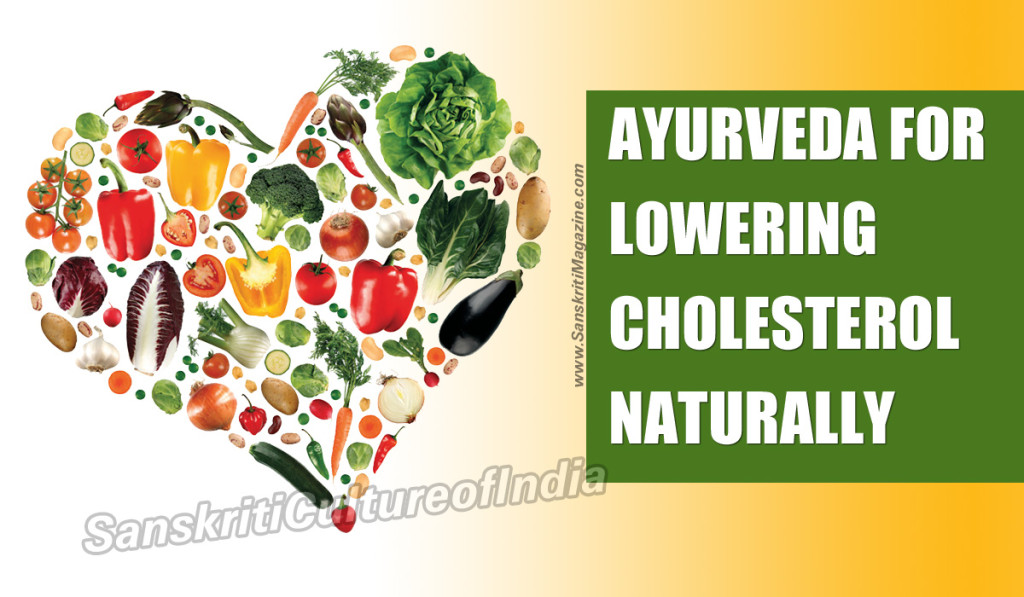
To lower cholesterol naturally, Ayurveda doesn’t just focus on cholesterol lowering foods, but rather on dietary recommendations, which will balance the overall fat metabolism of the body. For this, Ayurveda recommends balancing Kapha dosha, one of the three bodily principles involved in fat metabolism. Unbalanced Kapha lies at the root of excess production of cholesterol in the body. To help pacify Kapha dosha and enhance fat metabolism, follow a Kapha-pacifying diet, which especially favors foods with bitter, astringent and pungent tastes.
Astringent foods: This includes pulses or dried beans, such as lentils, split mung dhal, and garbanzo beans. Avoid larger beans, instead favor the smaller, split kind. Astringent tastes also includes many vegetables, such as the cruciferous family (broccoli, cabbage, and cauliflower) and fruits such as apples and pears.
Bitter foods: All sorts of leafy greens, including spinach, chard, kale and mustard greens. When cooked and seasoned with spices, these greens help cleanse the bowel, which helps prevent bad cholesterol from accumulating in the body.
The Kapha-pacifying diet also includes many healthy grains. Barley enhances fat metabolism. Oats provide needed fiber, as long as it is whole oats, not processed oats. Quinoa provides zinc, which enhances fat metabolism. Amaranth is also recommended.
Avoid sweet, sour and salty foods. This doesn’t just mean sugar, but also sweet grains like wheat, rice, pasta, and breads, along with sweet milk products. Sour foods include not only lemons and other sour fruits, but yogurt, cheese, tomatoes and vinegar, which is found in salad dressings, ketchup, mustard and pickles.
Cook your food and eat it warm as this also helps counteract the cool, earthy Kapha dosha. Avoid bad fats (saturated fats and transfats), and cook with small amounts of ghee or olive oil.
Setting our goal
Healthy values of HDL is over 40 – 50 mg/dl and LDL is below 140 – 150 mg/dl. So our goal is to keep the bad cholesterol below 140mg/dl and good cholesterol above 50mg/dl.
Sources of cholesterol
People get cholesterol in two ways.
1. The body – mainly the liver – produces varying amounts, usually about 1,000 milligrams a day. that is three to four times more cholesterol than you may eat.
2. Various foods – saturated fatty acids are the main culprit in raising blood cholesterol. Trans fats also raise blood cholesterol. But dietary cholesterol also plays a part. Foods from animals (especially egg yolks, meat, poultry, fish, seafood and whole-milk dairy products) contain it. Foods from plants (fruits, vegetables, grains, nuts and seeds) don’t contain cholesterol.
Strategies to lower LDL and improve HDL
Ayurveda suggests that a disciplined diet and exercise plan can help us achieve our goal.
Here are a few time tested measures that can bring your high cholesterol levels to normal and keep it that way.
- Do regular exercise like walking – for an hour. Regular physical itself increases HDL cholesterol in some people.
- Do deep breathing exercise for 15minutes daily. It helps refresh your system and is an effective destress technique too.
- Drink 6 – 8 glasses of water daily
- Quit smoking. Smoking lowers HDL cholesterol levels and increases the tendency for blood to clot.
- Start your day with fresh fruits and high soluble fibre grains such as oats.
- Eat plenty of vegetables, dried beans or legumes and seafood especially fatty fish like salmon, mackerel, sardine and tuna. Oysters, clams and mussels are also beneficial in lowering LDL and boosting HDL.
- Minimize all animal fats including those in dairy and dairy products
- Restrict omega 6 vegetable oils like corn and safflower
- Take enough good fat in foods, don’t avoid fat. Olive oil, rapeseed oil, sesame oil etc are healthy.
- Make sure to eat lots of antioxidant compounds concentrated in fruits [especially citrus fruits, strawberries, apple etc.] nuts [especially almonds and walnut] and vegetables like carrots, broccoli and spinach.
- Take grilled garlic – one or two small cloves – daily with your main meal. Half a raw onion juice daily is beneficial in boosting HDL.
- Turmeric and Curry leaves are mentioned as having cholesterol lowering properties and may be added when preparing various dishes.
- Drink water boiled with 2 tsp coriander seed twice daily. It reduces cholesterol, improves digestion and flushes out toxins.
- Guggulu [commiphora mukul] is used in ayurveda since long back in treatment for its cholesterol lowering properties.
- Avoid excess of alcohol. People who consume moderate amounts of alcohol (an average of one to two drinks per day for men and one drink per day for women) have a lower risk of heart disease than nondrinkers.
However, increased consumption of alcohol brings other health dangers, such as alcoholism, high blood pressure, obesity, stroke, cancer, suicide, etc.
Finally, know that a high cholesterol is not essentially dangerous by itself, but may just reflect an unhealthy condition.
Many studies have shown that people whose blood cholesterol is low become just as atherosclerotic as people whose cholesterol is high. Only when LDL is converted into a toxic form of oxidized LDL by oxygen free radicals in the blood does it become truly dangerous. And it can occur in a person with low LDL too.
The various strategies mentioned above intervene at the very genesis of atherosclerosis, blocking the toxic transformation of LDL. Thus it is not only beneficial to the ones with high cholesterol, but everyone who is keen in preventing atherosclerosis and its grave hazards.