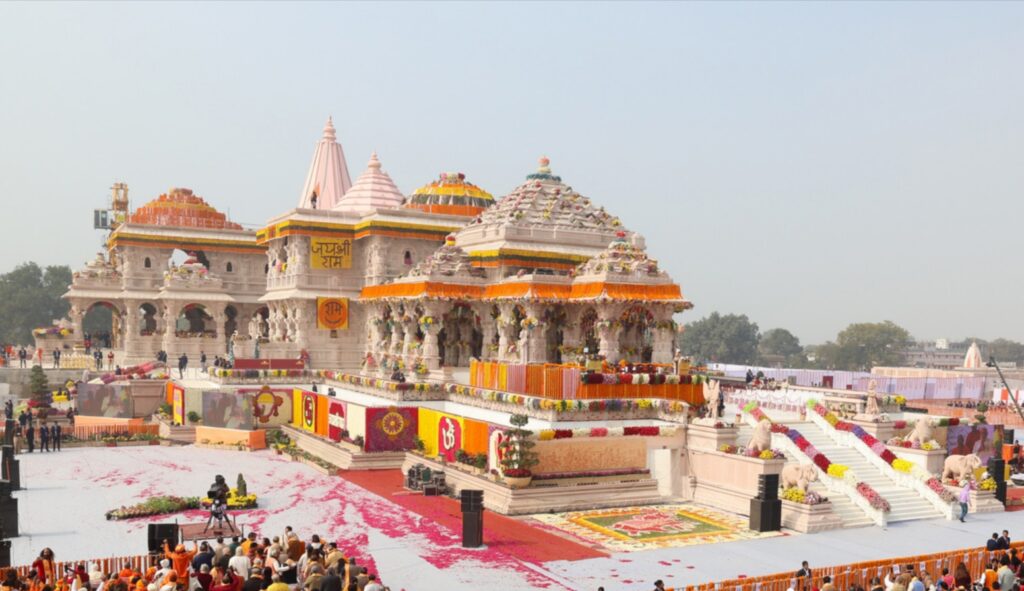
The Ram Temple in Ayodhya, recently completed in 2024, is not just a monumental addition to India’s religious landscape but also a beacon of historical faith and modern progress. This blog post delves into the multifaceted implications of the Ram Temple’s construction, impacting the socio-economic fabric and cultural ethos of Ayodhya and beyond.
The Historical Backdrop of Lord Ram
The Ram Temple, built at the birthplace of Lord Ram as chronicled in ancient Indian scriptures, is a testament to the enduring legacy of these historical narratives. Lord Ram, a central figure in the Ramayana, is revered as an embodiment of virtue and righteousness. The temple, thus, stands as a physical embodiment of these historical and cultural narratives, deeply ingrained in the collective consciousness of India.
Economic Renaissance in Ayodhya
The temple has catalyzed an economic renaissance in Ayodhya. The surge in tourism and pilgrimage has significantly boosted local businesses, transforming the city into a hub of spiritual tourism. This economic revitalization extends beyond mere commerce, symbolizing a rejuvenation of hope and prosperity for the region. The development of infrastructure to accommodate the influx of visitors further underscores this transformative impact.
Architectural and Artistic Grandeur
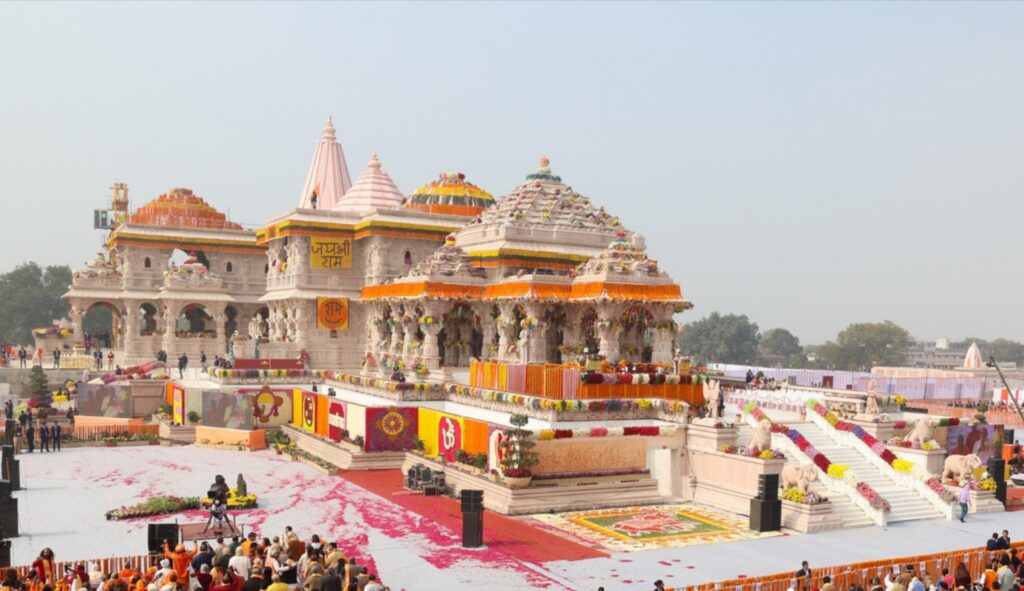
The architectural grandeur of the Ram Temple, aligning with traditional Indian architectural styles, represents a confluence of spirituality and artistry. The temple’s intricate design and the sculptures that adorn it are not just aesthetically pleasing but also serve as a reminder of India’s rich artistic heritage. This aspect of the temple underscores the fusion of spiritual devotion with artistic expression.
Socio-Cultural Implications
The Ram Temple stands at the crossroads of India’s socio-cultural dynamics. It represents a landmark in the nation’s ongoing discourse on religious and cultural identity. The temple’s construction highlights the complex interplay between faith, history, and modernity in India’s socio-cultural landscape.
Personal Experiences and Devotion
The temple has become a focal point for devotees and visitors, each bringing their own narratives of faith and devotion. These personal stories add a human dimension to the temple’s significance, transforming it from a structure of stone to a living symbol of faith and continuity. The emotions and experiences of the visitors reflect the deep-seated reverence for Lord Ram and the temple’s role in contemporary spiritual practice.
Conclusion
The Ram Temple in Ayodhya transcends its physical structure to become a symbol of India’s historical faith intertwined with its modern aspirations. As Ayodhya embarks on this new journey of growth and spiritual resurgence, the temple stands as a testament to India’s enduring legacy and its evolving societal narrative.
For an in-depth understanding of the Ram Temple’s impact on various aspects of society, readers are encouraged to explore a range of sources that provide diverse perspectives on this significant development.