IndianSanskriti
Militant killed in Anantnag encounter belonged to Hyderabad? Inquiry begins

Kashmir: Terrorist killed in Anantnag encounter belonged to Hyderabad, Inquiry begins

The Ansar Ghazwatul Hind (AGUH) – an outfit with alleged link to the al-Qaeda in Kashmir said the slain militant was Muhammad Taufeeq from Hyderabad.

Police and intelligence agencies are probing an al-Qaeda linked group’s claim that a militant killed in an encounter with security forces in South Kashmir hailed from Hyderabad, officials said on Wednesday.

If confirmed, it would only be the second time since 2008, when two suspected Lashkar-e-Taiba members were gunned down in the v alley, that militants from another Indian state have been killed in Kashmir.

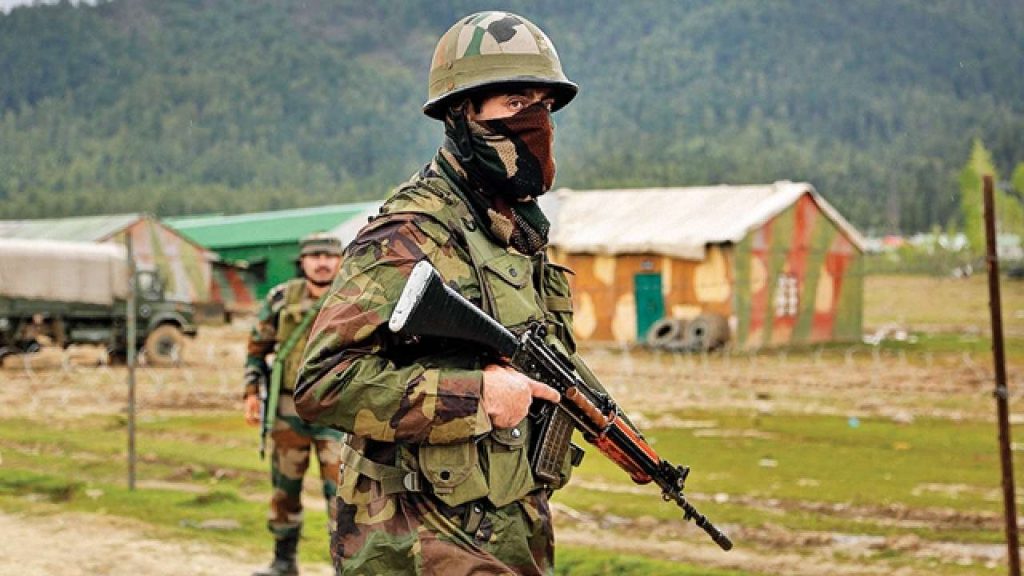
The militant was among three shot dead by security forces on Monday in the Hakoora area of Anantnag district. Two of them were identified as Eisa Fazili and Syed Owais Shafi; the third was not named.
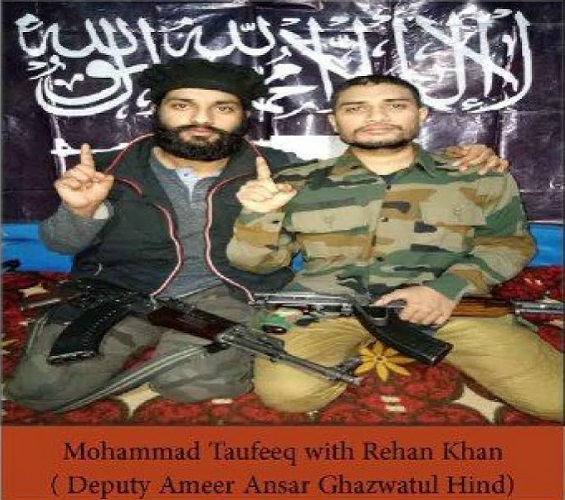
Police have not said anything about the identity of the third militant but on Tuesday the Ansar Ghazwatul Hind – a group with alleged links to the al-Qaeda in Kashmir — said the slain militant was Muhammad Taufeeq from Hyderabad. The al-Qaeda’s Kashmir unit is led by wanted militant leader Zakir Musa.

A police spokesperson said the department are investigating the matter and trying to ascertain the identity of the slain militant. An Intelligence Bureau officer also confirmed that the IB is probing the claim made by the militant group.

According to a senior police official in Hyderabad, the state’s special branch has been tipped off about the claim.

“We are making inquiries, but so far there has been no clue about his identity,” the officer said on condition of anonymity.

According to an AGUH pamphlet available online , Taufeeq became a militant in 2017 after coming to Kashmir from Hyderabad.

“Responding to the call of shariat or shahadat (martyrdom), Mohammad Taufeeq started his jihadi journey in 2017 after making hijrah (migration) from India’s Hyderabad city to the mountains of Kashmir and was among the first in the ranks of Ansar Ghazwatul Hind,” the pamphlet said.

The group added that Taufeeq’s “jihadi names were Sultan Zabul Al Hind and Abu Zarr Al Hindi”.

The body of the militant, which was not claimed by anyone, was buried in a graveyard for foreign militants in the Gantmulla area of north Kashmir’s Baramulla district on Tuesday night. A police officer handling the case said the militant’s DNA has been preserved to help in the identification process.

Police refused to say anything on AGUF although security officials say militants from different groups work in tandem in south Kashmir.

In an earlier statement, another militant group, the Tehreek-ul-Mujahideen (TeM), identified the third militant as Sabzar Ahmad Sofi. In a statement to a local news agency, TeM said Fazili was its district commander and added that Syed Owais Shafi belonged to the Hizbul Mujahideen.

Counter-insurgency expert Ajai Sahni said people from other parts of India joining militancy in Kashmir are “aberrations” and not frequent occurrences.

“The development is worth examining but it definitely is not a pattern. In three decades of Kashmir insurgency, the number of occasions where youth from Indian cities joined Kashmir jihad is almost negligible,” Sahni said.


You may also like

Search the website

Like us on Facebook

Get daily updates via Email

Enter your email address:

Recent Posts

Jamai Shashthi 2026 — The Story of Maa Shashthi, the Cat, and the Wife Who Was Forgiven

Jamai Shashthi 2026 — The Story of Maa Shashthi, the Cat, and the Wife Who Was Forgiven

On Saturday, June 20, 2026, Bengali households across Bharata will welcome their married daughters and sons-in-law home for the legendary jamai-aador feast and perform the Shashthi Vrata. But behind the warmth lies a story most Bengalis know by heart and most non-Bengalis have never heard — the wife who stole the hilsa, blamed the cat, lost six sons to Maa Shashthi’s wrath, and was finally forgiven. The Vrat Katha, the vidhi, the mantras, and the deeper teaching.

Vat Purnima 2026 — The Wife Who Argued Yama Into Returning Her Husband’s Life

On Monday, June 29, 2026, women across Maharashtra, Gujarat, and southern Bharata will tie red thread around banyan trees and hear the story of Savitri — the wife who walked behind Yamaraja Himself when He came for her husband, and out-argued the Lord of Dharma into returning Satyavan’s life. The Mahabharata’s Pativrata Mahatmya Parva, the vrat vidhi, and why the banyan witnessed everything.

Nija Jyeshtha 2026 — The Real Jyeshtha Begins, and the Calendar Resumes

Nija Jyeshtha 2026 — The Real Jyeshtha Begins, and the Calendar Resumes

With Adhik Maas now closed on the Somvati Amavasya of June 15, the long-postponed festivals of Jyeshtha return — Vat Purnima (June 29, the Savitri-Yamaraja katha), Jamai Shashthi (June 20, the Bengali festival of Maa Shashthi), Sankashti Chaturthi (June 28), Yogini Ekadashi (July 10), and Devshayani Ekadashi (July 16, opening the four-month Chaturmas of Bhagavan Vishnu’s yoga-nidra). A guide to what the next four weeks hold and what the household that kept Purushottam Maas now carries forward.

The Closing of Purushottam Maas 2026 — Adhik Amavasya and the Sealing of the Month-Long Vrat

On Monday, June 15, 2026 — a rare Somvati Amavasya — the intercalary month that bears Bhagavan Vishnu’s own name comes to its close. The Acharyas teach that a vrat is not measured by its duration but by its closing. Here are the Padma Purana’s instructions for sealing the month-long Purushottam Maas vrat: the morning snan, the closing puja with the Vishnu Sahasranama, the day of dana, the Somvati Amavasya gift, and the final sarva-arpana — the offering of all merit at the feet of the Lord.

Parama Ekadashi 2026 — The Other Rare Ekadashi of Purushottam Maas, and the Poor Brahmin Who Kept It

Two weeks ago, Vaishnavas across Bharata kept Padmini Ekadashi — the rare Shukla Paksha Ekadashi of Adhik Maas. Padmini has a twin. On Thursday, June 11, 2026, the Krishna Paksha Ekadashi of the same intercalary month appears: Parama — the Supreme Ekadashi. The Padma Purana names it the rarer and more secret of the two, and reserves it for those whose poverty or sorrow has refused to lift in spite of every other vrat already kept. The story of Sumedha and Pavitra of Kampilya, the rishi Kaundinya, the prince sent by Bhagavan Brahma — and the vidhi for the day.

css.php