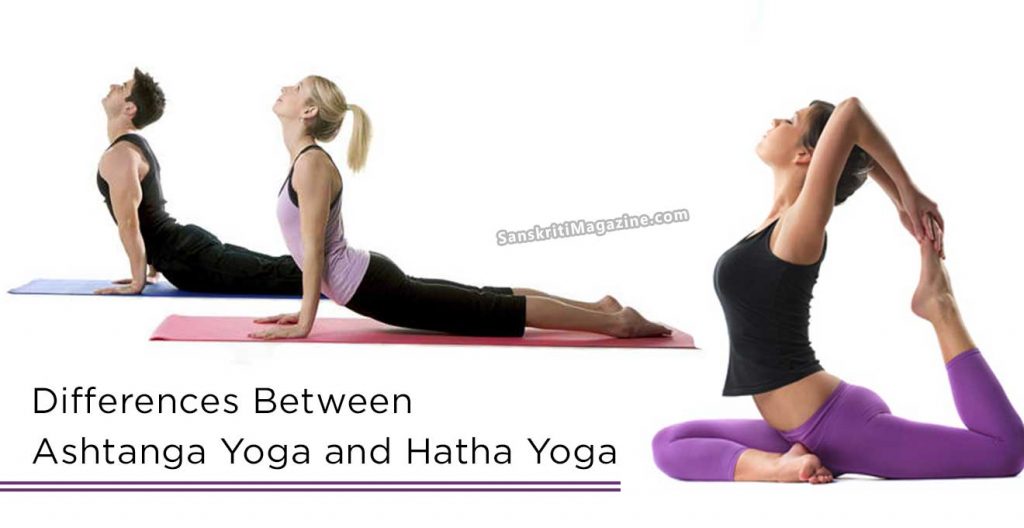
Understand how Ashtanaga and Hatha yoga are different in theory and practice though the objective of spiritual upliftment is common to both.
Browsing through yoga classes offering an array of styles and approaches could be a real exercise in confusion. This five thousand year old discipline of mind-body wellness has evolved over the ages, mushrooming into a variety of interpretations and interrelated approaches. While some styles highlight dynamism and core strengthening exercises others shed light on restful postures, the most common categories being Hatha and Ashtanga. The two modes are contrasting in the way Hatha demonstrates a generic set of seated and standing postures while Ashtanga engages practitioners in a specific sequence of more exacting asanas.
While it would be unfair to state that one style is superior to the other, it remains true that Hatha and Ashtanga are meant for people of two different temperaments. Let us explore in detail characteristics unique to these two styles:
Gentleness in Hatha and Ashtanga’s Intensive Potentials
One of the greatest differentiating factors—with hatha you can simply perform as one asana at a time, but Ashtanga practice won’t let you stop before completing a series of asanas in an unremitting flow. This is vinyasa. To flow from one asana to the next makes the whole practice more vigorous, consequently, a greater heat generation within. Ashtanga is thus good for fast calorie burning and dynamic strength building. With the motion slow and focused, you can utilize Ashtanga to potentials of cardio-vascular exercise as well. Hatha is more effective as a warm up, restorative workout, and relaxant.
Single Asana Observance and Ashtanga Vinyasa Flow
While Hatha lets you focus deeply upon the bends and flexes in each asana, in Ashtanga, it all passes in a blur. Ashtanga gets a little more complex when the instructor brings your attention to the synergy of movement and breath. Not only must you set your movements in a rhythm while Ashtanga vinyasa, your breath must fall in curves too. To master synchronized breath-intensified asana movement, it is highly recommended to start your journey in yoga with Hatha first. After you have followed through the nuances of yoga breath and the importance of synchronizing yoga movement with pranayamic yoga breath in singular Hatha exercises, move to the more complex system of Ashtanga yoga.
Hatha Harmonization of the Sun and the Moon Energies and Ashtanga’s “Eight Limbs”
Hatha, translated literally is the coming together of the “sun” and the “moon”. Figuratively, this indicates a harmony or blend of different and oppositional forces. The coming together of the sun and the moon is an image of resolving conflicts and united energy in diversity. In case of the human body, it indicates a healthy system in which every unit is at par with others and is governed by a singular universal force. The main strategy of achieving such perfection is through asana observance. Hatha is thus a discipline with an objective which is same as one of the “limbs” of Ashtanga yoga, that being – asana.
Ashtana on the other hand is an eight-fold path to the final stage of bliss. The “eight limbs” are:
Yama – This refers to moral restraints which prohibits the practitioner from adhering to any action or thought that disavows the commitment to universal love and brotherhood. The first limb concerns our relationship with the world, the people and our day to day interaction with them.
Niyama – This refers to our duties. Ashtanga yoga codifies a set of regulations and duties to which a practitioner must commit to. The duties concern ones responsibility to the society, family, and individual selves.
Asana – The third step to the path to freedom is physical exercise. This is the main scope of concern in Hatha yoga and forms a part of Ashtanga discipline. To adapt one’s body to a steady and comfortable posture is the goal. It does not necessarily have to be a striking bend or an appealing headstand. Anything that sets the body at ease and aligns internal organs and the mind to their optimum efficiency is satisfactory.
Pranayama – Prana is the vital life force that flows through us and the universe around. It is often equated with breath and thus, by working with the way we breath we can create a more progressive flow if prana. This limb of Ashtanaga is an important part of Hatha exercises as well, where pranayamic breath is incorporated in all its asana movements.
Pratyahara – This limb of Ashtanga refers to sense withdrawal. Drawing inwardly from the distractions of sense perceptions help a meditative mind delve deeper into spiritual immersion.
Dharana – Dharana refers to focus and unwavering concentration, a part of the meditative practice.
Dhyana – This is meditation in the most absorbed state, a vital component of yoga common to all its stylistic forms
Samadhi – The final stage of bliss as the yogic goal comes after reorganizing our oppositions and contradictions within the self and outside in the world around.
Thus, Hatha and Ashtanga yoga are not different in their spiritual objective but appeals yogis of different temperaments. For a dedicated practitioner, an integrated learning approach combining the vital aspects of Ashtanga and Hatha will be ideal.