IndianSanskriti
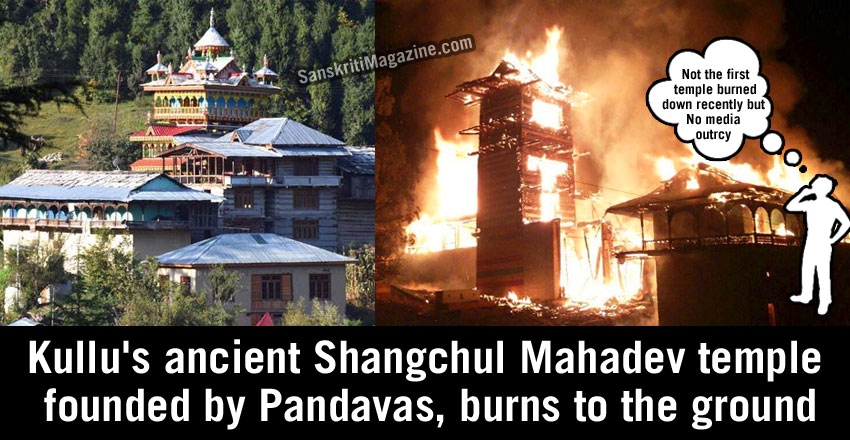
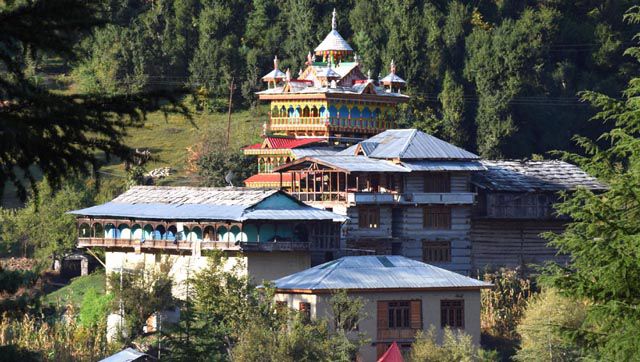
Kullu's ancient Shangchul Mahadev temple burns to the ground

Kullu’s ancient Shangchul Mahadev temple burns to the ground

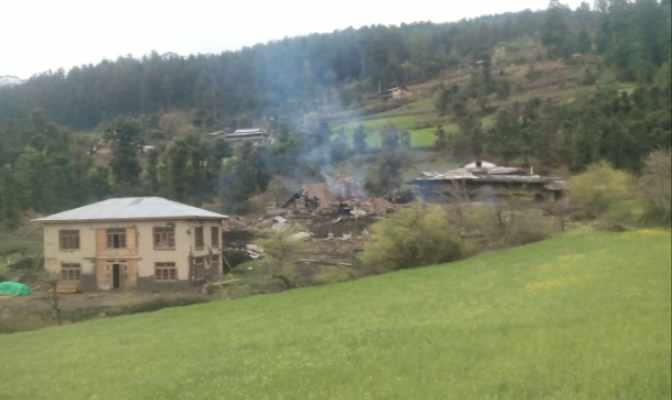
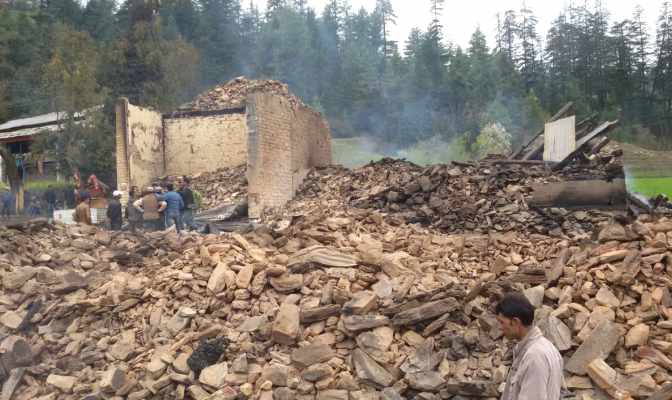
In yet another fire incident, the ancient historic Shangchul Mahadev temple and three houses were engulfed in a blaze on April 6th in Patahar village, Himachal Pradesh, rendering 18 families homeless.

According to sources the fire erupted due to short circuit, while the police are investigating into the incident.

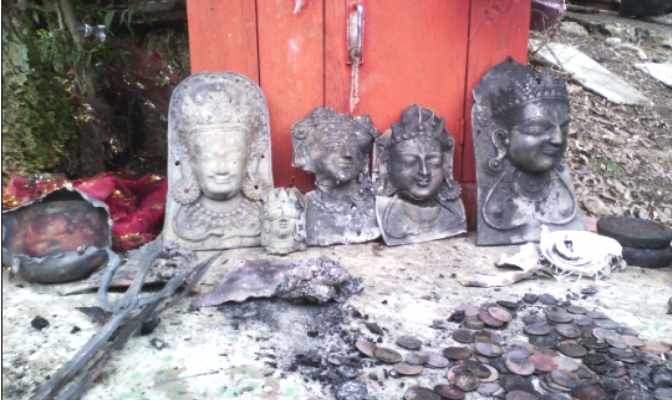
Murtis made of gold and other metals, cash and other valuable turned into ashes, however, the rath (palanquin) of the deity was preserved.

Witnesses claim the fire started from the temple and engulfed adjoining houses. There was no loss of life or livestock. The village is connected by a forest road, which was inaccessible to fire tenders or other vehicles. Besides, the nearest fire station is in Kullu, it takes over two hours for fire brigade vehicles to reach the Sainj valley.

As a measure of interim relief, Rs 10,000 each had been given to the affected 18 families and blankets provided to all the 56 members of these families. Free ration of 15 days has also been provided to the affected persons and they had been temporarily accommodated in adjoining houses by villagers.

It was one of the oldest temple of Himachal Pradesh in the village founded by the Pandavas from Mahabharata.

In December of 2014, the ancient temple of Mata Jawali ji, revered deity of Kashmiri Pandits was gutted in a fire caused by yet another “short-circuit” in Pulwama district of South Kashmir.  No further investigative report is available after preliminary findings.

All Parties Migrants Coordination Committee (APMCC) appealed to the government to take preventive steps over reports of “mafia encroaching upon the temple properties” in Habba Kadal and other places in Kashmir Valley.

 

You may also like

Search the website

Like us on Facebook

Get daily updates via Email

Enter your email address:

Recent Posts

Purushottam Maas — The Month No Deity Would Claim, and the Lord Who Made It Supreme

Every month of the Hindu calendar has a lord — except the rare thirteenth, the Adhika Maas, born an orphan and shunned as the “impure month.” The Puranas tell how this rejected month went in grief to Bhagavan Vishnu, who claimed it, gave it His own name — Purushottam — and made it the most fruitful month of all. The origin story, the teaching, and what it means for Purushottam Maas 2026 (May 17 – June 14).

Padmini Ekadashi 2026 — The Ekadashi Even the Devas Descend to Keep

Padmini Ekadashi 2026 — The Ekadashi Even the Devas Descend to Keep

The rarest Ekadashi of the entire Hindu calendar is three days away. The Padma Purana preserves a conversation between Bhagavan Krishna and Yudhishthira about a single Ekadashi the great Rishis spend lifetimes waiting for — Padmini. The Vrat Katha of Queen Padmini of Mahishmati, the lotus teaching, and why May 27, 2026 is the morning Vaishnavas across Bharata are preparing for.

Varada Chaturthi 2026 — The Rare Ganesha Day of Purushottam Maas

Varada Chaturthi 2026 — The Rare Ganesha Day of Purushottam Maas

Once every 2.5–3 years — when the rare 13th month of Adhika Maas opens — a thirteenth Vinayaka Chaturthi appears. The Mudgala Purana calls it Varada Chaturthi, the “boon-giving” Chaturthi, and holds it as the most fruit-bearing Ganesha day of the entire calendar. Today, Wednesday May 20, 2026, is that day.

Padmini Ekadashi 2026 — The Rare Ekadashi That Comes Only in Purushottam Maas

Padmini Ekadashi 2026 — The Rare Ekadashi That Comes Only in Purushottam Maas

Padmini Ekadashi 2026 falls on Wednesday, May 27 — the Shukla Paksha Ekadashi of Adhika Maas, the rarest Ekadashi in the entire Hindu calendar (it appears only every 2.5–3 years). The Padma Purana conversation between Bhagavan Krishna and Yudhishthira, the Vrat Katha of Queen Padmini, complete vrat vidhi with jagrana, mantras, and the lotus symbolism that gives the Ekadashi its name.

Ganga Dussehra 2026 — The Day Maa Ganga Came Down to Bhagiratha

Ganga Dussehra falls on Monday, May 25, 2026 — commemorating the day Maa Ganga descended from Vaikuntha to the earth through the millennia-long tapasya of King Bhagiratha. The full account from the Valmiki Ramayana, snan vidhi, dana traditions, mantras, and the teaching of sustained sincerity.

css.php