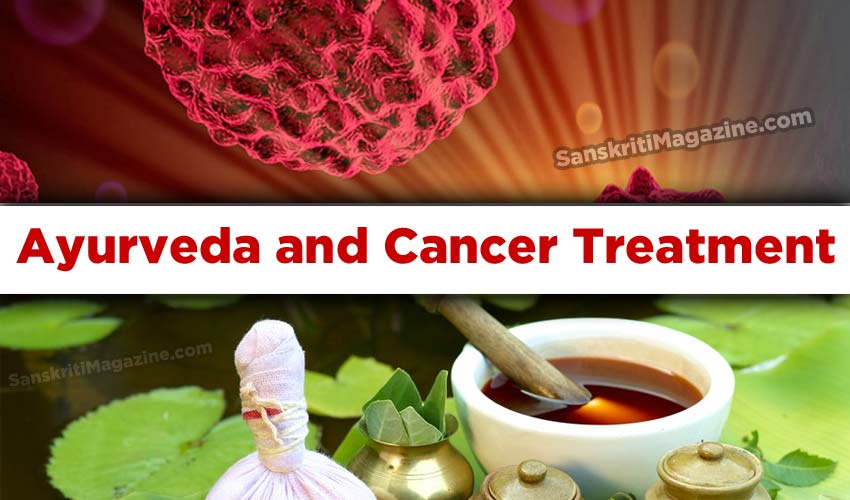
Cancer, which is marked by an unusual growth of cells, necessitates a curative technique insisting on the destruction of cellular multiplication. Radiotherapy and chemotherapy making use of X rays are generally resorted to so that the abnormal multiplication can be controlled. On account of the side effects of radiotherapy and surgery- the usual procedures of allopathic medicine, many a sufferer of malignancy are falling back upon the alternative medication of Ayurveda.
Ayurvedic treatment of cancer focuses on the principle of rejuvenation. As an alternative approach to the treatment of cancer, Ayurveda upholds the process of purification in order to bring about a thorough regeneration in the afflicted person’s cellular structure. It is pre-empted that organ of the human body having malfunctioned over a long time may be prone to cancerous formation with the cellular growth refusing to comply with the nerve signals.
In keeping with the Ayurvedic process of purification used as one of the possible avenues of cancer cure, there is the involvement of fivefold process. Technically referred to as the ‘Panchakarma’, there are four different stages of ‘vaman’, ‘virachan’, ‘vasti’, ‘nasya’ preceding the concluding stage of ‘raktamokshan’- implying a process of purification. The process entailed is also supposed to strike a rightful balance in the energizing substances of bile, phlegm and air making up the human physiology. The process of ‘Panchakarma‘ not only rejuvenates the malignancy or the abnormal growth afflicting the concerned organ; but also seeks to bring about thorough rejuvenation.
Prior to initiating the fivefold process of purification, adequate preparation is carried out in order to bring the physiology around to the changed mode of treatment. The process of Panchkarma thus precedes the techniques of oiling and fomentation- two fold processes thriving on the use of medications based on herbs and metallic components. Besides herbs, metallic elements and compounds also contribute to the formation of Ayurvedic medications meant for cancer therapy. Known elements such as gold, zinc, copper and zinc are made use of. Even the ashes of natural gems such as pearl, ruby and diamond are made use of in the preparation of medicines. The process of fomentation which involves detoxification with the help of lethal means primarily rests on the use and purification of mercury- the lethality of mercury takes on a beneficial character when it is amalgamated with certain beneficial herbs.
Fomentation based on the principle of conflict, plays a vital role in the Ayurvedic remedial procedure of cancer; which has its main thrust in the purification of the cellular structure. The administration of herbal and ‘ras rasayan’ (use of metallic ashes for medication of cancer) based medication embarked upon in Ayurvrda; is known to be effective in controlling different forms of malignant growth. Malignancy which has its origin in tumors of different kinds is effectively brought under control with the dissolution of the same. It generally transforms into the shape of irregular mass to be absorbed by the circulatory system. Important to say that size of the given tumor and stages in its pathogenesis play significant roles as far as its response to the lines of Ayurvedic treatment are concerned.
For a successful treatment of cancer by means of Ayurveda, it is important that one embarks upon the given mode in its early stage of discovery, apart from approaching a skilled Ayurved who follows the exact stages of treatment involved in the ‘Panchakarma’ process of purification.