IndianSanskriti

Health Benefits of Saffron: The golden super spice

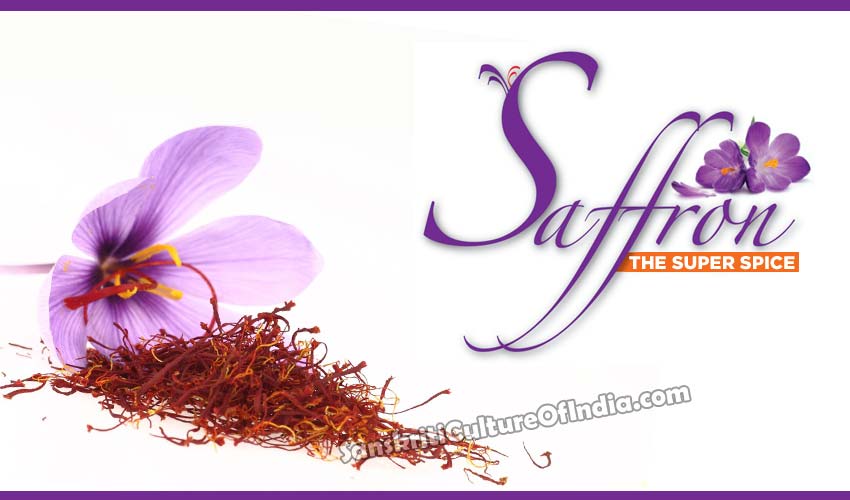
One of the most costly spices in the world derived from the dried stigma of saffron flower is the saffron spice, also known as Kesar or Kumkumapoo in India.
Saffron is considered as a golden spice as it can not only be used in cooking to add an aroma to food, turning any dish into an exotic one, it can also be beneficial to a number of health problems. It is used as medicine from ancient times. This spice is special and a precious spice as it has numerous health benefits which can help in the enhancement of one’s overall well being.

Health Benefits of Saffron:

Digestion:
Saffron is helpful in the improvement of digestion and appetite, because it helps in improving circulation to the organs of digestion. It coats the membranes of stomach and colon which help in soothing gastrointestinal colic and acidity.
Kidney and liver problem:
This spice s found to be extremely beneficial for the treatment of kidney, bladder and liver disorders. Saffron is considered as a blood purifier.
Gas and acidity: 
Saffron is effective for providing relief from gas and acidity related problems.
Athritis:It helps in relieving inflammation of arthritis. Saffron also provides relief from joint pains. It is very helpful for athletes as it eases fatigue and muscle inflammation by helping the tissues to get rid of lactic acid which gets built up after strenuous exercise.

Insomnia:
It is said that saffron is also a mild sedative which can be used for insomnia and even treat depression. Taking a pinch of saffron with milk before bed helps in sleep disorders like insomnia.Fever:
Saffron also contains the compound “crocin”, which scientists believe that helps in reducing fever. Crocin found in saffron also promotes learning, memory retention, and recall capacity.Eye problem:
Saffron improves eye and vision health. In a recent research study, every participant who took saffron had vision improvements. Notably, saffron has been reported to significantly helping vision in the instance of cataracts.Gums:
Massaging the gums with saffron helps in reduce soreness and inflammation of the mouth and the tongue.

More Saffron Benefits
saffronAmong the multiple health benefits of saffron are the treatment of asthma, menstrual discomfort, atherosclerosis, depression, whooping cough, and many other health problems.

It also helps to lower the levels of bad cholesterol and triglycerides. Saffron can be applied topically as a paste to relieve dryness and other skin conditions. It is useful in general health problem like headache, cough and cold. Pregnant women are advised to take saffron as it is believed that it improves the color of baby.

How to Use Saffron?
Saffron is used to improve taste and smell in many food items . You can use saffron in kheer, above sweets, in dishes like biryani, risotto, paella, fabada or pote gallego etc. You can add a pinch of saffron in your daily glass of milk. Applying milk mixed with saffron on skin refine the skin tone.

How to Choose Saffron?
Saffron is very expensive. There are also many adulterated and fake products being dyed to imitate saffron. To find out whether you have pure saffron or not, immerse a bit of the product in warm water or milk. If the liquid colors immediately, then the saffron is fake. Pure saffron must soak in either warm water or milk for at least 10 to 15 minutes before its deep red-gold color and the saffron aroma begin to develop.

You may also like

Search the website

Like us on Facebook

Get daily updates via Email

Enter your email address:

Recent Posts

Yogini Ekadashi 2026 — The Yaksha Who Missed the Morning Flowers, and the Ekadashi That Undid His Curse

On Friday, July 10, 2026, the rare Krishna Paksha Ekadashi of Nija Ashadha arrives. The Padma Purana tells the story of Hemamali — the Yaksha gardener of Bhagavan Kubera in Alaka, whose single morning of distraction with his wife Vishalakshi cost him his form, his wife, and his celestial city. Cursed to wander the earth of Bharata as a leper for a long time, he was at last shown the way back by Sage Markandeya — a single sincere keeping of Yogini Ekadashi.

Jamai Shashthi 2026 — The Story of Maa Shashthi, the Cat, and the Wife Who Was Forgiven

Jamai Shashthi 2026 — The Story of Maa Shashthi, the Cat, and the Wife Who Was Forgiven

On Saturday, June 20, 2026, Bengali households across Bharata will welcome their married daughters and sons-in-law home for the legendary jamai-aador feast and perform the Shashthi Vrata. But behind the warmth lies a story most Bengalis know by heart and most non-Bengalis have never heard — the wife who stole the hilsa, blamed the cat, lost six sons to Maa Shashthi’s wrath, and was finally forgiven. The Vrat Katha, the vidhi, the mantras, and the deeper teaching.

Vat Purnima 2026 — The Wife Who Argued Yama Into Returning Her Husband’s Life

On Monday, June 29, 2026, women across Maharashtra, Gujarat, and southern Bharata will tie red thread around banyan trees and hear the story of Savitri — the wife who walked behind Yamaraja Himself when He came for her husband, and out-argued the Lord of Dharma into returning Satyavan’s life. The Mahabharata’s Pativrata Mahatmya Parva, the vrat vidhi, and why the banyan witnessed everything.

Nija Jyeshtha 2026 — The Real Jyeshtha Begins, and the Calendar Resumes

Nija Jyeshtha 2026 — The Real Jyeshtha Begins, and the Calendar Resumes

With Adhik Maas now closed on the Somvati Amavasya of June 15, the long-postponed festivals of Jyeshtha return — Vat Purnima (June 29, the Savitri-Yamaraja katha), Jamai Shashthi (June 20, the Bengali festival of Maa Shashthi), Sankashti Chaturthi (June 28), Yogini Ekadashi (July 10), and Devshayani Ekadashi (July 16, opening the four-month Chaturmas of Bhagavan Vishnu’s yoga-nidra). A guide to what the next four weeks hold and what the household that kept Purushottam Maas now carries forward.

The Closing of Purushottam Maas 2026 — Adhik Amavasya and the Sealing of the Month-Long Vrat

On Monday, June 15, 2026 — a rare Somvati Amavasya — the intercalary month that bears Bhagavan Vishnu’s own name comes to its close. The Acharyas teach that a vrat is not measured by its duration but by its closing. Here are the Padma Purana’s instructions for sealing the month-long Purushottam Maas vrat: the morning snan, the closing puja with the Vishnu Sahasranama, the day of dana, the Somvati Amavasya gift, and the final sarva-arpana — the offering of all merit at the feet of the Lord.

css.php