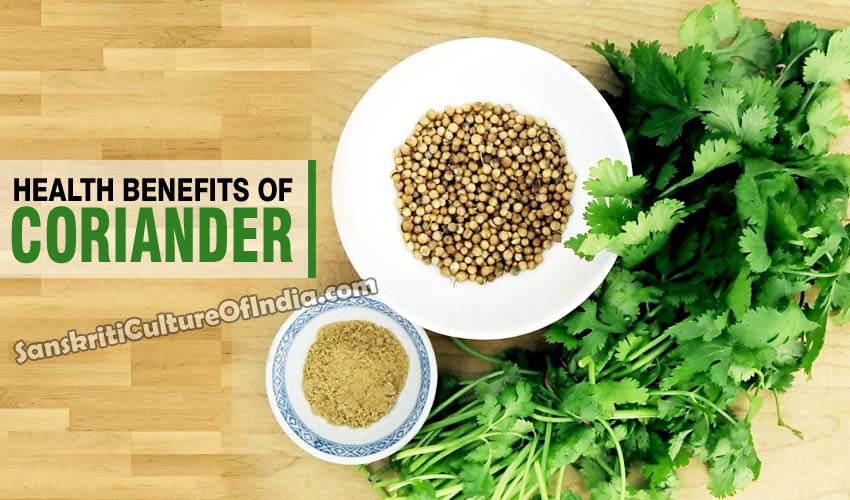
Coriander, also known as cilantro, Chinese parsley or dhania, is an annual herb native to regions spanning from Europe, North Africa to southwestern Asia. It is believed to be one of the earliest spices used by man and there are references to the spice in early Sanskrit documents, ancient Chinese and Middle Eastern stories.
The fresh leaves are an ingredient in many Indian, Chinese, Thai and Mexican dishes. Chopped coriander leaves are a garnish on Indian dishes, is used liberally on almost all dishes, made into chutneys and used for pickling. Coriander is easy to grow and can be grown indoors or in most warm climates and is best suited for hot and dry summers.
The fruits from this herb are called coriander seeds or dhania in Indian cuisine and has its own uses and benefits.
Commonly used for its wonderful aroma and anti-bacterial properties to prepare culinary dishes, its health benefits are almost overlooked. Coriander leaves and seeds have many known health benefits and more are being discovered on a continual basis. Coriander has antibacterial, antifungal, antioxidant, detoxifying, disinfectant and antiarthritic properties. It has eleven components of essential oils and several vitamins and minerals.
Some known health benefits:
- Aids in digestion and prevents flatulence, intestinal gas
- Prevents nausea
- Regulates proper assimilation and absorption of sugar, balancing blood sugar spikes
- Reduces skin inflammation and improves skin appearance
- Clears up skin disorders such as dryness, fungal infections and eczema
- A good source of dietary fiber
- Aids in detoxifying the body from polutants such as heavy metals like mercury, aluminium and lead
- High iron content helps with blood conditions such as anemia, promoting increased energy and strength
- Good source of magnesium, rich in pphytonutrients and flavonoids
- Releases excess water from the body by inducing urination and protects against unrinary tract infections
- Protects body from salmonella poisoning
- Is a rich source of calcium and promotes strong and healthy bones
- Regulates proper menstrual cycle and reduces pain from cramps
- Rich in antioxidants, vitamin A and C, phosphorous and beta-carotene, it helps in eye care, reducing strain, stress and other diseases that affects the eyes including the effects from aging
- Reduces bad cholestrol while aiding good cholestrol
- Its sedative effects have been known to treat insomnia and anxiety
- Promotes good memory
- Relieves headaches
- Reduces fat from the body
- Coriander seeds contain coriandrol, a substance that is used to treat liver, breast and colon cancer
- Oil extract from the seeds is effective in relieving rheumatic pains and body aches associated with flu or cold
Ayurvedic Home Remedies
Reduce Fat:
Boil 4-5 cups of water and add 1/2 tsp of cumin seeds, 1/2 tsp of coriander seeds and 1/2 tsp of fennel seeds. Strain and drink first thing in the morning. If it is too strong, then reduce the amount of seeds to 1/4 tsp each for the first couple of weeks, increasing it to 1/2 tsp afterwards.
Nausea and Dysentery:
Add -2 tsp of coriander juice in one cup of fresh buttermilk.
Arthritis Pain:
Boil ground coriander seeds with water, strain and drink to reduce pain.
Dry mouth due to fever:
Boil 1 tsp of ground coriander seeds in 1 cup of water, cool, strain and drink.
Headaches:
Apply fresh coriander paste to forehead for fast relief of headaches.
Boil cumin and coriander seeds in a cup of hot water and drink.
Rash:
Apply coriander paste to the affected area or drink coriander tea.
As with any food consumption, coriander has been known on rare occasions to cause reaction or allergies. Please proceed with caution if you have never consumed coriander before. Those suffering from bronchitis or asthma should consult their health practitioner before consumption of coriander.