Abhyanga or Ayurvedic massage is an essential part of a healthy daily routine. Regular massage helps detoxification of the body and provides nourishment to the deeper tissues. This daily regimen produces a powerful preventive and rejuvenative effect on the body. It also leaves you feeling young, vital, beautiful, and healthy.
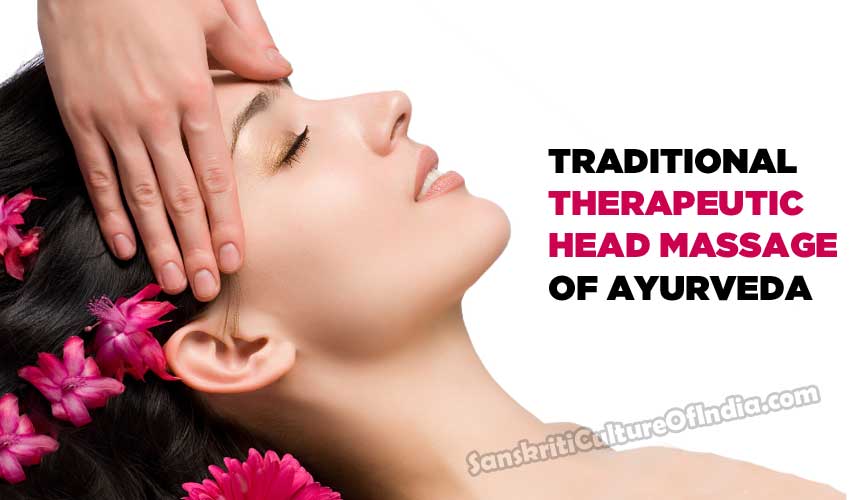
A regular oil massage should also incorporate massage of the head and scalp. The head is one of the most important parts of the body. Massaging the head keeps the nervous system healthy. Champi is a very popular type of head massage that has been practiced in India for centuries.
An Ayurvedic head massage can be done with or without oil by rubbing the scalp and forehead with palms or tapping it with fingers. The therapy is very beneficial for people who suffer from baldness, graying of hair, headache, migraine, insomnia, stress and mental disorders. It helps in cases of paralysis, polio, loss of memory, high blood pressure, and in diseases of the nervous system.
Massaging the scalp and hair with warm oil, preferably infused with hair-nourishing herbs, is the best way to nurture the scalp and hair topically. Ayurvedic oils designed for hair and scalp massage typically include one or more hair-friendly herbs to augment the benefit of the massage. Traditionally, these herbs are slow-cooked with the oil, and the oil is then strained and ready for use. Not only does the massage work wonders for your hair, but it also relaxes the mind and nervous system.
The oil for the massage can be customized by hair and body type. If you have Vata hair (thin, dry, frizzy, and prone to split-ends), choose almond oil or sesame oil as the base oil. Both of these oils are very nourishing for the scalp and hair and help reduce stiffness and tightness in the scalp.
If your hair is the Pitta type (fine hair prone to premature thinning or graying), cooling coconut oil is the ideal choice. As coconut is Pitta-pacifying, coconut oil massage can retard hair problems associated with an aggravated Pitta dosha. If you have Kapha hair (thick and oily), sesame or olive oil are good choices. Olive oil has purifying properties that help keep pores open.
Practicing Champi at home
Pour some oil into a bowl and warm the oil by placing the bowl in hot water. Apply the oil little by little to different parts of your scalp using the pads of your fingers, parting your hair as needed. Also work some oil along the length of your hair. Work the oil into your scalp, using circular motions as in shampooing. Cover your entire scalp, all the way down the sides to your ears and at the back to your neck.
Use both fists to gently tap the head all over. This stimulates the circulation and alerts the nervous system. Next, rub your fingers along the scalp and gently pull small tufts of hair, helping to relieve muscle tension.
Leave the oil on for at least 30-60 minutes or longer if you can. For added conditioning and softening of hair, dip a towel in hot water, wring it out, and wrap it around your head after the massage. You can even leave the oil on overnight. Place a thick towel over your pillow to protect your linens. Wash your hair with a gentle, natural shampoo.
Massaging the scalp and hair stimulates the scalp, nourishes the hair roots and hair, relieves mental fatigue, helps enhance mental clarity and focus, and balances and nourishes the emotions. Slow, deliberate movements are relaxing while steady but vigorous movement helps enhance energy and circulation. Herbal extracts are combined with the base oil for their beneficial impact on hair health and growth. In addition, the herbs also help to calm the mind, promote a better quality of sleep, enhance memory, and help withstand the effects of day-to-day stress.
~ Dr. Partap Chauhan