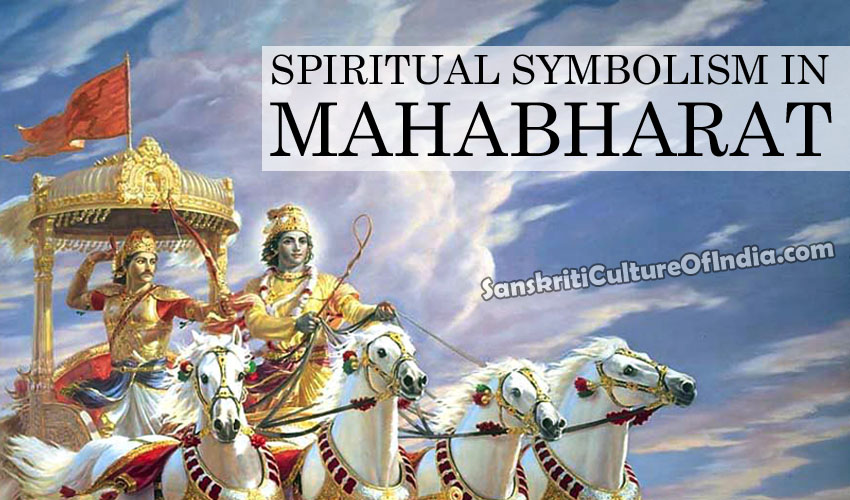
The ‘Mahabharata’ has a deep underlying symbolism.
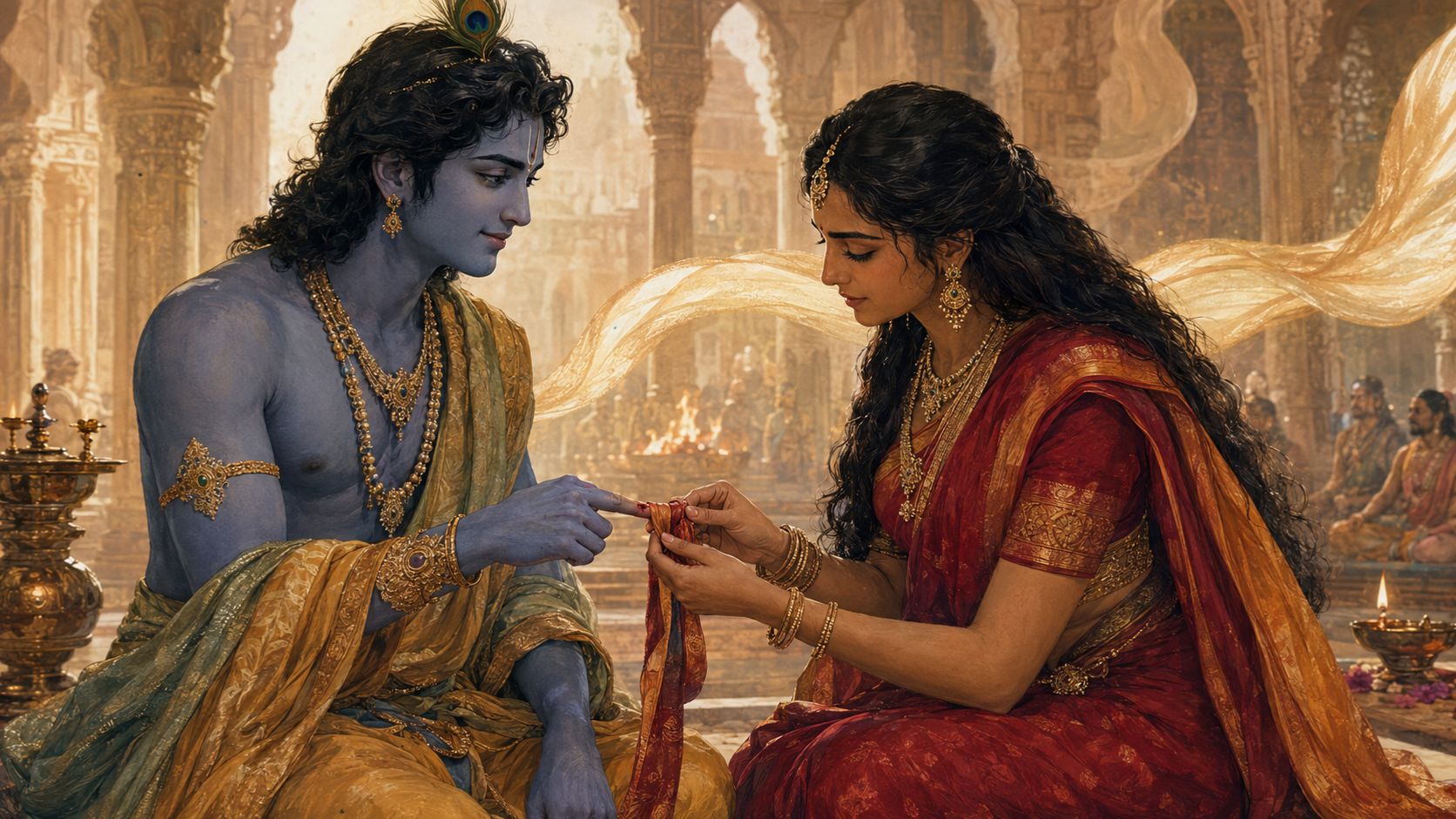
Imagine Draupadi as the human body, The Pandavas, the five senses, are wedded to it. Their first cousins, a hundred in number, the Kauravas, are present in the form of the tendencies of the mind. Yudhishthir thinks that he is a good gambler and so would win over the Kauravas. The senses also think that they can win over the tendencies of the mind. The Pandavas keep gambling till they lose everything, including themselves and their beloved.wife, Draupadi.
 Likewise, we lose everything when we gamble with our tendencies, and, like the Pandavas, end up in spiritual exile. The body is demeaned, like Draupadi was, and only divine intervention can save it. However, our body does not abandon us, even when we lead it into exile.
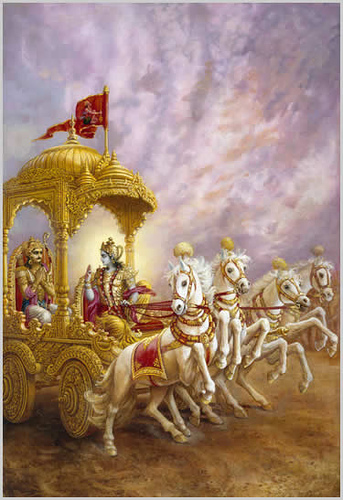
However, there are some good tendencies also. There are many good people in the Kaurava camp but Krishna advises Arjuna to kill all of them, implying that all tendencies, both good and evil should be exterminated. They are already dead, he says. You are only an instrument in making this evident.
If a person has to gain enlightenment he must overcome all the tendencies of the mind, good or bad. These do not have an existence, apart from what we have given them they are already dead. However, we keep them alive by our own acts, and, by our own acts, we can kill them all. Only then will we be free.
Kurukshetra is the world in which we live this life, witnessing a war between our senses and our mind’s tendencies. Dhritarashtra symbolises the mind, which gives birth, in a sense, to our tendencies.
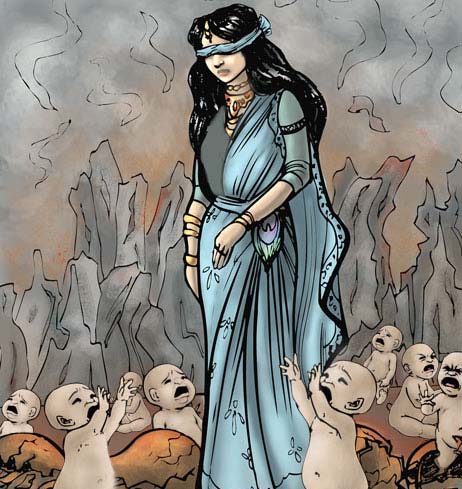
He was blind as the mind is to its tendencies. His wife, Gandhari, was not blind but chose to blindfold herself. Even when we have a choice to see, we choose not to see. None of the Pandavas were born of their mother’s husband, Pandu. Their mother, Kunti, had been given a chant, which invoked various gods who fathered the Pandavas. The Sun was the father of Karna. Dharma, the god of duty was the father of Yudhishthir and Indra the king of gods was the father of Arjuna. The god of wind, symbolising strength, was the father of Bheem and the Ashwini Kumars were the fathers of Nakul and Sahdev.
 Our senses are basically part of our divinity, the instruments born to keep us in this form. The original name of their mother was Pritha, signifying Prithvi, the Earth, and she took the name Kunti when Kuntibhoja adopted her. So, the Pandavas were born through the conjoining of the Earth and the divine, the body and the spirit Karna was born of the Sun-god and the Earth mother. He is a symbol of our ego. Like him, our ego is also armoured and only the guru’s intervention could get the armour removed. Similarly, the guru helps the seeker in killing his ego.
Krishna’s form, too, is symbolic. Deep blue is the colour of eternity, it is the colour of the sky and of the deep ocean. Yellow is the colour of the earth. A deep blue god-image enclosed in yellow clothes symbolises the spirit clothed in the body. Krishna, then, is a symbol of the body and spirit, a symbol of you and me in our enlightened form. When we become aware of our true self, we realise that there is no difference between us and Krishna or Vishnu, of whom he is an incarnation, as, indeed are we.
By: Kishore Asthana