The do-it-anytime set of breathing kriyas remove tension, anger, annoyance, fear and exhaustion, says yogacharya Surakshit Goswami.
The mind is fickle in nature and so finds it difficult to remain anchored. Usually the mind is never where the body is; it keeps wandering on its own. The fickle mind is constantly influenced by our sensual and passionate desires and the environment. Hence the wandering mind is the cause of our bondage. But when the mind begins to look inward, and is self-conscious, it leads to liberation. A unique yoga kriya has been developed by incorporating three different exercises to make the mann or mind, amann, or a mind that has overcome its fickle nature.
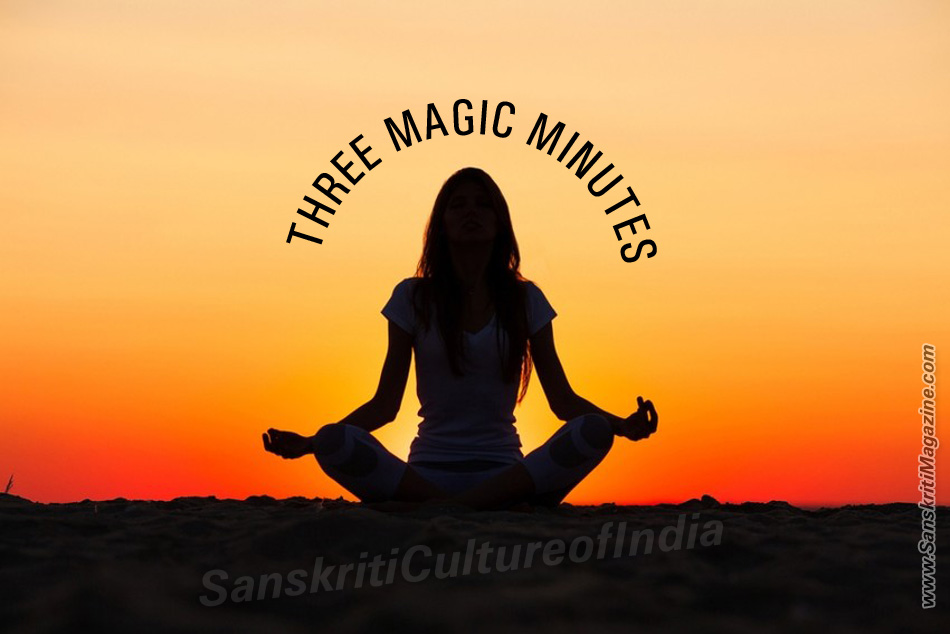
The new kriya, called praan oorja kriya is based on breathing techniques, and saakshibhav, and can be performed at any time of the day for three minutes.
With this kriya, the mind becomes serene and inward looking, and feelings of love, vigour, patience, concentration and memory also get a boost. You should do this kriya with your eyes closed.
1. Concentration:
Concentrate on your breathing in the first minute. Sit in a relaxed position, with hands on knees and with your neck and back straight and eyes closed. Inhale gradually, filling your lungs to capacity. Exhale gradually, without holding your breath and without making any breathing sound. One cycle of deep breathing usually takes 10 to 12 seconds, so one minute means five to six cycles of deep breathing.
2. Naad Gunjan:
After you concentrate on your breathing for one minute, it is time for deep inhaling and exhaling in the second minute. Take out a mild humming sound from the nostrils while breathing out. Concentrate on the humming sound and try and make it as melodious as possible. Repeat this process five or six times.
3 Ajapa Jap:
Once naad gunjan is done, the mind will be serene. In the third kriya, concentrate on your normal inhalation and exhalation process and visualise those in a joyful mood. The pace of breathing should be neither increased or decreased and you should be able to feel the air going in and coming out. Try and notice that a special sound is being produced while you are breathing in and out. This is the so-hum sound. The so sound is produced as you breathe in, and as you breathe out, it sounds like hum. This is the ajapa jap that happens 21,600 times in 24 hours, but we don’t feel it because of the outward inclination of our mind. But once the mind is at peace, you can hear this sound.
Brimming with love
Immerse yourself in ajapa jap after experiencing it for a while. Thereafter, sit joyfully in the dhyan posture and feel that you are complete and brimming with love. Don’t imagine anything at this stage, but be a mute witness to all that is happening in and around you. Think that what you are experiencing is for your own self only. Concentrate on yourself and sit in this saakshibhav peacefully for some time.
Finally, raise your hands and rub the palms vigorously. Put the palms, thus warmed, on the eyes. Remove the palms after some time and open your eyes.
The ajapa jap practitioner remains immersed in it even when he performs his daily chores, and feels liberated. These kriyas especially benefit children as they increase concentration and boost memory.
Practise these rejuvenating kriyas whenever you are tense, angry, annoyed, fearful, and exhausted at any time. If you do this in the morning, you will remain free of tension, and will sleep soundly at night!
(Surakshit Goswami)