IndianSanskriti
McDonald Fries

Do you know what`s in your McDonald French Fries?

  • Mythbusters host Grant Imahara traveled to the fast food chain’s potato processing plant in Idaho to see the production process from start to finish
  • During his investigation he found that dimethylpolysiloxane – a form of silicone found in Silly Putty – is used in the making of McDonald’s fries along with a petrol-based chemical called TBHQ
  • He also discovered that the fries are fried twice – once at the factory and again at the restaurant

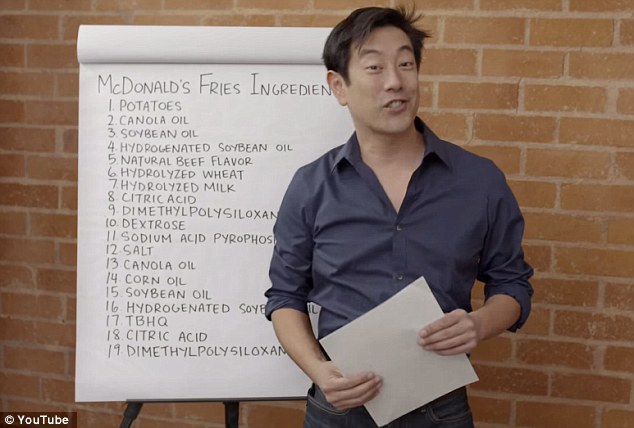
‘Potatoes, thank goodness! That’s a good start,’ former Mythbusters host Grant Imahara says as he goes on to reveal the 13 other ingredients contained in a humble McDonald’s fry.

The TV personality traveled to the fast food chain’s potato processing plant in Idaho to see the production process from start to finish.

During his investigation he found that there are two rounds of frying.

He also discovered that dimethylpolysiloxane – a form of silicone found in Silly Putty – is used in the making of McDonald’s fries along with a petrol-based chemical called tertiary butylhydroquinone (TBHQ).

However, he reassures viewers that these are both safe additives used for perfectly good reasons.

Dimethylpolysiloxane, which Imahara struggles to pronounce, is added for safety reasons to prevent cooking oil from foaming.

While tertiary butylhydroquinone (TBHQ) is applied as a food preservative.

Imahara explains that there are numerous steps involved in the creation of McDonald’s fries.

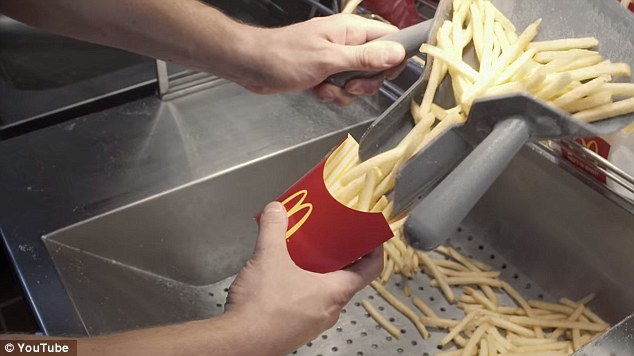
First potatoes are harvested from fields before being peeled, cut and blanched.

They’re then fired through a cutter at up to 70 miles an hour into thin sticks.

After being chiseled into the perfect shape, the strips of potato are sauced with a blend of canola oil, soybean oil, hydrongenated soybean oil, natural beef flavor, hydrolyzed wheat, hydrolyzed milk, citric acid and dimethylpolysiloxane.

Dextrose – a natural sugar – is sprayed on the batons to help them maintain a golden fried color.

Sodium acid pyrophosphate is also added to prevent the fries from going grey.

Last but not least, salt is sprinkled on for flavor.

The fries are then flash frozen at the Simplot factory and transported to McDonald’s outlets across the country.

Once they are at restaurants, the potato sticks are fried for a second time.

The oil blend is similar to the factory mix, with the addition of tertiary butylhydroquinone and hydrogenated soybean oil – a manufactured form of trans fat.

And voila! McDonald’s World Famous Fries are served.

A large serving of the finished product contains 510 calories, 6gms of protein, 24gms of fat, 67gms of carbs and 290mgms of sodium.

McDonald’s digital series ‘Our Food. Your Questions’ comes as the company fights to boost its performance in the U.S., where sales slid at established locations in the last quarter of 2014.

In addition to increased competition, McDonald’s is trying to keep up with changing tastes, with places such as Chipotle marketing their food as more wholesome alternatives.

To improve the image of its food, McDonald’s recently rolled out chicken wraps with sliced cucumbers and the option to substitute egg whites in breakfast sandwiches.

It also plans to eventually let people swap out the French fries in value meals with options like salad or vegetables.
(Source)


Fries
Learning curve: Mythbusters host Grant Imahara traveled to the fast food chain’s potato processing plant in Idaho to see the production process from start to finish
Fries
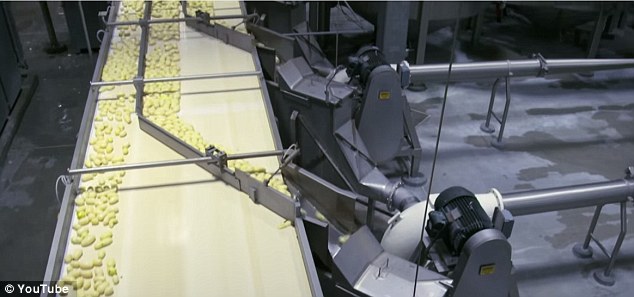
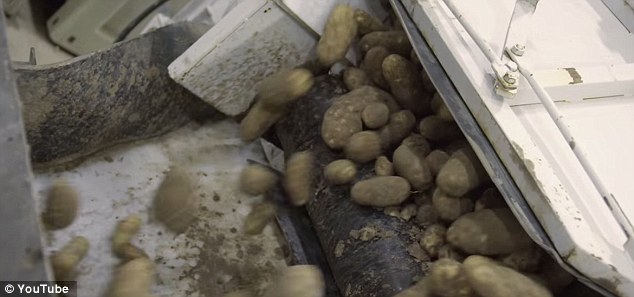
Raw product: First potatoes harvested from fields before being peeled, cut and blanched
Multi-step process: Here they are seen on a conveyor belt at the factory in Idaho


Fries
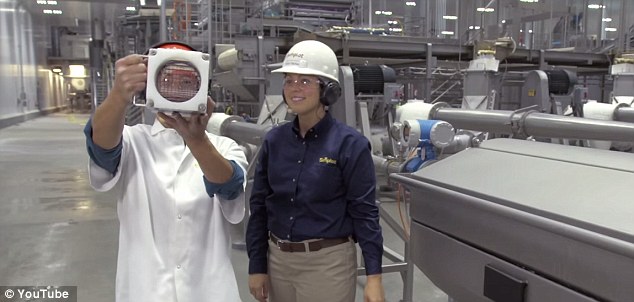
Getting the right shape: The washed potatoes are then fired through a cutter at up to 70 miles an hour into thin sticks – here Imahara holds up the fry slicer
Fries
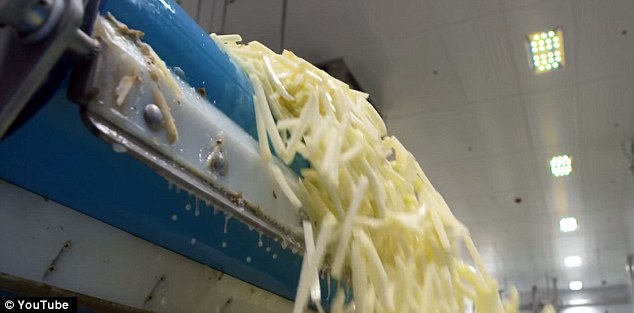
Finishing touches: After they are sliced the potato sticks are sauced in an oil blend, coated in dextrose to maintain their golden fried color and sprinkled with salt
Fries
Almost there: They fries are flash frozen before being shipped to restaurants where they are fried for a second time – they are not vegetarian or gluten free

Fries
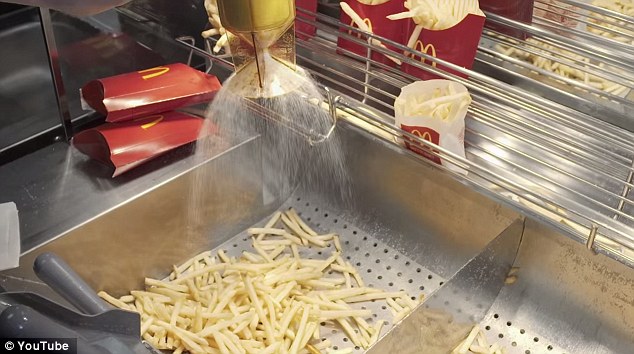
Your meal is served: A large serving of the finished product contains 510 calories, 6gms of protein, 24gms of fat, 67gms of carbs and 290mgs of sodium

You may also like

Search the website

Like us on Facebook

Get daily updates via Email

Enter your email address:

Recent Posts

Padmini Ekadashi 2026 — The Ekadashi Even the Devas Descend to Keep

Padmini Ekadashi 2026 — The Ekadashi Even the Devas Descend to Keep

The rarest Ekadashi of the entire Hindu calendar is three days away. The Padma Purana preserves a conversation between Bhagavan Krishna and Yudhishthira about a single Ekadashi the great Rishis spend lifetimes waiting for — Padmini. The Vrat Katha of Queen Padmini of Mahishmati, the lotus teaching, and why May 27, 2026 is the morning Vaishnavas across Bharata are preparing for.

Varada Chaturthi 2026 — The Rare Ganesha Day of Purushottam Maas

Varada Chaturthi 2026 — The Rare Ganesha Day of Purushottam Maas

Once every 2.5–3 years — when the rare 13th month of Adhika Maas opens — a thirteenth Vinayaka Chaturthi appears. The Mudgala Purana calls it Varada Chaturthi, the “boon-giving” Chaturthi, and holds it as the most fruit-bearing Ganesha day of the entire calendar. Today, Wednesday May 20, 2026, is that day.

Padmini Ekadashi 2026 — The Rare Ekadashi That Comes Only in Purushottam Maas

Padmini Ekadashi 2026 — The Rare Ekadashi That Comes Only in Purushottam Maas

Padmini Ekadashi 2026 falls on Wednesday, May 27 — the Shukla Paksha Ekadashi of Adhika Maas, the rarest Ekadashi in the entire Hindu calendar (it appears only every 2.5–3 years). The Padma Purana conversation between Bhagavan Krishna and Yudhishthira, the Vrat Katha of Queen Padmini, complete vrat vidhi with jagrana, mantras, and the lotus symbolism that gives the Ekadashi its name.

Ganga Dussehra 2026 — The Day Maa Ganga Came Down to Bhagiratha

Ganga Dussehra falls on Monday, May 25, 2026 — commemorating the day Maa Ganga descended from Vaikuntha to the earth through the millennia-long tapasya of King Bhagiratha. The full account from the Valmiki Ramayana, snan vidhi, dana traditions, mantras, and the teaching of sustained sincerity.

Adhik Jyeshtha Maas 2026 — The Hidden Month That Belongs to Lord Vishnu

Once every 2.5–3 years, the Hindu calendar opens a quiet thirteenth chamber — the intercalary month Lord Vishnu took for His own. A Puranic look at Adhik Jyeshtha Maas 2026 (May 2–31), the Padma Purana account of how it became Purushottam Maas, and a complete householder’s guide for its closing days.

css.php