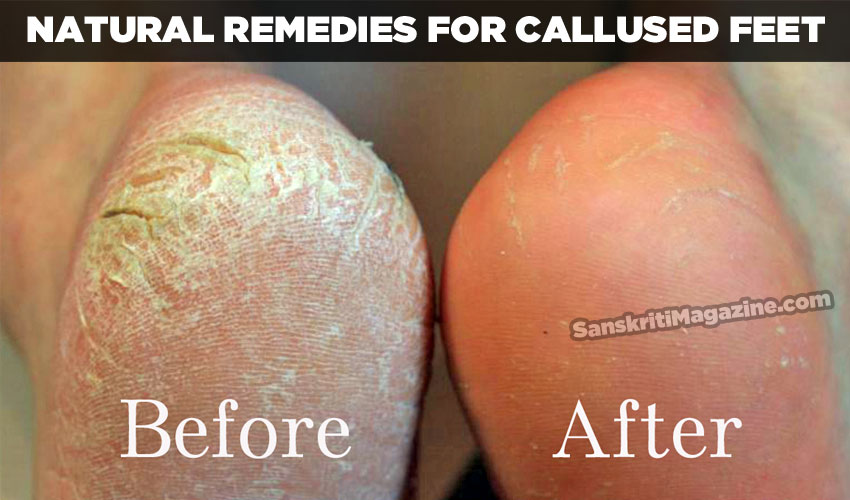
So many of us suffer from those hard little patches of built-up skin on our feet! Don´t worry, it’s perfectly normal, when a body part continually rubs against something the tender skin forms a protective barrier of hard skin to protect the area it feels is in danger of an injury, this hard skin is called a callus and they are most common on the hands and feet.
It takes time to get rid of them, but it can be done. There are some good natural and inexpensive homemade solutions to remove calluses on feet or other areas of your body:
Sugar Scrub:
Put ¾ cup of granulated sugar in a dry jar, add enough mineral oil to form a loose paste, you can add peppermint, spearmint, sandalwood, musk, or any essential oil you choose (optional). Mix together, then scrub and gently massage, you can use this anywhere you want to have smooth, soft skin. Do this before shaving your legs, it feels incredible!
Pineapple Peel and Oils:
Cut strips of pineapple peel and cover the callus completely, then tape the pineapple peel in place and leave it on for a couple hours and repeat daily for one week, changing when necessary. The enzymes and acid content of the fresh pineapple will remove calluses.
Baking soda:
One of the best ways you can treat corns and calluses is with a warm-water soak. This loosens the dead skin and helps with healing. Add 3 tablespoons baking soda to a basin of warm water and soak. Or massage calluses with a paste of 3 parts baking soda to 1 part water.
Pumice stone:
Using a pumice stone, scrub your calluses. Be sure to periodically clean the stone and re-soak your feet as they start drying. Do not over scrub. If you begin to feel pain or after you have removed a couple layers of skin, stop.
Epsom Salt:
Soaking feet in Epsom salts and warm water for approximately 20 minutes can help soften calluses and may even temporarily reduce pain by decreasing swelling and inflammation below the skin.
Another option is to apply wheat germ oil, castor oil, sesame oil, coconut oil, or olive oil on the callused area several times a day.